|
|
|||
|
||||
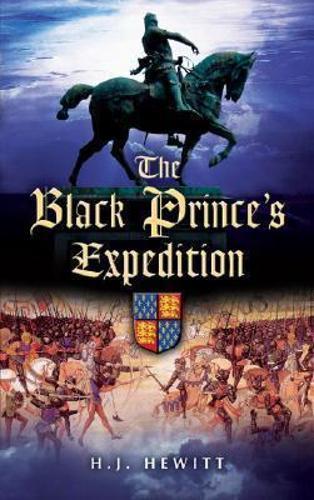
OverviewEdward, the Black Prince, is one of the legendary figures of English history. The first son of Edward III and an outstanding military leader, he is famous for his decisive victory at the Battle of Poitiers, and he is one of the most charismatic characters of the Hundred Years' War. This classic study focuses on the crucial phase of his extraordinary career - his daring campaign against the French in central and southwestern France in 1355-7. H.J. Hewitt's work is one of the key texts on the Prince, and it will be fascinating reading for anyone who is interested in medieval warfare. Full Product DetailsAuthor: H. J. HewittPublisher: Pen & Sword Books Ltd Imprint: Leo Cooper Ltd ISBN: 9781844152179ISBN 10: 1844152170 Pages: 208 Publication Date: 13 July 2004 Audience: General/trade , General Format: Paperback Publisher's Status: Active Availability: In Print This item will be ordered in for you from one of our suppliers. Upon receipt, we will promptly dispatch it out to you. For in store availability, please contact us. Table of ContentsReviewsCrecy, Poitiers, Agincourt: three great British victories that live in our memories even six centuries later - this is the tale of the battle of Poitiers, and the daring raids through France ( chevauchees ) that led up to it. Poitiers was exceptional in that the Valois king himself, John II, was captured. The peace treaty, therefore, cemented Plantagenet hold on Aquitaine and Calais; though hostilities resumed and the Hundred Years War ended with the loss of the former while the latter too was lost under Mary Tudor. The victor of Poitiers was the son of Edward III, another Edward who predeceased his father by a year and is known to posterity as the Black Prince. He led a force largely recruited from his own principality of Wales and his earldom of Cheshire, with a goodly contingent of Gascons besides. Being young, he was punctilious in consulting his council of war on all critical decisions, a behaviour that may well account for his stunning success. This sort of history does not permit much sophistication in character portrayal, but Prince Edward comes across as an extremely free spender. This is a re-issue of a book written when a different style of history that one might almost call pre-modern persisted. The throwing together of a plethora of names, both of places in France and of men (such as the Captal de Buch) has a rather dated charm. The amount of detail, for example regarding finance, witnesses to original archival research being presented fairly raw. But however it has been done, this account of two years' campaigning in mediaeval France grips from beginning to end. (Kirkus UK) Author InformationTab Content 6Author Website:Countries AvailableAll regions |
||||