Overview
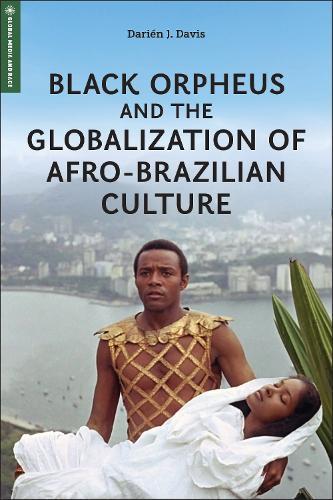
Black Orpheus and the Globalization of Afro-Brazilian Culture is the first historical study in English to examine the development, production, and reception of the 1958 film Black Orpheus and its legacy in the 1960s and 1970s. It focuses on the making of the film and the trajectories of the major actors and musicians who helped construct and image of Black Brazil and provides an analysis of the globalization of Afro-Brazilian images and music in France and the United States in the wake of the movie’s success. Using archival sources, interviews, and the secondary literature from France, Brazil and the United States, this book reveals information about the cultural histories of all three countries and gives readers new insight into the trajectories of diverse actors such as Breno Mello, Marpessa Dawn and Leea Garcia and performers such as Agostinho dos Santos, Baden Powell and Maria D’Apparecida.
Full Product Details
Author: Darién J. Davis
Publisher: Rutgers University Press
Imprint: Rutgers University Press
Weight: 0.454kg
ISBN: 9781978844148
ISBN 10: 197884414
Pages: 230
Publication Date: 09 December 2025
Recommended Age: From 18 to 99 years
Audience:
General/trade
,
College/higher education
,
Professional and scholarly
,
General
,
Tertiary & Higher Education
Format: Paperback
Publisher's Status: Active
Availability: In Print

This item will be ordered in for you from one of our suppliers. Upon receipt, we will promptly dispatch it out to you. For in store availability, please contact us.
Reviews
""Davis explores how Black Orpheus became one of the most important vehicles of Brazilian culture abroad. The sources are myriad and his blend of transatlantic and transamerican perspectives is effective and inspirational.""--Charles A. Perrone ""author of Chico Buarque's First Chico Buarque"" ""In this excellent book, Davis offers a wealth of information about the production, international impact, and legacy of Marcel Camus' Black Orpheus, especially its projection of an image of Brazil through its all-black cast and its vibrant music, which resonated deeply in France and the United States.""--Randal Johnson ""Distinguished Professor Emeritus of Spanish and Portuguese at the University of California, Los Ange"" ""Taking a highly original approach, Davis takes director Marcel Camus' 1958 Black Orpheus as a point of departure for exploring the transnational migrations of Afro-Brazilian popular culture in the 1960s and 70s. Following a detailed exploration of this landmark film's soundtrack and casting, Davis's ambitious study focuses on its cultural repercussions in the U.S. and France, charting the flows of Afro-Brazilian music and its performers.""--Lisa Shaw ""author of Tropical Travels: Brazilian Popular Performance, Transnational Encounters, and the Constru""
""In this excellent book, Davis offers a wealth of information about the production, international impact, and legacy of Marcel Camus's Black Orpheus, especially its projection of an image of Brazil through its all-Black cast and its vibrant music, which resonated deeply in France and the United States."" --Randal Johnson ""distinguished professor emeritus of Spanish and Portuguese at the University of California, Los Ange"" ""Taking a highly original approach, Davis takes director Marcel Camus's 1958 Black Orpheus as a point of departure for exploring the transnational migrations of Afro-Brazilian popular culture in the 1960s and 1970s. Following a detailed exploration of this landmark film's soundtrack and casting, Davis's ambitious study focuses on its cultural repercussions in the United States and France, charting the flows of Afro-Brazilian music and its performers."" --Lisa Shaw ""author of Tropical Travels: Brazilian Popular Performance, Transnational Encounters, and the Constru"" ""Davis explores how Black Orpheus became one of the most important vehicles of Brazilian culture abroad. The sources are myriad and his blend of transatlantic and transamerican perspectives is effective and inspirational.""--Charles A. Perrone ""author of Chico Buarque's First Chico Buarque""
Author Information
DAIRÉN J. DAVIS is a professor and the chair of Africana studies at Rutgers University–Newark. He is the author of four books, three edited volumes, and more than 40 essays and articles in English, Spanish and Portuguese.