Awards
- Commended for Choice: Outstanding Academic Title 2017
Overview
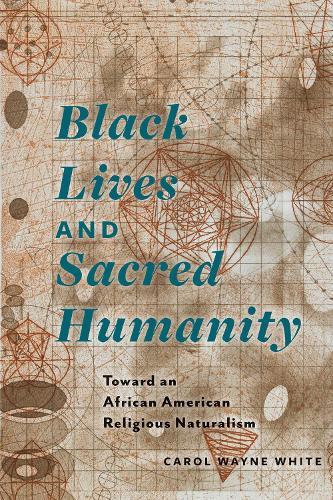
Identifying African American religiosity as the ingenuity of a people constantly striving to inhabit their humanity and eke out a meaningful existence for themselves amid harrowing circumstances, Black Lives and Sacred Humanity constructs a concept of sacred humanity and grounds it in the writings of Anna Julia Cooper, W. E. B. Du Bois, and James Baldwin. Supported by current theories in science studies, critical theory, and religious naturalism, this concept, as Carol Wayne White demonstrates, offers a capacious view of humans as interconnected, social, value-laden organisms with the capacity to transform themselves and create nobler worlds wherein all sentient creatures flourish. Acknowledging the great harm wrought by divisive and problematic racial constructions in the United States, this book offers an alternative to theistic models of African American religiosity to inspire newer, conceptually compelling views of spirituality that address a classic, perennial religious question: What does it mean to be fully human and fully alive?
Full Product Details
Author: Carol Wayne White
Publisher: Fordham University Press
Imprint: Fordham University Press
Dimensions:
Width: 15.20cm
, Height: 1.80cm
, Length: 22.90cm
Weight: 0.386kg
ISBN: 9780823269815
ISBN 10: 0823269817
Pages: 176
Publication Date: 01 May 2016
Audience:
Professional and scholarly
,
College/higher education
,
Professional & Vocational
,
Tertiary & Higher Education
Format: Hardback
Publisher's Status: Active
Availability: Manufactured on demand

We will order this item for you from a manufactured on demand supplier.
Reviews
Carol Wayne White's Black Lives and Sacred Humanity is a major contribution to American religious thought. She deftly constructs a rationale for African American sacred humanism that accomplishes (at least) three important tasks. First, she establishes the compatibility of her notion of sacred humanism with the best of current scientific thought regarding deep relationality in biology and cosmology. Second, she provides a solidly argued alternative to dogmatically theistic assumptions about African American religiosity. Third, White traces an intellectual history of sacred humanism in key American intellectual texts (Du Bois, Cooper, and Baldwin). With narrative grace, White has created a conversation among figures and fields in American religious thought that cannot help but open new avenues of philosophical and theological possibility. -- -Laurel Schneider
As constructions of race, religion, and identity grow more complex in the twenty-first century, we are in deep need of texts like Sacred Humanity. White provides an account of African American religiosity that explores the radical diversity of the black religious tradition. The result is a beautifully embroidered new narrative, one that is rooted historically in heterodox religious voices such as Anna Julia Cooper, W. E. B. Du Bois, and James Baldwin. By reconstructing black religion on naturalistic and humanistic grounds, Sacred Humanity provides new resources for giving voice to the varieties of African American religious expression and for imagining its future possibilities. -Jonathon S. Kahn, Vassar College Carol Wayne White's Black Lives and Sacred Humanity is a major contribution to American religious thought. She deftly constructs a rationale for African American sacred humanism that accomplishes (at least) three important tasks. First, she establishes the compatibility of her notion of sacred humanism with the best of current scientific thought regarding deep relationality in biology and cosmology. Second, she provides a solidly argued alternative to dogmatically theistic assumptions about African American religiosity. Third, White traces an intellectual history of sacred humanism in key American intellectual texts (Du Bois, Cooper, and Baldwin). With narrative grace, White has created a conversation among figures and fields in American religious thought that cannot help but open new avenues of philosophical and theological possibility. -Laurel Schneider, Chicago Theological Seminary
Carol Wayne White's Black Lives and Sacred Humanity is a major contribution to American religious thought. She deftly constructs a rationale for African American sacred humanism that accomplishes (at least) three important tasks. First, she establishes the compatibility of her notion of sacred humanism with the best of current scientific thought regarding deep relationality in biology and cosmology. Second, she provides a solidly argued alternative to dogmatically theistic assumptions about African American religiosity. Third, White traces an intellectual history of sacred humanism in key American intellectual texts (Du Bois, Cooper, and Baldwin). With narrative grace, White has created a conversation among figures and fields in American religious thought that cannot help but open new avenues of philosophical and theological possibility. -- -Laurel Schneider * Chicago Theological Seminary *
As constructions of race, religion, and identity grow more complex in the twenty-first century, we are in deep need of texts like Sacred Humanity. White provides an account of African American religiosity that explores the radical diversity of the black religious tradition. The result is a beautifully embroidered new narrative, one that is rooted historically in heterodox religious voices such as Anna Julia Cooper, W. E. B. Du Bois, and James Baldwin. By reconstructing black religion on naturalistic and humanistic grounds, Sacred Humanity provides new resources for giving voice to the varieties of African American religious expression and for imagining its future possibilities. -Jonathon S. Kahn, Vassar College Carol Wayne White's Black Lives and Sacred Humanity is a major contribution to American religious thought. She deftly constructs a rationale for African American sacred humanism that accomplishes (at least) three important tasks. First, she establishes the compatibility of her notion of sacred humanism with the best of current scientific thought regarding deep relationality in biology and cosmology. Second, she provides a solidly argued alternative to dogmatically theistic assumptions about African American religiosity. Third, White traces an intellectual history of sacred humanism in key American intellectual texts (Du Bois, Cooper, and Baldwin). With narrative grace, White has created a conversation among figures and fields in American religious thought that cannot help but open new avenues of philosophical and theological possibility. -Laurel Schneider, Chicago Theological Seminary
Author Information
Carol Wayne White is Professor of Philosophy of Religion at Bucknell University. She is the author of Poststructuralism, Feminism, and Religion: Triangulating Positions and The Legacy of Anne Conway (1631–1679): Reverberations from a Mystical Naturalism.