Full Product Details
Author: Rodreguez King-Dorset
Publisher: McFarland & Co Inc
Imprint: McFarland & Co Inc
Dimensions:
Width: 15.20cm
, Height: 1.80cm
, Length: 22.60cm
Weight: 0.295kg
ISBN: 9780786438501
ISBN 10: 0786438509
Pages: 204
Publication Date: 10 September 2008
Audience:
General/trade
,
General
Format: Paperback
Publisher's Status: Out of Print
Availability: In Print

Limited stock is available. It will be ordered for you and shipped pending supplier's limited stock.
Reviews
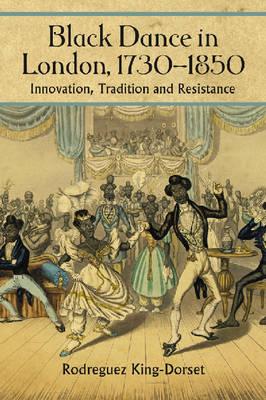
Dance history is a difficult subject. The story of the transmission and dissemination of an ephemeral visual medium with, until relatively recently, only partial methods of notation has always been uncertain. Black Dance in London is a welcome addition, usefully outlining the essentials of a subject where much still remains hazy. King-Dorset, himself trained in both classical and modern dance, is the great-grandson of Barbudan slaves with an enviable record of family dance transmission (he cites his great-grandmother on the Kachriil, the creole version of the quadrille). Here he looks at the dance culture of Africa, its transmission to the New World, both the USA and the Caribbean, and its subsequent creolization, considering the ways in which the European dance forms were learned, used and adapted, both in the New World and in the black community that then established itself in London in the eighteenth and nineteenth centuries. The author efficiently sets out the various theoretical debates that have been raging since E. Franklin Frazier and Melville Herskovits first argued the possibilities of survival of African culture during and after the Atlantic crossing, and neatly summarizes the positions, indicating how authenticities, rather than authenticity, can be recognized. The tenacity of African music and dance culture is then elaborated, showing how African dance forms, especially the shout, developed in the New World. Then, in a chapter of particularly enlightening close reading, King-Dorset looks at two sets of reproductions of black dancers in London in the nineteenth century. This is the core of the book, and his analysis is both rigorous and sympathetic, elaborating the dichotomy of the London black communities adherence both to their African/creole history and their openness to their new British life. King-Dorset persuasively argues that in these images dance is used as a tool of social enjoyment, as a way of bonding and, especially, as a way of satirizing the dominant community, which in turn gives the dancers a sense of collective identity, and also a way of covertly commenting on the white majority. - Times Literary Supplement (January 2009) â This book deals with an aspect of dance history hitherto unexplored and revealing a fascinating approach to the subject of black communities in England, particularly London, in the 18th and early 19th centuries. As King-Dorset says in his preface, many readers will be surprised at the size of this community. The book is a scholarly work, but at the same time very interesting to read and is well presentedâ ¦ this is an interesting book approaching the subject of dance in 18th century London from a new and original angle, and providing an opening for many stimulating discussions. King-Dorset is a young dance historian of great merit and it is hoped that he will continue to develop his research interests.â - Dancing Times
Dance history is a difficult subject. The story of the transmission and dissemination of an ephemeral visual medium with, until relatively recently, only partial methods of notation has always been uncertain. Black Dance in London is a welcome addition, usefully outlining the essentials of a subject where much still remains hazy. King-Dorset, himself trained in both classical and modern dance, is the great-grandson of Barbudan slaves with an enviable record of family dance transmission (he cites his great-grandmother on the Kachriil, the creole version of the quadrille). Here he looks at the dance culture of Africa, its transmission to the New World, both the USA and the Caribbean, and its subsequent creolization, considering the ways in which the European dance forms were learned, used and adapted, both in the New World and in the black community that then established itself in London in the eighteenth and nineteenth centuries. The author efficiently sets out the various theoretical debates that have been raging since E. Franklin Frazier and Melville Herskovits first argued the possibilities of survival of African culture during and after the Atlantic crossing, and neatly summarizes the positions, indicating how authenticities, rather than authenticity, can be recognized. The tenacity of African music and dance culture is then elaborated, showing how African dance forms, especially the shout, developed in the New World. Then, in a chapter of particularly enlightening close reading, King-Dorset looks at two sets of reproductions of black dancers in London in the nineteenth century. This is the core of the book, and his analysis is both rigorous and sympathetic, elaborating the dichotomy of the London black communities adherence both to their African/creole history and their openness to their new British life. King-Dorset persuasively argues that in these images dance is used as a tool of social enjoyment, as a way of bonding and, especially, as a way of satirizing the dominant community, which in turn gives the dancers a sense of collective identity, and also a way of covertly commenting on the white majority. - Times Literary Supplement (January 2009) â This book deals with an aspect of dance history hitherto unexplored and revealing a fascinating approach to the subject of black communities in England, particularly London, in the 18th and early 19th centuries. As King-Dorset says in his preface, many readers will be surprised at the size of this community. The book is a scholarly work, but at the same time very interesting to read and is well presentedâ ¦ this is an interesting book approaching the subject of dance in 18th century London from a new and original angle, and providing an opening for many stimulating discussions. King-Dorset is a young dance historian of great merit and it is hoped that he will continue to develop his research interests.â - Dancing Times
Dance history is a difficult subject. The story of the transmission and dissemination of an ephemeral visual medium with, until relatively recently, only partial methods of notation has always been uncertain. Black Dance in London is a welcome addition, usefully outlining the essentials of a subject where much still remains hazy. King-Dorset, himself trained in both classical and modern dance, is the great-grandson of Barbudan slaves with an enviable record of family dance transmission (he cites his great-grandmother on the Kachriil, the creole version of the quadrille). Here he looks at the dance culture of Africa, its transmission to the New World, both the USA and the Caribbean, and its subsequent creolization, considering the ways in which the European dance forms were learned, used and adapted, both in the New World and in the black community that then established itself in London in the eighteenth and nineteenth centuries. The author efficiently sets out the various theoretical debates that have been raging since E. Franklin Frazier and Melville Herskovits first argued the possibilities of survival of African culture during and after the Atlantic crossing, and neatly summarizes the positions, indicating how authenticities, rather than authenticity, can be recognized. The tenacity of African music and dance culture is then elaborated, showing how African dance forms, especially the shout, developed in the New World. Then, in a chapter of particularly enlightening close reading, King-Dorset looks at two sets of reproductions of black dancers in London in the nineteenth century. This is the core of the book, and his analysis is both rigorous and sympathetic, elaborating the dichotomy of the London black communities adherence both to their African/creole history and their openness to their new British life. King-Dorset persuasively argues that in these images dance is used as a tool of social enjoyment, as a way of bonding and, especially, as a way of satirizing the dominant community, which in turn gives the dancers a sense of collective identity, and also a way of covertly commenting on the white majority. - Times Literary Supplement (January 2009) â This book deals with an aspect of dance history hitherto unexplored and revealing a fascinating approach to the subject of black communities in England, particularly London, in the 18th and early 19th centuries. As King-Dorset says in his preface, many readers will be surprised at the size of this community. The book is a scholarly work, but at the same time very interesting to read and is well presentedâ | this is an interesting book approaching the subject of dance in 18th century London from a new and original angle, and providing an opening for many stimulating discussions. King-Dorset is a young dance historian of great merit and it is hoped that he will continue to develop his research interests.â - Dancing Times
Author Information
Choreographer and filmmaker Rodreguez King-Dorset is currently a senior lecturer in dance at the University of Lincoln in the United Kingdom.