Overview
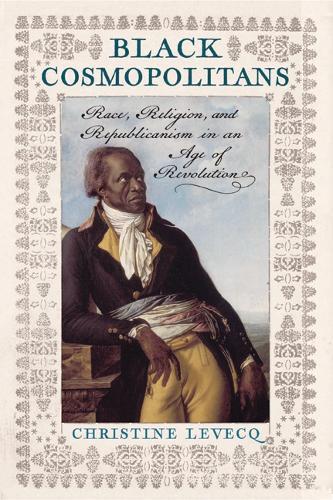
Black Cosmopolitans examines the lives and thought of three extraordinary black men—Jacobus Capitein, Jean-Baptiste Belley, and John Marrant—who traveled extensively throughout the eighteenth-century Atlantic world. Unlike millions of uprooted Africans and their descendants at the time, these men did not live lives of toil and sweat in the plantations of the New World. Marrant was born free, while Capitein and Belley became free when young, and this freedom gave them not only mobility but also the chance to make significant contributions to print culture. As public intellectuals, Capitein, Belley, and Marrant developed a cosmopolitan vision of the world anchored in the republican ideals of civic virtue and communal life, and so helped radicalize the calls for freedom that were emerging from the Enlightenment. Relying on sources in English, French, and Dutch, Christine Levecq shows that Calvinism, the French Revolution, and freemasonry were major inspirations for this republicanism. By exploring these cosmopolitan men's connections to their black communities, she argues that the eighteenth-century Atlantic world fostered an elite of black thinkers who took advantage of surrounding ideologies to spread a message of universal inclusion and egalitarianism.
Full Product Details
Author: Christine Levecq
Publisher: University of Virginia Press
Imprint: University of Virginia Press
Edition: Second Revised Edition
Dimensions:
Width: 15.70cm
, Height: 2.20cm
, Length: 23.10cm
Weight: 0.530kg
ISBN: 9780813942186
ISBN 10: 0813942187
Pages: 304
Publication Date: 30 July 2019
Audience:
Professional and scholarly
,
Professional & Vocational
Format: Hardback
Publisher's Status: Active
Availability: In Print

This item will be ordered in for you from one of our suppliers. Upon receipt, we will promptly dispatch it out to you. For in store availability, please contact us.
Reviews
Black Cosmopolitans introduces a new and valuable concept into scholarship. Although the phrase 'black cosmopolitan' has appeared here and there, it has always been in passing, without much evidence or thought about cosmopolitanism. This book is the first effort at a deep reflection on black cosmopolitanism--and it is an excellent one. A major and original contribution to African American literary history and religious history, it should become one of the top 25 books ever published on the early African Atlantic. --John Saillant, Western Michigan University, author of Black Puritan, Black Republican: The Life and Thought of Lemuel Haynes, 1753-1833
Black Cosmopolitans introduces a new and valuable concept into scholarship. Although the phrase 'black cosmopolitan' has appeared here and there, it has always been in passing, without much evidence or thought about cosmopolitanism. This book is the first effort at a deep reflection on black cosmopolitanism--and it is an excellent one. A major and original contribution to African American literary history and religious history, it should become one of the top 25 books ever published on the early African Atlantic. --John Saillant, Western Michigan University, author of Black Puritan, Black Republican: The Life and Thought of Lemuel Haynes, 1753-1833 Levecq offers vivid glimpses into the lives of remarkable free and formerly enslaved people. Black Cosmopolitans is a key intervention in Black Atlantic literary, political, and intellectual history and an important examination of black political thought outside of the context of slavery. --Christopher Cameron, University of North Carolina at Charlotte, author of Black Freethinkers: A History of African American Secularism Intellectuals of African descent in the eighteenth-century Atlantic world fused multiple philosophical traditions in their careers. Christine Levecq's Black Cosmopolitans demonstrates how three highly mobile men grappled with notions of egalitarianism, race, political rights, religion, and global interconnections through their lives and writing. Black Cosmopolitans combines approaches to historical political philosophy and theology from thinkers such as Kwame Anthony Appiah, Paul Gilroy, Quentin Skinner, and J. G. A. Pocock to offer a new narrative of the emergence of Black intellectual discourse in the period roughly between 1742 and 1805. --H-Atlantic
Black Cosmopolitans introduces a new and valuable concept into scholarship. Although the phrase 'black cosmopolitan' has appeared here and there, it has always been in passing, without much evidence or thought about cosmopolitanism. This book is the first effort at a deep reflection on black cosmopolitanism--and it is an excellent one. A major and original contribution to African American literary history and religious history, it should become one of the top 25 books ever published on the early African Atlantic. --John Saillant, Western Michigan University, author of Black Puritan, Black Republican: The Life and Thought of Lemuel Haynes, 1753-1833 Intellectuals of African descent in the eighteenth-century Atlantic world fused multiple philosophical traditions in their careers. Christine Levecq's Black Cosmopolitans demonstrates how three highly mobile men grappled with notions of egalitarianism, race, political rights, religion, and global interconnections through their lives and writing. Black Cosmopolitans combines approaches to historical political philosophy and theology from thinkers such as Kwame Anthony Appiah, Paul Gilroy, Quentin Skinner, and J. G. A. Pocock to offer a new narrative of the emergence of Black intellectual discourse in the period roughly between 1742 and 1805. --author of H-Atlantic Levecq offers vivid glimpses into the lives of remarkable free and formerly enslaved people. Black Cosmopolitans is a key intervention in Black Atlantic literary, political, and intellectual history and an important examination of black political thought outside of the context of slavery. --Christopher Cameron, University of North Carolina at Charlotte, author of Black Freethinkers: A History of African American Secularism
Author Information
Christine Levecq is Associate Professor of Humanities at Kettering University and the author of Slavery and Sentiment: The Politics of Feeling in Black Atlantic Antislavery Writing, 1770-1850.