Overview
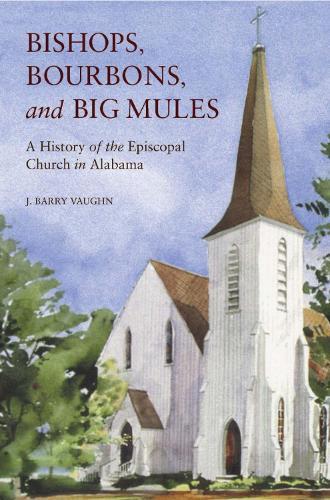
Tells the story of how the Episcopal Church gained influence over Alabama's cultural, political, and economic arenas despite being a denominational minority in the state The consensus of southern historians is that, since the Second Great Awakening, evangelicalism has dominated the South. This is certainly true when one considers the extent to which southern culture is dominated by evangelical rhetoric and ideas. However, in Alabama one non-evangelical group has played a significant role in shaping the state's history. J. Barry Vaughn explains that, although the Episcopal Church has always been a small fraction (around 1 percent) of Alabama's population, an inordinately high proportion, close to 10 percent, of Alabama's significant leaders have belonged to this denomination. Many of these leaders came to the Episcopal Church from other denominations because they were attracted to the church's wide degree of doctrinal latitude and laissez-faire attitude toward human frailty. Vaughn argues that the church was able to attract many of the state's governors, congressmen, and legislators by positioning itself as the church of conservative political elites in the state--the planters before the Civil War, the ""Bourbons"" after the Civil War, and the ""Big Mules"" during industrialization. He begins this narrative by explaining how Anglicanism came to Alabama and then highlights how Episcopal bishops and congregation members alike took active roles in key historic movements including the Civil War, Reconstruction, and the Civil Rights Movement. Bishops, Bourbons, and Big Mules closes with Vaughn's own predictions about the fate of the Episcopal Church in twenty-first-century Alabama.
Full Product Details
Author: J. Barry Vaughn
Publisher: University Alabama Press
Imprint: University Alabama Press
Dimensions:
Width: 15.20cm
, Height: 2.30cm
, Length: 22.90cm
Weight: 0.454kg
ISBN: 9780817362706
ISBN 10: 0817362703
Pages: 280
Publication Date: 15 March 2026
Audience:
General/trade
,
Professional and scholarly
,
General
,
Professional & Vocational
Format: Paperback
Publisher's Status: Active
Availability: In Print

This item will be ordered in for you from one of our suppliers. Upon receipt, we will promptly dispatch it out to you. For in store availability, please contact us.
Reviews
“It is not easy to write a diocesan history that is interesting to anyone not named in the book. J. Barry Vaughn, however, has done it; this is a book that has a story to tell of a church—Christian people—attempting to bear witness to Christian faith and life in a context that was often unfriendly and sometimes hostile to that mission.” - Anglican and Episcopal History ""To my knowledge, this is by far the most dramatic parish denominational (especially Episcopal) church history I have seen thus far. Hopefully this honest, humanised story will nourish similar latent movements toward self-examination and realism in denominational race relations, usually masked by less humanly dramatic 'church history' narrative.""—Journal of Religious History ""J. Barry Vaughn has written an interesting history of the Episcopal Church in Alabama that transcends narrow denominational history and places the church and its members squarely within the context of Alabama history."" —Journal of Southern History “The research in both primary and secondary documents is impressive. Unlike much ecclesiastical history written by nonprofessional historians, this work is set in a broad social and historical context. It is filled with tough love and deserved analysis and criticism of Episcopalians, filling an important gap in our present understanding of the state's complex religious history, and the analysis is sharp and largely supported by the evidence.""—Wayne Flynt, author of Keeping the Faith: Ordinary People, Extraordinary Lives, Alabama Baptists: Southern Baptists in the Heart of Dixie, and Alabama in the Twentieth Century ""Vaughn has produced a lively and well-researched history of The Episcopal Church which has much to teach students of the broader history of the church as well as those who are particularly interested in Alabama. The title should draw in many, and the fascinating details of Civil War history, Tallulah Bankhead, deaconesses, and intra-church politics will keep any reader engaged. The author offers a frank and thoughtful treatment of the church's attitudes toward slavery and racism which just might lead to repentance and healing. He also points to earlier models of Episcopal leadership and attitudes to conflict which are being tested again in the 21st century. Enjoy – it's a riveting read!"" —The Most Reverend Katharine Jefferts Schori, Presiding Bishop of the Episcopal Church “The two things that set apart Dr. Vaughn's book are his meticulous scholarship and his setting the history of he church in civil and economic contexts."" —The Coastline, the Episcopal Diocese of the Central Gulf Coast ""Bishops, Bourbons, and Big Mules is a history of the Episcopal Church in a specific time and place, but it is also full of insights and celebrates the stories of people who have received gifts and graces from the God they have served. Barry's book also frankly acknowledges the faults and frailties of those same people. Barry has done a wonderful job of not only outlining the possibilities and pressures of church life, but also telling the stories of the people of the Episcopal Church in Alabama, and for that, we are grateful."" The Right Reverend John McKee Sloan, Bishop of Alabama
""The two things that set apart Dr. Vaughn's book are his meticulous scholarship and his setting the history of he church in civil and economic contexts."" --The Coastline, the Episcopal Diocese of the Central Gulf Coast Bishops, Bourbons, and Big Mules is a history of the Episcopal Church in a specific time and place, but it is also full of insights and celebrates the stories of people who have received gifts and graces from the God they have served. Barry's book also frankly acknowledges the faults and frailties of those same people. Barry has done a wonderful job of not only outlining the possibilities and pressures of church life, but also telling the stories of the people of the Episcopal Church in Alabama, and for that, we are grateful."" --The Right Reverend John McKee Sloan, Bishop of Alabama ""It is not easy to write a diocesan history that is interesting to anyone not named in the book. J. Barry Vaughn, however, has done it; this is a book that has a story to tell of a church--Christian people--attempting to bear witness to Christian faith and life in a context that was often unfriendly and sometimes hostile to that mission."" --Anglican and Episcopal History ""To my knowledge, this is by far the most dramatic parish denominational (especially Episcopal) church history I have seen thus far. Hopefully this honest, humanised story will nourish similar latent movements toward self-examination and realism in denominational race relations, usually masked by less humanly dramatic 'church history' narrative."" --Journal of Religious History ""J. Barry Vaughn has written an interesting history of the Episcopal Church in Alabama that transcends narrow denominational history and places the church and its members squarely within the context of Alabama history."" --Journal of Southern History ""The research in both primary and secondary documents is impressive. Unlike much ecclesiastical history written by nonprofessional historians, this work is set in a broad social and historical context. It is filled with tough love and deserved analysis and criticism of Episcopalians, filling an important gap in our present understanding of the state's complex religious history, and the analysis is sharp and largely supported by the evidence.""--Wayne Flynt, author of Keeping the Faith: Ordinary People, Extraordinary Lives, Alabama Baptists: Southern Baptists in the Heart of Dixie, and Alabama in the Twentieth Century ""Vaughn has produced a lively and well-researched history of The Episcopal Church which has much to teach students of the broader history of the church as well as those who are particularly interested in Alabama. The title should draw in many, and the fascinating details of Civil War history, Tallulah Bankhead, deaconesses, and intra-church politics will keep any reader engaged. The author offers a frank and thoughtful treatment of the church's attitudes toward slavery and racism which just might lead to repentance and healing. He also points to earlier models of Episcopal leadership and attitudes to conflict which are being tested again in the 21st century. Enjoy - it's a riveting read!"" --The Most Reverend Katharine Jefferts Schori, Presiding Bishop of the Episcopal Church
“It is not easy to write a diocesan history that is interesting to anyone not named in the book. J. Barry Vaughn, however, has done it; this is a book that has a story to tell of a church—Christian people—attempting to bear witness to Christian faith and life in a context that was often unfriendly and sometimes hostile to that mission.” - Anglican and Episcopal History ""To my knowledge, this is by far the most dramatic parish denominational (especially Episcopal) church history I have seen thus far. Hopefully this honest, humanised story will nourish similar latent movements toward self-examination and realism in denominational race relations, usually masked by less humanly dramatic 'church history' narrative.""—Journal of Religious History ""J. Barry Vaughn has written an interesting history of the Episcopal Church in Alabama that transcends narrow denominational history and places the church and its members squarely within the context of Alabama history."" —Journal of Southern History ""The research in both primary and secondary documents is impressive. Unlike much ecclesiastical history written by nonprofessional historians, this work is set in a broad social and historical context. It is filled with tough love and deserved analysis and criticism of Episcopalians, filling an important gap in our present understanding of the state's complex religious history, and the analysis is sharp and largely supported by the evidence.""—Wayne Flynt, author of Keeping the Faith: Ordinary People, Extraordinary Lives, Alabama Baptists: Southern Baptists in the Heart of Dixie, and Alabama in the Twentieth Century ""Vaughn has produced a lively and well-researched history of The Episcopal Church which has much to teach students of the broader history of the church as well as those who are particularly interested in Alabama. The title should draw in many, and the fascinating details of Civil War history, Tallulah Bankhead, deaconesses, and intra-church politics will keep any reader engaged. The author offers a frank and thoughtful treatment of the church's attitudes toward slavery and racism which just might lead to repentance and healing. He also points to earlier models of Episcopal leadership and attitudes to conflict which are being tested again in the 21st century. Enjoy – it's a riveting read!"" —The Most Reverend Katharine Jefferts Schori, Presiding Bishop of the Episcopal Church ""The two things that set apart Dr. Vaughn's book are his meticulous scholarship and his setting the history of he church in civil and economic contexts."" —The Coastline, the Episcopal Diocese of the Central Gulf Coast ""Bishops, Bourbons, and Big Mules is a history of the Episcopal Church in a specific time and place, but it is also full of insights and celebrates the stories of people who have received gifts and graces from the God they have served. Barry's book also frankly acknowledges the faults and frailties of those same people. Barry has done a wonderful job of not only outlining the possibilities and pressures of church life, but also telling the stories of the people of the Episcopal Church in Alabama, and for that, we are grateful."" —The Right Reverend John McKee Sloan, Bishop of Alabama
Author Information
J. Barry Vaughn received a masters of divinity from Yale University and a PhD in divinity from the University of St. Andrews in Scotland. From 2000 to 2004 he served as rector of an Episcopal parish in Philadelphia, and in 2004 he returned to his native Alabama to serve as the rector of St. Alban’s Episcopal Church in Birmingham. He is presently the rector of Christ Episcopal Church in Las Vegas, Nevada.