|
|
|||
|
||||
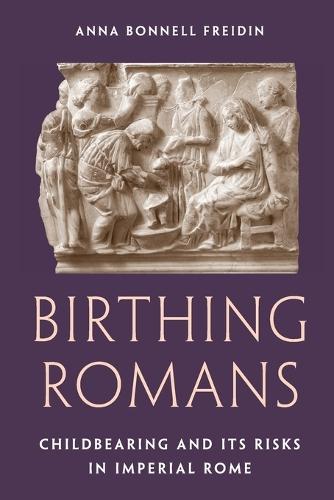
OverviewFull Product DetailsAuthor: Anna Bonnell FreidinPublisher: Princeton University Press Imprint: Princeton University Press ISBN: 9780691226286ISBN 10: 0691226288 Pages: 336 Publication Date: 26 May 2026 Audience: College/higher education , Professional and scholarly , Tertiary & Higher Education , Professional & Vocational Format: Paperback Publisher's Status: Active Availability: Not yet available, will be POD This item is yet to be released. You can pre-order this item and we will dispatch it to you upon it's release. This is a print on demand item which is still yet to be released. Table of ContentsReviews""An important contribution to understanding the cycle of pregnancy, birth – and death – in which Roman women lived. The world of Veturia, and of her invisible sisters throughout the Roman empire, comes alive in its pages.""---Helen King, Times Literary Supplement ""Birthing Romans is a compelling and powerful book""---Gaia Gianni, American Journal of Philology ""A new history of Imperial Rome that analyzes social hierarchy, imperial stability, and cultural continuity. . . . Birthing Romans broadens the understanding of Roman society by shedding light on an oftenoverlooked component of social engineering: childbearing."" * Choice * ""Birthing Romans: Childbearing and its Risks in Imperial Rome offers an in-depth analysis of how pregnancy and childbirth were understood in the Roman Empire. . . . [and] presents a cohesive argument of sufficient weight to become a key work in discussions of pregnancy, childbirth and risk management in ancient societies.""---Helena López Gómez, Bryn Mawr Classical Review ""Bonnell Freidin has demonstrated the multileveled complexities of pregnancy and childbirth, from the individual to the social. This implies a new approach to already well-known facts of risks with childbearing in antiquity and presents an alternate way of writing ancient history.""---Lena Larsson Lovén, American Historical Review ""Birthing Romans powerfully illustrates how birthing in Rome created indispensable networks, both human and non-human, influenced politics, and was fundamental to a vast and complex society. [It] is sure to become essential reading for students and scholars of Roman social, medical, and political history alike.""---Sheena Finnigan, Continuity and Change ""A fresh approach. . . .Freidin’s use of every kind of evidence and generative methodology offers an enlivening perspective on birthing, the most critical process of Roman society and, thus, of Roman history.""---Pauline Ripat, Current World Archaeology Author InformationAnna Bonnell Freidin is assistant professor of history at the University of Michigan. Tab Content 6Author Website:Countries AvailableAll regions |
||||