Overview
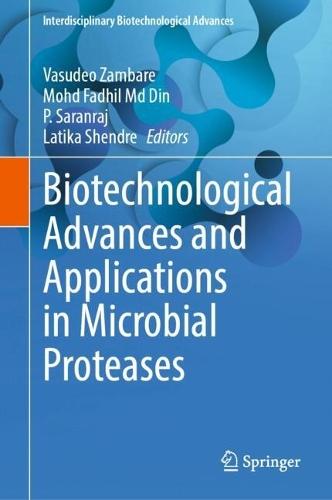
This book provides a comprehensive overview of biotechnological advances and applications in microbial proteases, offering readers a detailed understanding of their role in modern science and industry. By exploring the latest research and innovations, this volume sheds light on how microbial proteases are revolutionizing fields such as food processing, waste management, and biorefinery applications. The chapters cover a wide range of topics, including the sources and classification of microbial proteases, emerging trends in their applications, and advanced fermentation technologies for their production. Readers will discover the potential of genetic engineering and CRISPR-Cas9 techniques to enhance protease properties, as well as the use of AI and machine learning for optimization. The book also addresses the multifaceted applications of microbial proteases in dermatology, cosmetics, and the meat and poultry industries, highlighting their versatility and impact. Ideal for researchers, academics, and professionals in biotechnology, microbiology, and related fields, this book serves as an essential resource for anyone interested in the future of microbial protease technology. It is particularly relevant for those interested in the practical applications of microbial proteases and their potential to drive innovation and sustainability across various industries. This collection invites readers to consider critical questions about sustainable production, scalability, and safety considerations, making it a must-read for anyone involved in biotechnology and microbiology. It serves as a valuable resource for academics and postgraduate students engaged in microbial protease technology for food, feed, leather, waste management, and biotransformation, as well as for microbiologists, biotechnologists, environmental engineers, bioprocess engineers, analysts, biochemical engineers, and industrial entrepreneurs.
Full Product Details
Author: Vasudeo Zambare ,
Mohd Fadhil MD Din ,
P. Saranraj ,
Latika Shendre
Publisher: Springer Verlag, Singapore
Imprint: Springer Verlag, Singapore
ISBN: 9789819590100
ISBN 10: 9819590108
Pages: 532
Publication Date: 08 June 2026
Audience:
Professional and scholarly
,
Professional & Vocational
Format: Hardback
Publisher's Status: Forthcoming
Availability: Not yet available

This item is yet to be released. You can pre-order this item and we will dispatch it to you upon its release.
Author Information
Dr. Vasudeo Zambare is an R&D Head at Balaji Enzyme & Chemical Pvt Ltd. He holds Bachelor’s and Master’s degrees in Chemistry and Biochemistry from North Maharashtra University and a Ph.D. in Biochemistry from Agharkar Research Institute, Pune University. During his doctoral research, he filed three international patents. He has held leadership roles including Senior Manager, General Manager, Vice President in biotechnology industries, and served as Dean of the School of Science at Sandip University, India. Dr. Zambare has worked internationally as a Research Scientist in the USA, Postdoctoral Fellow in Canada, Project Manager on an EU Horizon 2020 project in Ireland and Research Fellow at Research Fellow at the Centre for Environmental Sustainability and Water Security (IPASA), Universiti Teknologi Malaysia. An editor and fellow of multiple scientific societies, he has over 25 years of expertise in fermentation, industrial enzymes, bioprocess development, probiotics, biofertilizers, and waste management for biofuel, food, and pharmaceutical applications. Prof. Ir. Ts Dr. Mohd Fadhil bin Md Din is a Professor of Environmental Engineering at Universiti Teknologi Malaysia (UTM) and Director of UTM Campus Sustainability. He holds a PhD in Civil Engineering from UTM under a joint program with Delft University of Technology. His expertise focuses on solid waste management, environmental sustainability, circular economy, wastewater treatment, and green technology. He has led major projects including the “Zero Waste Policy for Sustainable Services and Green Campus Community” and heads the Waste Recovery research group. He serves on the national Technical Committee on Circular Economy (SIRIM) and contributes to ESG and sustainability frameworks for higher education in Malaysia. Prof. Fadhil has received numerous national and international innovation awards and actively advises on environmental policy, sustainable campus development, and resource recovery initiatives. Dr. P. Saranraj is an Indian microbiologist, academic leader, researcher, author, ad publisher with over 15 years of research experience and more than a decade of teaching excellence. He serves as Head of the Department of Microbiology at Sacred Heart College, Tirupattur, Tamil Nadu, where he promotes research-driven education and mentors students in scientific innovation. He earned his Ph.D. in Microbiology from Annamalai University with specialization in agricultural and environmental microbiology. Dr. Saranraj holds 11 granted patents focused on sustainable microbial applications. He has organized academic courses, developed digital learning content through “Saran’s Learn Microbiology,” and published numerous scientific blogs and lectures. A recipient of multiple academic awards and member of professional scientific bodies, he is widely recognized for contributions to microbiology research, education, innovation, and scholarly publishing. Dr. Latika Shendre is a microbiologist, biotechnologist, and academician with over nine years of experience in academia, research, scientific publishing, and bioprocess development. She holds a Ph.D. in Microbiology and serves as an Assistant Professor, contributing to teaching, research supervision, curriculum development, and institutional accreditation at Dr. D. Y. Patil Biotechnology and Bioinformatics Institute. Her expertise spans microbiology, enzyme technology, bioprocess engineering, tissue engineering, and sustainable biotechnology. Her doctoral research focused on eco-friendly biosurfactant production using low-cost substrates and their application in pesticide degradation. She has guided undergraduate, postgraduate, and doctoral projects in bioethanol production, biomaterials, biodegradable packaging, and green nanotechnology. Dr. Shendre actively engages in interdisciplinary research, mentoring, and science communication, integrating research excellence with impactful teaching and ethical scientific writing.