Overview
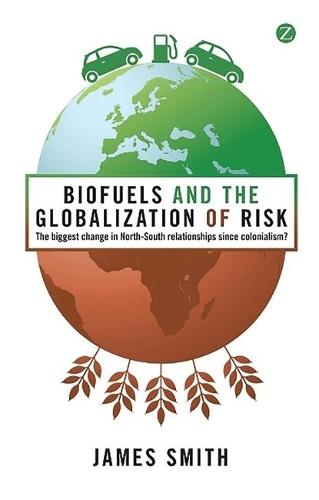
Biofuels and the Globalization of Risk offers a fresh, compelling analysis of the politics and policies behind the biofuels story, with its technological optimism and often-idealized promises for the future. This essential new critique argues that investment in biofuels may reconfigure risk and responsibility, whereby the global South is encouraged to invest its future in growing biofuel crops, often at the expense of food, in order that the global North may continue its unsustainable energy consumption unabated and guilt-free. Thus, Smith argues, biofuels may constitute the biggest change in North-South relationships since colonialism.
Full Product Details
Author: Professor James Smith
Publisher: Bloomsbury Publishing PLC
Imprint: Zed Books Ltd
Dimensions:
Width: 13.80cm
, Height: 13.80cm
, Length: 21.60cm
Weight: 0.318kg
ISBN: 9781848135710
ISBN 10: 1848135718
Pages: 160
Publication Date: 11 November 2010
Audience:
College/higher education
,
Postgraduate, Research & Scholarly
Format: Hardback
Publisher's Status: Active
Availability: Manufactured on demand

We will order this item for you from a manufactured on demand supplier.
Reviews
This is a revolutionary body of work that analyses the allure of biofuels from a global, historical and political perspective. Nuances of why the global debate on biofuels, climate change, and sustainable development have lost resonance with the livelihoods and local perspective are explored. The question of whether the biofuel system offers emerging economies, and local communities the opportunity of being exigent from the colonial paradigm is probed. - Professor Judi Wakhungu, Director of the African Centre of Technology Studies 'James Smith has produced an incredibly important book for anyone interested in why global investment in biofuels continues to expand at breakneck speed despite the technology's current inherent inability to make any significant impact on energy security or green house gas emissions.' - Simon Trace, CEO Practical Action 'iofuels have received a huge amount of attention in the past few years and Smith has done an excellent job in bringing to our attention their potential and unforeseen consequences. By their nature, biofuels involve complex issues and I agree with him that we simple do not understand yet the gamut of interactions and implications; bioenergy is constantly evolving, interacting and shaping interlocking systems. Smith examines key uncertainties in science, knowledge and methodology that drive the uncertainty of potential impacts of biofuels, and the increasing control of multinationals of the biofuel industry. Biofuels, Smith states (p.130), risk generating not energy but a false sense of sustainability. Biofuels promise a supposedly radical new way of generating energy in the most benign manner possible, by changing very little at all. As Smith says, we need to avoid undue pessimism but at the same time we need to be imbued with realism. I do not share some of his conclusions, however. For example, bioenergy and biofuels is used interchangeably while they represent different things. Smith overstates the potential impacts of biofuels when they still represent a very small proportion of land use and oil replacement e.g. he states that we are witnessing land use changes of unprecedented scale, and new global connections of unparalleled scope (p.91), largely attributed to biofuels, when in reality it is due to many complex factors. He also often gives the impression that biofuels will be used in large scale when this is highly unlikely, at least in a global scale. Understanding the role of agriculture is fundamental to the future role of biofuels production and should be given greater prominence. Another area he largely ignores is the potential negative impacts of subsidies of fossil fuels. Overall, I strongly recommend the reading of this book, for the expert and non-expert and politicians. If biofuels are to play an important role in our energy future, it is imperative we address all questions including uncomfortable ones, as Smith has done in this book.' Frank Rosillio-Calle, Imperial College
'This is a revolutionary body of work that analyses the allure of biofuels from a global, historical and political perspective. Nuances of why the global debate on biofuels, climate change, and sustainable development have lost resonance with the livelihoods and local perspective are explored. The question of whether the biofuel system offers emerging economies, and local communities the opportunity of being exigent from the colonial paradigm is probed.' - Professor Judi Wakhungu, Director of the African Centre of Technology Studies 'James Smith has produced an incredibly important book for anyone interested in why global investment in biofuels continues to expand at breakneck speed despite the technology's current inherent inability to make any significant impact on energy security or green house gas emissions.' - Simon Trace, CEO Practical Action 'Biofuels have received a huge amount of attention in the past few years and Smith has done an excellent job in bringing to our attention their potential and unforeseen consequences. By their nature, biofuels involve complex issues and I agree with him that we simple do not understand yet the gamut of interactions and implications; bioenergy is constantly evolving, interacting and shaping interlocking systems. Smith examines key uncertainties in science, knowledge and methodology that drive the uncertainty of potential impacts of biofuels, and the increasing control of multinationals of the biofuel industry ...Overall, I strongly recommend the reading of this book, for the expert and non-expert and politicians. If biofuels are to play an important role in our energy future, it is imperative we address all questions including uncomfortable ones, as Smith has done in this book.' Frank Rosillio-Calle, Imperial College
Author Information
James Smith is co-director of and a senior lecturer in the Centre of African Studies at the University of Edinburgh. He is also a director at the ESRC Innogen Research Center at Edinburgh and a visiting fellow in development policy and practice at the Open University. He has worked with many international organizations and research centers including Oxfam, DFID, IDRC and the Consultative Group for International Agricultural Research.