Overview
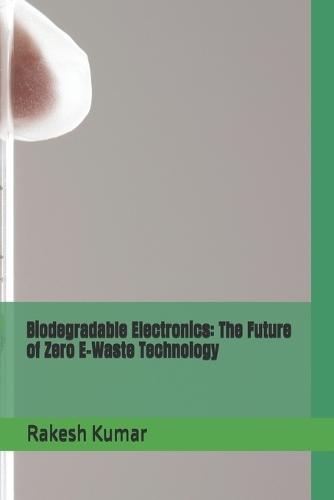
Technology has transformed nearly every aspect of modern life. From smartphones and medical devices to smart homes, industrial automation, and global communication networks, electronics have become the foundation of progress. Yet behind this extraordinary advancement lies one of the fastest-growing environmental challenges of our time: electronic waste, or e-waste. Millions of discarded devices, batteries, wires, and components are generated every year, many of which contain hazardous materials that pollute land, air, and water. As the demand for technology continues to rise, the need for sustainable alternatives has never been more urgent. This book explores a bold and necessary vision: the creation of a zero e-waste future through the power of biodegradable electronics, circular design, green manufacturing, and responsible innovation. It examines how the next generation of electronic systems can be designed not only to perform efficiently, but also to minimize harm, recover value, and safely return to nature when their purpose is complete. At the heart of this transformation is the field of biodegradable electronics-devices made from eco-friendly materials such as cellulose, silk fibroin, organic semiconductors, magnesium, zinc, and carbon-based nanomaterials. Unlike conventional electronics that remain in landfills for decades, these emerging systems are designed to dissolve, decompose, or be composted under controlled conditions. Their applications range from temporary medical implants and wearable health sensors to smart packaging, environmental monitoring systems, agricultural devices, and disposable IoT networks. The journey toward sustainable technology, however, extends beyond materials alone. This book also highlights the importance of ethical manufacturing, life cycle assessment, repairable and modular design, reuse and recycling systems, and circular economy strategies that keep valuable resources in continuous use. Readers will discover how industries, governments, educational institutions, and individuals all play vital roles in reducing waste and reshaping the technology ecosystem. In addition, the book explores how advanced technologies such as artificial intelligence, nanotechnology, 3D printing, printed electronics, and smart supply chains are accelerating innovation in this space. AI can optimize material discovery and product lifecycle planning. Nanotechnology can enhance performance while reducing material consumption. Additive manufacturing can reduce waste during production. Together, these tools are helping engineers build smarter and greener systems. To make these concepts practical and engaging, the book includes case studies, pilot projects from around the world, hands-on experiments, simple prototyping ideas, and industry success stories. It is written for students, engineers, researchers, entrepreneurs, sustainability leaders, and curious readers who want to understand how technology can evolve in harmony with the planet. The goal of this book is not only to present technical knowledge, but to inspire a new mindset: one where innovation is measured not only by speed and power, but also by responsibility, regeneration, and long-term impact. The future of electronics does not have to end in waste. It can begin with design, continue with purpose, and conclude with renewal. This book invites you to explore that future.
Full Product Details
Author: Rakesh Kumar
Publisher: Independently Published
Imprint: Independently Published
Dimensions:
Width: 15.20cm
, Height: 3.90cm
, Length: 22.90cm
Weight: 1.025kg
ISBN: 9798258694522
Pages: 780
Publication Date: 24 April 2026
Audience:
General/trade
,
General
Format: Paperback
Publisher's Status: Active
Availability: Available To Order

We have confirmation that this item is in stock with the supplier. It will be ordered in for you and dispatched immediately.