Overview
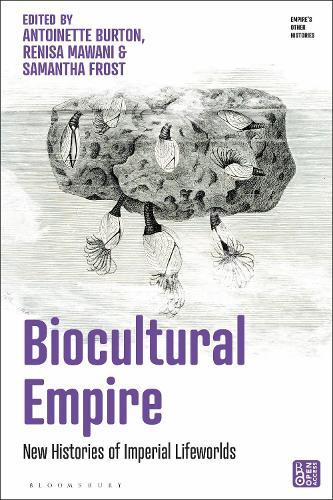
Human species supremacy is one of the most persistent fictions at work in the field of modern British imperial history today. This open access collection challenges that assumption, and investigates what histories of empire look like if reimagined as the effect of biocultural, chemical and cultural processes, rather than the result of effects by humans that have been visited upon cultural landscapes, fauna and biomes. In understanding the boundaries between human and nonhuman worlds as porous and open to mutual transformation, and foregrounding interspecies interactions, Biocultural Empire seeks to understand the conditions of imperial power, experience and knowledge as a remix of ‘nature’ and ‘culture’. Bringing empire’s ‘biocultural histories’ to the fore, it asks imperial historians to reckon with an interpretative framework which refuses the sovereignty and boundedness of the imperial subject by seeing it as inseparable from its social and ecological formations. Through this biocultural framework this collection highlights how relentlessly the human species bias of western liberal thought persists at the heart of imperial projects and their histories, and offers a new anti-colonial method that represents a significant intervention in the field of British imperial history. The ebook editions of this book are available open access under a CC BY-NC-ND 4.0 licence on bloomsburycollections.com. Open access was funded by University of Illinois, USA and University of British Columbia, Canada.
Full Product Details
Author: Professor Antoinette Burton (University of Illinois at Urbana-Champaign, USA) , Renisa Mawani (University of British Columbia, Canada) , Samantha Frost (University of Illinois, USA)
Publisher: Bloomsbury Publishing PLC
Imprint: Bloomsbury Academic
Dimensions:
Width: 15.50cm
, Height: 1.80cm
, Length: 23.10cm
Weight: 0.520kg
ISBN: 9781350451056
ISBN 10: 1350451053
Pages: 240
Publication Date: 12 December 2024
Audience:
Professional and scholarly
,
Professional & Vocational
Format: Hardback
Publisher's Status: Active
Availability: Manufactured on demand 
We will order this item for you from a manufactured on demand supplier.
Language: English
Table of Contents
Acknowledgements List of Maps, Illustrations and Tables Notes on Contributors Introduction: Biocultural Empires as an Anti-colonial Method, Antoinette Burton (University of Illinois, USA) Renisa Mawani (University of British Columbia, Canada), Samantha Frost (University of Illinois, USA) 1. Very Like a Whale: Animal Metaphors and the Biocultural Imagination, Jamie Jones 2. Biocultural Histories of the Black Anthropocene: Energy, Consumption, and Non-Human Worlds in The History of Barbados and The History of Mary Prince, Anna Feuerstein, (University of Hawaii, USA) 3. A Victorian Parliament of Animals; or, the Biocultural as Imperial Political Form, Antoinette Burton (University of Illinois, USA) 4. Ganja and the Godhead: Plant Matter and the Sacral Binds of the Excise Principle in British India, Utathya Chattopadhyaya (UC-Santa Barbara, USA) 5. The Royal Sacred Hairy Family of Burmah: Human Difference and Biocultural Empire in the Nineteenth Century, Jonathan Saha, (Durham University, UK) 6. History in the Water(s): Water and Empire in North America’s Wet Centre”, Adele Perry, (University of Manitoba, Canada) 7. Strangers, Difference and the Darkness of Empire: The HMB Endeavour in New Zealand, Tony Ballantyne (University of Otago, New Zealand) 8. Papering over Muddy Histories: Imperial Logics of Space in the Anthropocene, Debjani Bhattacharya (University of Zurich, Switzerland) Bibliography Index
Reviews
This provocative collection takes imperial history where it has seldom been before, re-imagining empire as a consequence of biocultural processes. Compelling essays illustrate this approach whether through keratin, chromosomes, whales, plants, water, mud and more. An essential guide for doing radical imperial history in the age of the Anthropocene. * Isabel Hofmeyr, Professor Emeritus, University of the Witwatersrand, South Africa *
Author Information
Antoinette Burton is Professor of History and Swanlund Endowed Professor at University of Illinois Urbana-Champaign, USA. A feminist historian of the British Empire whose work has focused on women, gender, race and intersectional approaches, she is the author of six monographs and many edited collections including (with Renisa Mawani) Animalia: An Anti-Imperial Bestiary for Our Times (2020). Renisa Mawani is Canada Research Chair in Colonial Legal Histories and Professor of Sociology at the University of British Columbia, Canada, located on the unceded territories of the Musqueam peoples. She is the author of Colonial Proximities (2009) and Across Oceans of Law (2018), which was a finalist for the U.K. Socio-Legal Studies Association Theory and History Book Prize (2020) and winner of the Association of Asian American Studies Book Prize for Outstanding Contribution to History (2020). With Antoinette Burton, she is co-editor of Animalia: An Anti-Imperial Bestiary for Our Times (2020). Samantha Frost is Professor of political theory in the Department of Political Science, the Department of Gender and Women’s Studies, and the Unit for Criticism and Contemporary Theory at the University of Illinois, Urbana-Champaign, USA. She is the author of Biocultural Creatures: Toward A New Theory of the Human (2016), which elucidates the conceptual significance of the plasticity of the biological body.
Tab Content 6
Author Website:
Countries Available
All regions
|