|
|
|||
|
||||
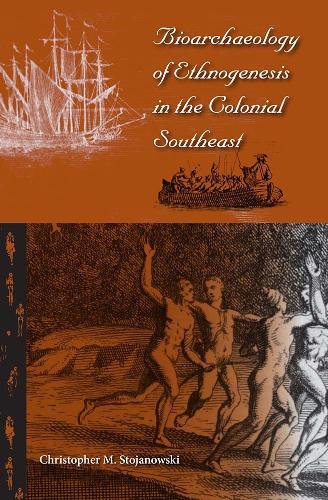
OverviewChristopher Stojanowski seeks to understand changes in social identities among Christianised Native Americans living within Franciscan missions during the Spanish colonial period. His novel contribution is attempting to reconstruct identity transformation through skeletal analysis within a microevolutionary framework. Key to this narrative is a detailed, contextual analysis of data gathered from mission cemetery remains of Apalachee, Timucua, and Guale individuals interpreted within broad historical trends and social theoretical constructions of ethnicity and ethnogenesis. Stojanowski's investigation of biological data gathered from these earlier groups may help scientists trace the ethnogenesis of the present-day Seminole tribe in Florida. Analyses suggest the native communities throughout northern Florida and coastal Georgia were developing a common social identity by the end of the seventeenth century--a fact that allows for reinterpretation of eighteenth-century ideas about Seminole origins. In this intriguing and controversial investigation, Stojanowski strives to bridge the divide between the social world of humans and the biological aspects of our lives by linking patterns of past skeletal variation to patterns of group affinity and identification. Full Product DetailsAuthor: Christopher M. StojanowskiPublisher: University Press of Florida Imprint: University Press of Florida Dimensions: Width: 15.20cm , Height: 1.50cm , Length: 22.80cm Weight: 0.456kg ISBN: 9780813049038ISBN 10: 0813049032 Pages: 256 Publication Date: 30 April 2013 Audience: College/higher education , Undergraduate , Postgraduate, Research & Scholarly Format: Paperback Publisher's Status: Active Availability: Manufactured on demand We will order this item for you from a manufactured on demand supplier. Table of ContentsReviewsAuthor InformationChristopher M. Stojanowski is coeditor of Bioarchaeology and Identity in the Americas. Tab Content 6Author Website:Countries AvailableAll regions |
||||