Overview
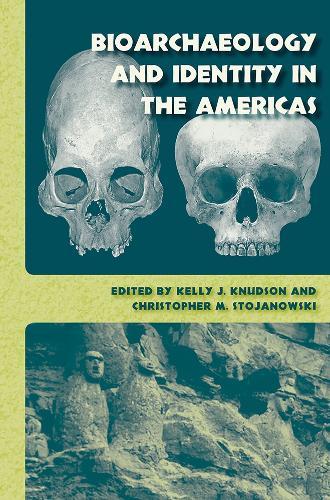
Bioarchaeology and Identity in the Americas represents an important shift in the interpretation of skeletal remains in the Americas. Until recently, bioarchaeology has focused on interpreting and analyzing populations. The contributors here look to examine how individuals fit into those larger populations. The overall aim is to demonstrate how bioarchaeologists can uniquely contribute to our understanding of the formation, representation, and repercussions of identity. The contributors combine historical and archaeological data with population genetic analyses, biogeochemical analyses of human tooth enamel and bones, mortuary patterns, and body modifications. With case studies drawn from North, Central, and South American mortuary remains from AD 500 to the Colonial period, they examine a wide range of factors that make up identity, including ethnicity, age, gender, and social, political, and religious constructions. By adding a valuable biological element to the study of culture--a topic traditionally associated with social theorists, ethnographers, and historical archaeologies--this volume highlights the importance of skeletal evidence in helping us better understand our past.
Full Product Details
Author: Kelly J. Knudsen ,
Christopher M. Stojanowski
Publisher: University Press of Florida
Imprint: University Press of Florida
Dimensions:
Width: 15.20cm
, Height: 1.50cm
, Length: 22.80cm
Weight: 0.333kg
ISBN: 9780813036786
ISBN 10: 081303678
Pages: 272
Publication Date: 29 November 2010
Audience:
Professional and scholarly
,
Professional & Vocational
Format: Paperback
Publisher's Status: Active
Availability: In Print

This item will be ordered in for you from one of our suppliers. Upon receipt, we will promptly dispatch it out to you. For in store availability, please contact us.
Reviews
Extends discussions of identity beyond the social meaning of age, sex, and social role to larger issues of group identity and ethnogenesis. The integration of biological and mortuary data results in new approaches to the construction of social identity. --Dale L. Hutchinson, University of North Carolina Represents an important shift in the interpretation of skeletal remains in the Americas and is therefore highly significant. Also of interest to other social scientists investigating the biological and social nature of identity and embodiment, as well as to scholars whose geographical area of expertise lies outside the Americas. --Rebecca Gowland, Durham University
"Extends discussions of identity beyond the social meaning of age, sex, and social role to larger issues of group identity and ethnogenesis. The integration of biological and mortuary data results in new approaches to the construction of social identity.""--Dale L. Hutchinson, University of North Carolina ""Represents an important shift in the interpretation of skeletal remains in the Americas and is therefore highly significant. Also of interest to other social scientists investigating the biological and social nature of identity and embodiment, as well as to scholars whose geographical area of expertise lies outside the Americas.""--Rebecca Gowland, Durham University"
Extends discussions of identity beyond the social meaning of age, sex, and social role to larger issues of group identity and ethnogenesis. The integration of biological and mortuary data results in new approaches to the construction of social identity.""--Dale L. Hutchinson, University of North Carolina ""Represents an important shift in the interpretation of skeletal remains in the Americas and is therefore highly significant. Also of interest to other social scientists investigating the biological and social nature of identity and embodiment, as well as to scholars whose geographical area of expertise lies outside the Americas.""--Rebecca Gowland, Durham University
Author Information
Kelly J. Knudson is assistant professor and founding member of the Center for Bioarchaeological Research at Arizona State University. Christopher M. Stojanowski, assistant professor and founding member of the Center for Bioarchaeological Research at Arizona State University, is the author of Biocultural Histories in La Florida.