|
|
|||
|
||||
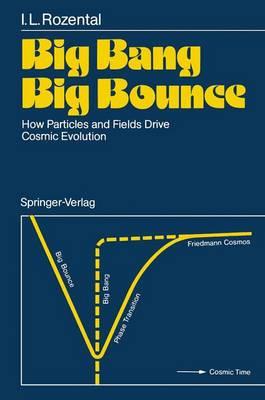
OverviewIn a foreword, an author usually elucidates the aim of his book and describes an idealized reader to whom it is addressed. The first task - the formulation of the scope of the book - is the easier one, for the second one involves assessing a reader's personality, and no ""specification"" should warrant the author's being accused of snobbery, underestimating the reader, or other sins of that kind. It is natural to commence with the first task. The last two decades have been marked by extreme, albeit somewhat unexpected, progress in the unifying approaches to fundamental physical theories. During the same time, a reasonably consistent picture of the early stages in the evolution of the Universe, starting from the time'"" 1 s reckoned from the beginning of its inflation, began to take shape. These questions have been separately treated at very different levels; their systematic presentation is the subject of monographs, sometimes very solid ones, containing many formulas not tractable for a layman. Full Product DetailsAuthor: Iosif L. Rozental , Juri EstrinPublisher: Springer-Verlag Berlin and Heidelberg GmbH & Co. KG Imprint: Springer-Verlag Berlin and Heidelberg GmbH & Co. K Edition: Softcover reprint of the original 1st ed. 1988 Dimensions: Width: 15.50cm , Height: 0.70cm , Length: 23.50cm Weight: 0.245kg ISBN: 9783540179047ISBN 10: 3540179046 Pages: 129 Publication Date: 22 January 1988 Audience: College/higher education , Professional and scholarly , Postgraduate, Research & Scholarly , Professional & Vocational Format: Paperback Publisher's Status: Active Availability: Out of stock The supplier is temporarily out of stock of this item. It will be ordered for you on backorder and shipped when it becomes available. Table of Contents1 Elementary Particles.- 1.1 Fundamental Interactions.- 1.2 Quantum Numbers of Elementary Particles.- 1.3 Basics of Classification of Elementary Particles.- 1.4 How Elementary Particles Interact.- 1.5 Unified Field Theories.- 1.6 Proton Decay.- 2 The Universe.- 2.1 A Bit of History.- 2.2 Friedmann’s Model of the Universe.- 2.3 Evolution of the Universe: A Quantitative Analysis.- 2.4 The Universe: Open or Closed?.- 2.5 A Hot Universe.- 2.6 Baryonic Asymmetry of the Universe.- 2.7 Cosmologic Nucleosynethesis of Helium.- 2.8 The Origin of Galaxies.- 2.9 Stars.- 3 The Universe and the Elementary Particles.- 3.1 On the Relation between the Characteristic of Stars and of the Elementary Particles.- 3.2 Structure of the Universe and the Mass of the Elementary Particles.- 3.3 Structure of the Universe and the Fundamental Interaction Constants.- 3.4 The Dimension of Space.- 3.5 Structure of the Universe and Quantum Numbers of Elementary Particles.- 3.6 The Anthropic Principle.- 3.7 On the Numerical Values of the Fundamental Constants.- 3.8 Conclusion.- 4. The Beginning and End of the Metagalaxy.- 4.1 Updating our Knowledge of the Metagalaxy.- 4.2 Describing the Metagalaxy.- 4.3 The Universality of the Physical Laws.- 4.4 The Very Beginning.- 4.5 Models of the Metagalaxy.- 4.6 The Friedmann Model.- 4.7 The Physical Vacuum.- 4.8 The de Sitter Model: The Beginning of the Metagalaxy.- 4.9 The Structure of the Metagalaxy and the Fundamental Constants.- 4.10 The Metagalaxy as a Fluctuation.- 4.11 The Anthropic Principle.- 4.12 The Birth of the Metagalaxy and of Metagalaxies.- 4.13 Future of the Metagalaxy.ReviewsAuthor InformationTab Content 6Author Website:Countries AvailableAll regions |
||||