|
|
|||
|
||||
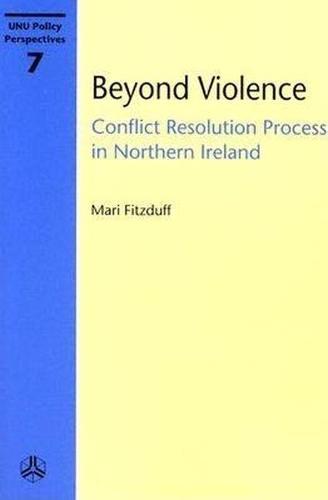
OverviewAfter almost 30 years of bloody conflict, the opposing parties in Northern Ireland signed the ""Good Friday Agreement"" in 1998, a document that specifies how to share power, thus bringing to an end the fighting that had claimed so many lives. What were the processes of conflict resolution that enabled Northern Ireland to move beyond violence and agree to such a settlement? Mari Fitzduff was involved in many of these processes and was a close observer of the others. Drawing on her extensive experience, she outlines the strategic developments, arrived at slowly and with difficulty over the years, that enabled agreement to be reached. These include programmes that successfully addressed the inequalities between the Protestant and Catholic communities, resulting in a more positive approach to cultural and political diversity and a significant decrease in tensions. The book contains practical insights for other nations struggling to manage and resolve ethnic, religious, political, or cultural conflicts. Full Product DetailsAuthor: Mari FitzduffPublisher: United Nations University Imprint: United Nations University Edition: illustrated edition Volume: 7 Dimensions: Width: 15.20cm , Height: 1.30cm , Length: 22.90cm Weight: 0.020kg ISBN: 9789280810783ISBN 10: 9280810782 Pages: 228 Publication Date: 30 October 2002 Audience: College/higher education , Professional and scholarly , Tertiary & Higher Education , Professional & Vocational Format: Paperback Publisher's Status: Active Availability: In Print This item will be ordered in for you from one of our suppliers. Upon receipt, we will promptly dispatch it out to you. For in store availability, please contact us. Table of ContentsReviewsAuthor InformationMari Fitzduff is the director of UNU/INCORE, an international conflict research center and joint initiative of the University of Ulster and the United Nations University. She is also a professor of Conflict Studies at the University of Ulster. A former chief executive of the Northern Ireland Community Relations Council, she has undertaken conflict resolution work in the Basque Country, Sri Lanka, the Middle East, Indonesia, the Baltics, and the CIS States. Tab Content 6Author Website:Countries AvailableAll regions |
||||