Overview
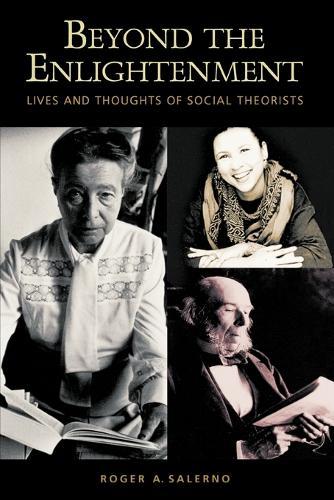
Important ideas that helped shape 20th-century thought—ideas which continue to hold great significance for anyone interested in the social world—are made accessible in this illuminating volume. Readers will be motivated to delve into the deeper pool of knowledge available on major social theorists and their groundbreaking ideas. A mixture of biographical and historical ideas, this book was written to introduce social theory to a broad audience. It looks at the intersection between the theorist as a social actor and as a reflection of his or her time. The volume's breadth makes it a useful tool for those interested in sociology and its many luminaries.
Full Product Details
Author: Roger A. Salerno
Publisher: Bloomsbury Publishing Plc
Imprint: Praeger Publishers Inc
Dimensions:
Width: 15.20cm
, Height: 1.30cm
, Length: 22.90cm
Weight: 0.397kg
ISBN: 9780275977252
ISBN 10: 0275977250
Pages: 256
Publication Date: 30 July 2004
Recommended Age: From 7 to 17 years
Audience:
General/trade
,
Professional and scholarly
,
College/higher education
,
General
,
Professional & Vocational
Format: Paperback
Publisher's Status: Active
Availability: Manufactured on demand

We will order this item for you from a manufactured on demand supplier.
Reviews
[R]eaders will find nuggets of new or unfamiliar information about many contemporary theorists. The book can serve as a handy reference tool for professors and as a concise introduction to the history of modern social thought for students. Recommended. All academic levels/libraries. -Choice R eaders will find nuggets of new or unfamiliar information about many contemporary theorists. The book can serve as a handy reference tool for professors and as a concise introduction to the history of modern social thought for students. Recommended. All academic levels/libraries. -Choice ?[R]eaders will find nuggets of new or unfamiliar information about many contemporary theorists. The book can serve as a handy reference tool for professors and as a concise introduction to the history of modern social thought for students. Recommended. All academic levels/libraries.?-Choice ?Roger Salerno's Beyond the Enlightenment is clearly an unusual book among the various social theory texts available on the current market. He should be commended merely for taking the venture off the beaten track, and perhaps for more than just that....The general outlay of the work is an amazing 29 brief discussions of the biographical contexts, major works, and key ideas of social theorists....[t]he book will enjoy a limited but faithful adoption in social theory courses and a more circumscribed success elsewhere. It might also be a handy reference for professors who want to spice up their lectures with biographical material on a wide range of social theorists. Salerno has provided a book that is a little offbeat, but not so revolutionary that professors will have difficulty incorporating it with standard teaching practices in social theory courses.?-Teaching Sociology Roger Salerno's Beyond the Enlightenment is clearly an unusual book among the various social theory texts available on the current market. He should be commended merely for taking the venture off the beaten track, and perhaps for more than just that....The general outlay of the work is an amazing 29 brief discussions of the biographical contexts, major works, and key ideas of social theorists....[t]he book will enjoy a limited but faithful adoption in social theory courses and a more circumscribed success elsewhere. It might also be a handy reference for professors who want to spice up their lectures with biographical material on a wide range of social theorists. Salerno has provided a book that is a little offbeat, but not so revolutionary that professors will have difficulty incorporating it with standard teaching practices in social theory courses. -Teaching Sociology
Roger Salerno's Beyond the Enlightenment is clearly an unusual book among the various social theory texts available on the current market. He should be commended merely for taking the venture off the beaten track, and perhaps for more than just that....The general outlay of the work is an amazing 29 brief discussions of the biographical contexts, major works, and key ideas of social theorists....[t]he book will enjoy a limited but faithful adoption in social theory courses and a more circumscribed success elsewhere. It might also be a handy reference for professors who want to spice up their lectures with biographical material on a wide range of social theorists. Salerno has provided a book that is a little offbeat, but not so revolutionary that professors will have difficulty incorporating it with standard teaching practices in social theory courses. -Teaching Sociology
[R]eaders will find nuggets of new or unfamiliar information about many contemporary theorists. The book can serve as a handy reference tool for professors and as a concise introduction to the history of modern social thought for students. Recommended. All academic levels/libraries. -Choice YReaders will find nuggets of new or unfamiliar information about many contemporary theorists. The book can serve as a handy reference tool for professors and as a concise introduction to the history of modern social thought for students. Recommended. All academic levels/libraries. -Choice ?[R]eaders will find nuggets of new or unfamiliar information about many contemporary theorists. The book can serve as a handy reference tool for professors and as a concise introduction to the history of modern social thought for students. Recommended. All academic levels/libraries.?-Choice ?Roger Salerno's Beyond the Enlightenment is clearly an unusual book among the various social theory texts available on the current market. He should be commended merely for taking the venture off the beaten track, and perhaps for more than just that....The general outlay of the work is an amazing 29 brief discussions of the biographical contexts, major works, and key ideas of social theorists....[t]he book will enjoy a limited but faithful adoption in social theory courses and a more circumscribed success elsewhere. It might also be a handy reference for professors who want to spice up their lectures with biographical material on a wide range of social theorists. Salerno has provided a book that is a little offbeat, but not so revolutionary that professors will have difficulty incorporating it with standard teaching practices in social theory courses.?-Teaching Sociology Roger Salerno's Beyond the Enlightenment is clearly an unusual book among the various social theory texts available on the current market. He should be commended merely for taking the venture off the beaten track, and perhaps for more than just that....The general outlay of the work is an amazing 29 brief discussions of the biographical contexts, major works, and key ideas of social theorists....[t]he book will enjoy a limited but faithful adoption in social theory courses and a more circumscribed success elsewhere. It might also be a handy reference for professors who want to spice up their lectures with biographical material on a wide range of social theorists. Salerno has provided a book that is a little offbeat, but not so revolutionary that professors will have difficulty incorporating it with standard teaching practices in social theory courses. -Teaching Sociology
Author Information
ROGER A. SALERNO is Professor of Sociology at Pace University.