Overview
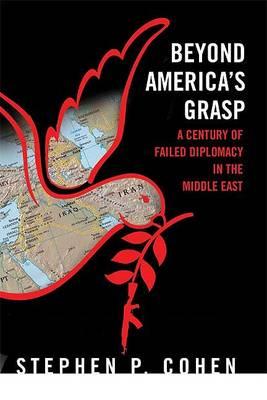
AN INCISIVE WHITE PAPER ON THE UNITED STATES'S STRUGGLE TO FRAME A COHERENT MIDDLE EAST POLICY In this book, the Middle East expert Stephen P. Cohen traces U.S. policy in the region back to the breakup of the Ottoman Empire, when the Great Powers failed to take crucial steps to secure peace there. He sees in that early diplomatic failure a pattern shaping the conflicts since then--and America's role in them. A century ago, there emerged two dominant views regarding the uses of America's newfound power. Woodrow Wilson urged America to promote national freedom and self-determination through the League of Nations--in stark contrast to his predecessor Theodore Roosevelt, who had advocated a vigorous foreign policy based on national self-interest. Cohen argues that this running conflict has hobbled American dealings in the Middle East ever since. In concise, pointed chapters, he shows how different Middle East countries have struggled to define themselves in the face of America's stated idealism and its actual realpolitik. This conflict came to a head in the confused, clumsy Middle East policy of George W. Bush--but Cohen suggests the ways a greater awareness of our history in the region might enable our present leaders to act more sensibly.
Full Product Details
Author: Stephen P Cohen, PhD (The Brookings Institution USA)
Publisher: Farrar, Straus & Giroux Inc
Imprint: Farrar, Straus & Giroux Inc
Dimensions:
Width: 16.00cm
, Height: 2.50cm
, Length: 23.60cm
Weight: 0.522kg
ISBN: 9780374281243
ISBN 10: 0374281246
Pages: 284
Publication Date: 04 November 2009
Audience:
General/trade
,
General
Format: Hardback
Publisher's Status: Out of Stock Indefinitely
Availability: In Print

Limited stock is available. It will be ordered for you and shipped pending supplier's limited stock.
Reviews
""In what should become required reading for those interested in the Middle East, Cohen, director of the Institute of Middle East Peace and Development, provides a richly detailed history of diplomacy in the region and its implications for current relations. The book begins with Woodrow Wilson's idealistic initiatives, which germinated into a 'confused legacy [that] continues to be at the heart of the problem between the United States and the Middle East.' Cohen takes a tour of major players and key events, including Egypt and its nationalist movement, Iran under British imperialism, the roots of a Saudi-U.S. alliance and the evolution of the Israeli-Palestinian conflict. Cohen provides broad suggestions for contemporary diplomacy, generally emphasizing the importance of avoiding a 'one-size-fits-all' policy. He discusses policies in the region of both Bush administrations, and remains timely in presaging the new administration's diplomatic message. When Cohen concludes, 'To overcome de
In what should become required reading for those interested in the Middle East, Cohen, director of the Institute of Middle East Peace and Development, provides a richly detailed history of diplomacy in the region and its implications for current relations. The book begins with Woodrow Wilson's idealistic initiatives, which germinated into a 'confused legacy [that] continues to be at the heart of the problem between the United States and the Middle East.' Cohen takes a tour of major players and key events, including Egypt and its nationalist movement, Iran under British imperialism, the roots of a Saudi-U.S. alliance and the evolution of the Israeli-Palestinian conflict. Cohen provides broad suggestions for contemporary diplomacy, generally emphasizing the importance of avoiding a 'one-size-fits-all' policy. He discusses policies in the region of both Bush administrations, and remains timely in presaging the new administration's diplomatic message. When Cohen concludes, 'To overcome de
In what should become required reading for those interested in the Middle East, Cohen, director of the Institute of Middle East Peace and Development, provides a richly detailed history of diplomacy in the region and its implications for current relations. The book begins with Woodrow Wilson’s idealistic initiatives, which germinated into a 'confused legacy [that] continues to be at the heart of the problem between the United States and the Middle East.' Cohen takes a tour of major players and key events, including Egypt and its nationalist movement, Iran under British imperialism, the roots of a Saudi-U.S. alliance and the evolution of the Israeli-Palestinian conflict. Cohen provides broad suggestions for contemporary diplomacy, generally emphasizing the importance of avoiding a 'one-size-fits-all' policy. He discusses policies in the region of both Bush administrations, and remains timely in presaging the new administration’s diplomatic message. When Cohen concludes, 'To