|
|
|||
|
||||
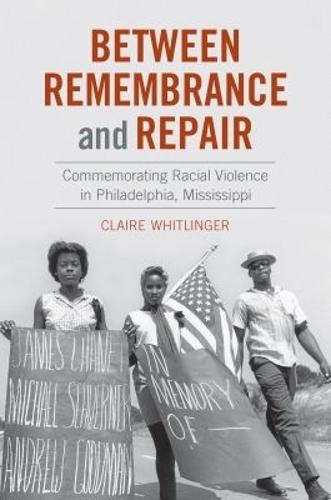
OverviewFew places are more notorious for civil rights–era violence than Philadelphia, Mississippi, the site of the 1964 ""Mississippi Burning"" murders. Yet in a striking turn of events, Philadelphia has become a beacon in Mississippi's racial reckoning in the decades since. Claire Whitlinger investigates how this community came to acknowledge its past, offering significant insight into the social impacts of commemoration. Examining two commemorations around key anniversaries of the murders held in 1989 and 2004, Whitlinger shows the differences in how those events unfolded. She also charts how the 2004 commemoration offered a springboard for the trial of former Klan leader Edgar Ray Killen for his role in the 1964 murders, the 2006 passage of Mississippi's Civil Rights/Human Rights education bill, and the initiation of the Mississippi Truth Project. In doing so, Whitlinger provides the first comprehensive account of these high profile events and expands our understanding of how commemorations both emerge out of and catalyze associated memory movements. Threading a compelling story with theoretical insights, Whitlinger delivers a study that will help scholars, students, and activists alike better understand the dynamics of commemorating difficult pasts, commemorative practices in general, and the links between memory, race, and social change. Full Product DetailsAuthor: Claire WhitlingerPublisher: The University of North Carolina Press Imprint: The University of North Carolina Press Dimensions: Width: 15.50cm , Height: 1.70cm , Length: 23.30cm Weight: 0.450kg ISBN: 9781469656335ISBN 10: 1469656337 Pages: 304 Publication Date: 30 May 2020 Audience: Professional and scholarly , College/higher education , General/trade , Professional & Vocational , Postgraduate, Research & Scholarly Format: Paperback Publisher's Status: Active Availability: Manufactured on demand We will order this item for you from a manufactured on demand supplier. Table of ContentsReviewsWhitlinger provides a compelling, analytically rich study that makes meaningful contributions to multiple disciplines. She unpacks how collective memory can translate into structural change, and in doing so provides an additional--and powerful--explanation of why commemorating racial violence matters. For anyone trying to understand how commemorating the past can change the present, Between Remembrance and Repair has much to offer.--H-Net Reviews Author InformationClaire Whitlinger is assistant professor of sociology at Furman University. Tab Content 6Author Website:Countries AvailableAll regions |
||||