|
|
|||
|
||||
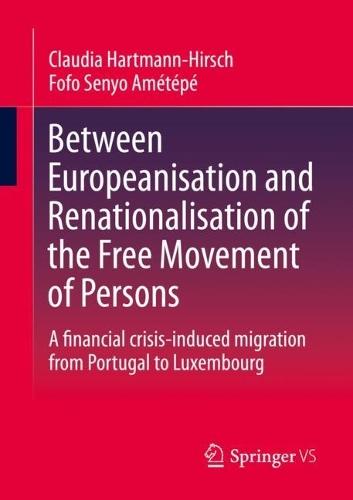
OverviewLuxembourg has an atypical, efficient migration. The recent Portuguese underclass themselves in the same way as their predecessors of the Salazar regime, despite higher educational attainment, while the citizens of the new member states move to the top of the pyramid. The strong north-south divide between Luxembourg and Portugal is illustrated by a number of indicators. Freedom of movement is reduced and renationalised by ECJ rulings on the initiative of northern member states against southern European crisis 'refugees'. The categories of EU citizens versus third-country nationals develop into economically strong EU and non-EU migrants versus weak EU and non-EU migrants. Full Product DetailsAuthor: Claudia Hartmann-Hirsch , Fofo Senyo AmétépéPublisher: Springer Fachmedien Wiesbaden Imprint: Springer VS Edition: 1st ed. 2023 Weight: 0.264kg ISBN: 9783658408138ISBN 10: 3658408138 Pages: 181 Publication Date: 10 August 2023 Audience: Professional and scholarly , Professional & Vocational Format: Paperback Publisher's Status: Active Availability: Manufactured on demand We will order this item for you from a manufactured on demand supplier. Language: German Table of ContentsLuxembourg's atypical migration.- Nation state, EU, migration: a systems theory approach.- Luxembourg - Portugal: push-and-pull factors.- Statistical analysis of the 'new' Portuguese.- Europeanisation and renationalisation, restrictions on free movement.- Qualitative interviews with social partners, political parties and NGOs.ReviewsAuthor InformationDr. Claudia Hartmann-Hirsch and Dr. Fofo Senyo Amétépé have worked at LISER (Luxembourg Institute of Socio-Economic Research) on migration-related topics, in particular on Luxembourg's atypical migration structure. Fofo Senyo Amétépé is currently working at STATEC (Institut national de la statistique et des études économiques du Grand-Duché de Luxembourg). Tab Content 6Author Website:Countries AvailableAll regions |
||||