|
|
|||
|
||||
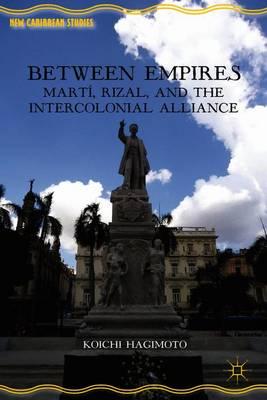
OverviewFull Product DetailsAuthor: Koichi HagimotoPublisher: Palgrave Macmillan Imprint: Palgrave Macmillan Dimensions: Width: 14.00cm , Height: 1.60cm , Length: 21.60cm Weight: 3.551kg ISBN: 9781137332950ISBN 10: 1137332956 Pages: 187 Publication Date: 19 November 2013 Audience: Professional and scholarly , Professional & Vocational Format: Hardback Publisher's Status: Active Availability: In Print This item will be ordered in for you from one of our suppliers. Upon receipt, we will promptly dispatch it out to you. For in store availability, please contact us. Table of ContentsIntroduction: Phantoms of José Martí and José Rizal 1. Anti-Colonial Melodramas: Gender Relations and the Discourse of Resistance in Noli me tangere and Lucía Jerez 2. Theatrical Performance in the Manifesto: Comparative Analysis of Martí's 'Manifiesto de Montecristi' and Rizal's 'Filipinas dentro de cien años' 3. Cuban and Filipino Calibans Confront the Modern Empire 4. Conversations Across the Pacific: Masonry, Epistolary, and Journal Writing AfterwordReviewsBetween Empires is an outstanding example of intellectual history about the Cuban Jose Marti and the Filipino Jose Rizal. Although others have studied points of contact between Marti and Rizal, Hagimoto's study is significant because of the extensive nature of his examination of continuities between the two writers under the theoretical umbrella of intercolonial alliance. It constitutes an important model for other ways of viewing postcoloniality in the Caribbean and Latin America beyond the models of Marxist revolution, and it makes a notable contribution to the growing and fascinating bibliography of Asian-Latin American cultural relations. - David William Foster, Regents' Professor of Spanish and Women and Gender Studies, Arizona State University, USA Koichi Hagimoto's comparative, post-colonial study reveals a fascinating intercolonial alliance against Spain and the United States between two countries under the yoke of the Spanish Empire: Cuba and the Philippines. Focusing on their respective iconic forefathers, Hagimoto shows us that, even though Jose Marti fought for independence while Jose Rizal was a reformist, their novels, manifestos, and chronicles show a collective consciousness of resistance many years before the emergence of a 'Third World' consciousness and anti-imperial collaboration that culminated in the 1955 Bandung Conference of non-aligned nations. As Hagimoto acutely points out, their prophetic views on the United States' relationship with the rest of the world, as this new empire saw their respective countries as targets of its expansionism, are still relevant today. - Ignacio Lopez-Calvo, Professor of Latin American Literature, University of California, Merced, USA Author InformationKoichi Hagimoto is an Assistant Professor of Spanish at Wellesley College. Tab Content 6Author Website:Countries AvailableAll regions |
||||