|
|
|||
|
||||
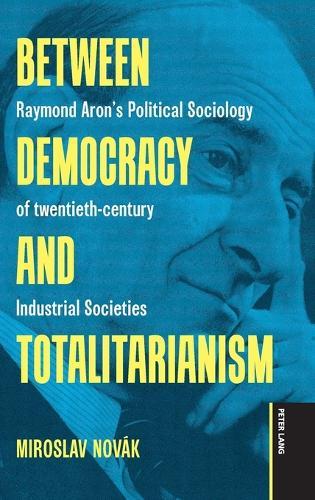
OverviewThis book provides a thorough interpretation of Raymond Aron’s political sociology of industrial societies from the perspective of contemporary political science. However, the book is not only aimed at specialists or advanced students of political science, but appeals to a much wider range of cultivated readers. Particular attention is paid to those issues that have been subject to conflicting interpretations, such as his relationship to the so-called convergence theory, or how he understood the end of the ideological age, what his relationship to European integration was, or to what extent he was influenced by Carl Schmitt. More than 40 years have passed since Aron’s death (1983). The author therefore explains the extent to which more recent scholars such as Giovanni Sartori, François Furet, Leszek Kołakowski, Martin Malia and Alain Besançon have contributed to or continued to analyse the issues that Raymond Aron was so concerned with. Full Product DetailsAuthor: Miroslav NovákPublisher: Peter Lang AG, Internationaler Verlag der Wissenschaften Imprint: Peter Lang AG, Internationaler Verlag der Wissenschaften Edition: New edition Weight: 0.449kg ISBN: 9783034361286ISBN 10: 3034361289 Pages: 246 Publication Date: 16 March 2026 Audience: Professional and scholarly , Professional & Vocational Format: Hardback Publisher's Status: Active Availability: Manufactured on demand We will order this item for you from a manufactured on demand supplier. Table of ContentsIntroduction - PART I INDUSTRIAL SOCIETIES - 1. From philosophy to political sociology - 2. Conceptual questions - 3. Political Power between Democratic Prose and Maniacal Poetry - 4. Industrial societies - 5. From social classes to political domination - 6. The Primacy of Politics according to Aron - 7. What is economic power? - PART II IDEOLOGY AND TOTALITARIANISM - 8. The End of the Ideological Age? - 9. Aron and “convergence theory”: for or against? - 10. From Marx to Lenin and the Communist Regimes: Raymond Aron and Leszek Kołakowski - 11. Aron and the discussion of possible changes in communism - 12. Aron’s early conception of totalitarianism - 13. The Debate over Machiavelism: Raymond Aron and Jacques Maritain - 14. Aron’s more recent work on totalitarianism: his relationship to Arendt and to Friedrich and Brzezinski - PART III ARON’S LEGACY - 15. Aron and his (sympathizing) critics Besançon and Todorov on the relationship between Nazism and Communism - 16. Between Liberalism and Democracy: Aron, Hayek, Solzhenitsyn, Zakaria and Popper - 17. In search of stability and efficiency - 18. Was Aron a Eurosceptic? - 19. Why did Aron oppose the European Defence Community? - 20. Is multinational citizenship possible? - 21. Between the fervor of a European activist and the cold detachment of a sociologist - 22. Are there real European political parties? - 23. Democracy on a global scale? - 24. Is the conversion of history possible? The limits of Carl Schmitt’s influence on Raymond Aron - 25. Aron’s concept of sovereignty and Schmitt’s critique of the universal state - 26. Is it only Nazi ideology that logically leads to absolute hostility? - 27. Where to place Aron within comparative political sociology? - CONCLUSION: WHAT REMAINS FROM ARON’S POLITICAL SOCIOLOGY OF TWENTIETH-CENTURY SOCIETIES? - Bibliography - INDEXReviewsAuthor InformationMiroslav Novák became the first full professor of political science at the Faculty of Social Sciences of Charles University in Prague (2004). He is currently a professor at AMBIS University (Prague). In 2024 he won the Award of the Czech Political Science Society for his contribution to the development of political science in the Czech Republic. Tab Content 6Author Website:Countries AvailableAll regions |
||||