Overview
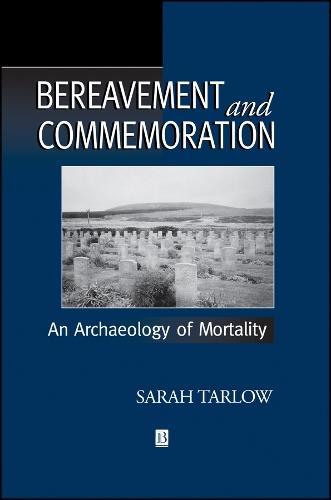
This book provides an historical archaeology of death, burial and bereavement from the Reformation to the present.
Full Product Details
Author: Sarah Tarlow (University of Wales, Lampeter)
Publisher: John Wiley and Sons Ltd
Imprint: Wiley-Blackwell
Dimensions:
Width: 16.10cm
, Height: 2.20cm
, Length: 23.80cm
Weight: 0.482kg
ISBN: 9780631206132
ISBN 10: 0631206132
Pages: 224
Publication Date: 14 June 1999
Audience:
College/higher education
,
Professional and scholarly
,
Undergraduate
,
Professional & Vocational
Format: Hardback
Publisher's Status: Active
Availability: Out of stock

The supplier is temporarily out of stock of this item. It will be ordered for you on backorder and shipped when it becomes available.
Reviews
An interesting and informative work. Choice This is a thoughtful study that attempts to deal with subjects of major import ... no one will come away from this book without new ideas and perceptions about the nature of bereavement, how it is commemorated through material culture and how these objects have been interpreted. Times Higher Education Supplement ... [an] extremely important contribution to the fast-growing field of post-medieval death studies. Archaeological Journal A stimulating read. Post-Medieval Archaeology Tarlow's book is heartening evidence that bereavement research need not stay in a narrow ghetto. Bereavement Care Throughout, there is a sense of the writer's own humanity ... There is a great deal of interest to be found in this book and it is to be hoped that it will encourage others who choose death as their subject to be as humane in the way they write about it. Folklore
""An interesting and informative work."" Choice ""This is a thoughtful study that attempts to deal with subjects of major import ... no one will come away from this book without new ideas and perceptions about the nature of bereavement, how it is commemorated through material culture and how these objects have been interpreted."" Times Higher Education Supplement ""... [an] extremely important contribution to the fast-growing field of post-medieval death studies."" Archaeological Journal ""A stimulating read."" Post-Medieval Archaeology ""Tarlow's book is heartening evidence that bereavement research need not stay in a narrow ghetto."" Bereavement Care ""Throughout, there is a sense of the writer's own humanity ... There is a great deal of interest to be found in this book and it is to be hoped that it will encourage others who choose death as their subject to be as humane in the way they write about it."" Folklore
"An interesting and informative work." Choice "This is a thoughtful study that attempts to deal with subjects of major import ... no one will come away from this book without new ideas and perceptions about the nature of bereavement, how it is commemorated through material culture and how these objects have been interpreted." Times Higher Education Supplement "... [an] extremely important contribution to the fast-growing field of post-medieval death studies." Archaeological Journal "A stimulating read." Post-Medieval Archaeology "Tarlow's book is heartening evidence that bereavement research need not stay in a narrow ghetto." Bereavement Care "Throughout, there is a sense of the writer's own humanity ... There is a great deal of interest to be found in this book and it is to be hoped that it will encourage others who choose death as their subject to be as humane in the way they write about it." Folklore
Author Information
Sarah Tarlow is a Lecturer in Archaeology at the University of Wales, Lampeter, where she teaches courses in the archaeology of death, later historical periods and aspects of archaeological method and theory. Since receiving her PhD in archaeology from Cambridge University, she has published articles on the later historical archaeology of Britain and on the archaeology of death. Her current research interests are in archaeologies of the human body and in utopian communities. She is co-editor of The Familiar Past? Archaeologies of Later Historical Britain (1998).