Overview
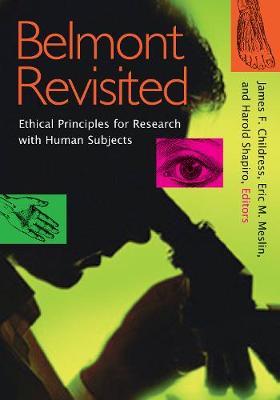
Research with human subjects has long been controversial because of the conflicts that often arise between promoting scientific knowledge and protecting the rights and welfare of subjects. Twenty-five years ago the National Commission for the Protection of Human Subjects of Biomedical and Behavioral Research addressed these conflicts. The result was the Belmont Report: Ethical Principles and Guidance for Research Involving Human Subjects, a report that identified foundational principles for ethical research with human subjects: respect for persons, beneficence, and justice. Since the publication of Belmont, these three principles have greatly influenced discussions of research with human subjects. While they are often regarded as the single-most influential set of guidelines for biomedical research and practice in the United States (and other parts of the world), not everyone agrees that they provide adequate guidance. Belmont Revisited brings together a stellar group of scholars in bioethics to revisit the findings of that original report. Their responses constitute a broad overview of the development of the Belmont Report and the extent of its influence, especially on governmental commissions, as well as an assessment of its virtues and shortcomings. Belmont Revisited looks back to reexamine the creation and influence of the Belmont Report, and also looks forward to the future of research - with a strong call to rethink how institutions and investigators can conduct research more ethically.
Full Product Details
Author: James F. Childress ,
Eric M. Meslin ,
Harold T. Shapiro ,
Albert R. Jonsen
Publisher: Georgetown University Press
Imprint: Georgetown University Press
Dimensions:
Width: 17.80cm
, Height: 1.60cm
, Length: 25.40cm
Weight: 0.612kg
ISBN: 9781589010628
ISBN 10: 1589010620
Pages: 296
Publication Date: 03 October 2005
Audience:
Professional and scholarly
,
Professional & Vocational
Format: Paperback
Publisher's Status: Active
Availability: Manufactured on demand

We will order this item for you from a manufactured on demand supplier.
Reviews
The editors...have done an exemplary job of organizing 15 [chapters] into an unusually cohesive whole. New England Journal of Medicine Serves as a valuable document of the ways interpretation and application of the Belmont principles have evolved. JAMA (Journal of the American Medical Association)
There can be little doubt that the 1979 Belmont Report was a key document in the development of national policy on human subject research. Its history and its importance are too little known. This book, a splendid and probing collection about the Report, is an important study, readable and interesting. Human subject research remains a difficult and contentious area. This book helps to show why, and will help to bring greater light to the ongoing debate. - Daniel Callahan, director of international programs, The Hastings Center Twenty-five years after publication, the Belmont Report and the principles it espoused remain the most influential events in biomedical research worldwide. These retrospective reflections, by participants in the report's formulations, offer frank and updated insights into the genesis and evolution of the report - and especially of its three famous principles. Given today's renewed scrutiny of human subject research, these essays will interest clinical investigators, policymakers, legislators, and the general public. - Edmund D. Pellegrino, professor emeritus of medicine and medical ethics, Georgetown University
Author Information
James F. Childress is the John Allen Hollingsworth Professor of Ethics at the University of Virginia. Eric M. Meslin is director of the Indiana University Center for Bioethics. Harold T. Shapiro is president emeritus, Princeton University and a professor of economics and public affairs in the Woodrow Wilson School of Public and International Affairs.