Overview
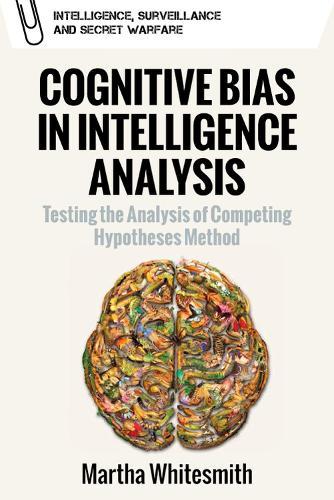
Tests whether the analysis of competing hypotheses reduces cognitive bias, and proposes a more effective approach Reveals that a key element of current training provided to the UK and US intelligence communities (and likely all 5-EYES and several European agencies) does not have a proven ability to mitigate cognitive biasesDemonstrates that judging the credibility of information from human sources means that intelligence analysis faces greater complexity and cognitive strain than non-intelligence analysisExplains the underlying causes cognitive biases, based on meta-analyses of existing researchShows that identifying the ideal conditions for intelligence analysis is a more effective way of reducing the risk of cognitive bias than the use of ACH Recent high-profile intelligence failures from 9/11 to the 2003 Iraq war prove that cognitive bias in intelligence analysis can have catastrophic consequences. This book critiques the reliance of Western intelligence agencies on the use of a method for intelligence analysis developed by the CIA in the 1990s, the Analysis of Competing Hypotheses (ACH). The author puts ACH to the test in an experimental setting against two key cognitive biases with unique empirical research facilitated by UK's Professional Heads of Intelligence Analysis unit at the Cabinet Office, and finds that the theoretical basis of the ACH method is significantly flawed. Combining the insight of a practitioner with over 11 years of experience in intelligence with both philosophical theory and experimental research, the author proposes an alternative approach to mitigating cognitive bias that focuses on creating the optimum environment for analysis, challenging current leading theories.
Full Product Details
Author: Martha Whitesmith (Senior Intelligence Analyst, Ministry of Defence)
Publisher: Edinburgh University Press
Imprint: Edinburgh University Press
Weight: 0.604kg
ISBN: 9781474466349
ISBN 10: 1474466346
Pages: 304
Publication Date: 15 September 2020
Audience:
Professional and scholarly
,
Professional & Vocational
Format: Hardback
Publisher's Status: Active
Availability: Temporarily unavailable

The supplier advises that this item is temporarily unavailable. It will be ordered for you and placed on backorder. Once it does come back in stock, we will ship it out to you.
Reviews
Whitesmith (Ministry of Defence, United Kingdom) argues against the key assumption that we have a ""fix"" for cognitive biases that creep into intel analyses, causing acceptance of findings that confirm erroneous beliefs. […] Summing Up: Recommended. -- D. N. Nelson, Center for Arms Control & Nonproliferation * CHOICE * Whitesmith (Ministry of Defence, United Kingdom) argues against the key assumption that we have a ""fix"" for cognitive biases that creep into intel analyses, causing acceptance of findings that confirm erroneous beliefs. […] Summing Up: Recommended. -- D. N. Nelson, Center for Arms Control & Nonproliferation * CHOICE * As we move further into the information revolution, the importance of robust, scientific methods of critical thinking becomes ever more pressing. In this context, Martha Whitesmith’s empirical analysis of the ACH technique is extremely timely and insightful, and will be of considerable significance to contemporary intelligence communities across the world. * Julian Richards, University of Buckingham * Martha Whitesmith’s book insightfully demonstrates how to improve the effectiveness of structured analysis methods by first improving the intelligence verification process. -- Boris Delagenière, PhD candidate, Sorbonne University * EFRC *
"As we move further into the information revolution, the importance of robust, scientific methods of critical thinking becomes ever more pressing. In this context, Martha Whitesmith's empirical analysis of the ACH technique is extremely timely and insightful, and will be of considerable significance to contemporary intelligence communities across the world.-- ""Julian Richards, University of Buckingham"" Whitesmith (Ministry of Defence, United Kingdom) argues against the key assumption that we have a ""fix"" for cognitive biases that creep into intel analyses, causing acceptance of findings that confirm erroneous beliefs. [...] Summing Up: Recommended.--D. N. Nelson, Center for Arms Control & Nonproliferation ""CHOICE"""
Author Information
Martha Whitesmith is Senior Intelligence Analyst at the Ministry of Defence.