Overview
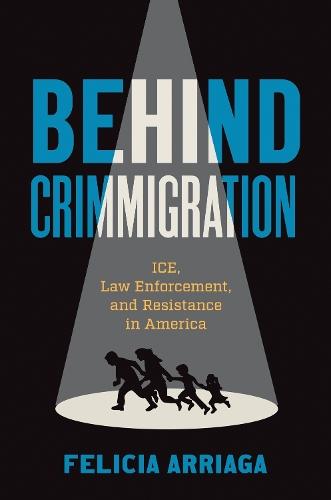
In recent years, dozens of counties in North Carolina have partnered with federal law enforcement in the criminalization of immigration—what many have dubbed ""crimmigration."" Southern border enforcement still monopolizes the national immigration debate, but immigration enforcement has become common within the United States as well. While Immigration and Customs Enforcement (ICE) operations are a major part of American immigration enforcement, Felicia Arriaga maintains that ICE relies on an already well-established system—the use of local law enforcement and local governments to identify, incarcerate, and deport undocumented immigrants. Arriaga contends that the long-term partnership between local sheriffs and immigration law enforcement in places like North Carolina has created a form of racialized social control of the Latinx community. Arriaga uses data from five county sheriff's offices and their governing bodies to trace the creation and subsequent normalization of ICE and local law enforcement partnerships. Arriaga argues that the methods used by these partnerships to control immigration are employed throughout the United States, but they have been particularly visible in North Carolina, where the Latinx population increased by 111 percent between 2000 and 2010. Arriaga's evidence also reveals how Latinx communities are resisting and adapting to these systems.
Full Product Details
Author: Felicia Arriaga
Publisher: The University of North Carolina Press
Imprint: The University of North Carolina Press
Dimensions:
Width: 15.50cm
, Height: 1.40cm
, Length: 23.30cm
Weight: 0.272kg
ISBN: 9781469673226
ISBN 10: 1469673223
Pages: 190
Publication Date: 18 April 2023
Audience:
General/trade
,
General
Format: Hardback
Publisher's Status: Active
Availability: Out of stock

The supplier is temporarily out of stock of this item. It will be ordered for you on backorder and shipped when it becomes available.
Reviews
"A rich critique of the actors and organizations in North Carolina that facilitate crimmigration. . . . The text expertly demonstrates how all crimmigration is local. . . . [and] Arriaga excels in taking readers to lesser-known settings and contexts to consider how 287(g) was conceptualized and contested through the everyday machinations of local government and electoral politics""--Sociology of Race and Ethnicity An important regional study on the criminalization of immigration. . . . This volume will interest students in the fields of crimmigration, criminology, sociology, legal studies, and immigration studies. Highly recommended""--CHOICE"
"Arriaga offers a novel and important contribution to contemporary research examining the interconnectedness of local law enforcement officials (LEOs) and Immigration and Customs Enforcement (ICE).""--Ethnic and Racial Studies A rich critique of the actors and organizations in North Carolina that facilitate crimmigration. . . . The text expertly demonstrates how all crimmigration is local. . . . [and] Arriaga excels in taking readers to lesser-known settings and contexts to consider how 287(g) was conceptualized and contested through the everyday machinations of local government and electoral politics""--Sociology of Race and Ethnicity An important regional study on the criminalization of immigration. . . . This volume will interest students in the fields of crimmigration, criminology, sociology, legal studies, and immigration studies. Highly recommended""--CHOICE"
Author Information
Felicia Arriaga is an assistant professor of sociology at the Marxe School of Public & International Affairs at Baruch College.