|
|
|||
|
||||
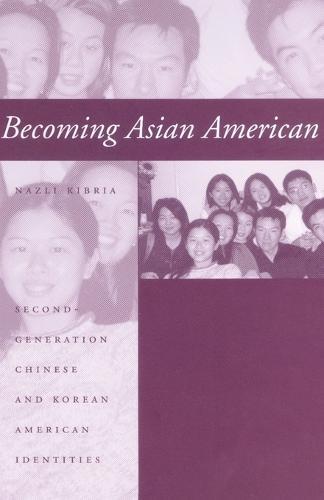
OverviewNazli Kibria draws upon extensive interviews she conducted with second-generation Chinese and Korean Americans in Boston and Los Angeles who came of age during the 1980s and 1990s to explore the dynamics of race, identity and adaptation within these communities. Moving beyond the frameworks created to study other racial minorities and ethnic whites, she examines the various strategies used by members of this group to define themselves as both Asian and American. In her discussions on such topics as childhood, interaction with non-Asian Americans, college, work and the problems of intermarriage and child-raising, Kibria finds wide discrepancies between the experiences of Asian Americans and those described in studies of other ethnic groups. While these differences help to explain the unusually successful degree of social integration and acceptance into mainstream American society enjoyed by this ""model minority"", it is an achievement that Kibria's interviewees admit they can never take for granted. Instead, they report that maintaining this acceptance ""requires constant effort on their part"". Kibria suggests further developments may resolve this situation - especially the emergence of a new kind of pan-Asian American identity that would complement the Chinese or Korean American identity rather than replace it. Full Product DetailsAuthor: Nazli Kibria (Boston University)Publisher: Johns Hopkins University Press Imprint: Johns Hopkins University Press Edition: New edition Dimensions: Width: 15.20cm , Height: 1.40cm , Length: 22.90cm Weight: 0.299kg ISBN: 9780801877445ISBN 10: 080187744 Pages: 232 Publication Date: 24 October 2003 Recommended Age: From 17 Audience: Professional and scholarly , Professional and scholarly , Professional & Vocational , Postgraduate, Research & Scholarly Format: Paperback Publisher's Status: Active Availability: Manufactured on demand We will order this item for you from a manufactured on demand supplier. Table of ContentsPreface and Acknowledgments Chapter 1. Asian Americans and the Puzzle of New Immigrant Integrations Chapter 2. Growing up Chinese and American, Korean and American Chapter 3. The Everyday Consequences of Being Asian: Ethnic Options and Ethnic Binds Chapter 4. College and Asian American Identity Chapter 5. The Model Minority at Work Chapter 6. Ethnic Futures: Children and Intermarriage Chapter 7. Becoming Asian American References IndexReviews<p> With its detailed analysis and lucid text, Becoming Asian American adds a rich case study to the growing sub-field of ethnic and racial studies: the sociology of second-generation immigrants. -- Keiko Yamanaka, Ethnic and Racial Studies Author InformationNazli Kibria is an associate professor of sociology at Boston University. Tab Content 6Author Website:Countries AvailableAll regions |
||||