Overview
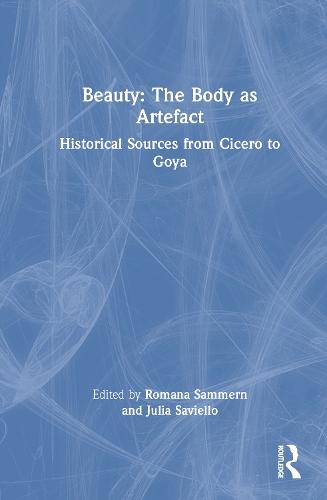
Beauty: The Body as Artefact traces the history of physical beauty in Western art and thought from antiquity to the eighteenth century. Bringing together foundational texts and newly translated works accompanied by scholarly commentaries, this volume explores how the human body was understood as both a product of nature and an artistic creation. Examining the intersections of aesthetics, art theory, medical practices and cosmetics, it reveals how ideals of beauty and beautification shaped conceptions of gender, the body and artistic creation. The book focuses on the early modern period, when the cosmetic transformation of the body became closely associated with artistic imagery and techniques. Drawing on art-historical, philosophical and cultural perspectives, the volume presents key writings by figures from Cicero and Alberti to Behn and Hogarth, highlighting shifting notions of imitation, ornament and naturalness. Suitable for undergraduates, postgraduates, and scholars in art history, cultural history and gender studies, Beauty: The Body as Artefact offers a framework for understanding physical beauty as a historical and artistic category at the intersection of image, body and knowledge.
Full Product Details
Author: Romana Sammern ,
Julia Saviello
Publisher: Taylor & Francis Ltd
Imprint: Routledge
ISBN: 9781032735719
ISBN 10: 1032735716
Pages: 386
Publication Date: 06 May 2026
Audience:
College/higher education
,
Tertiary & Higher Education
Format: Hardback
Publisher's Status: Forthcoming
Availability: Not yet available

This item is yet to be released. You can pre-order this item and we will dispatch it to you upon its release.
Reviews
‘From its beguiling cover to its engaging and carefully curated contents, this is a must-have addition to the early modern corpus and the burgeoning research fields of beauty and embodiment. With texts from Cicero to Goya – each presented in the original alongside translations and pithy commentary by a stellar international team of cutting-edge scholars – students and instructors alike have been gifted a rare and rich package here.’ Catherine Kovesi, Professor of History, University of Melbourne ‘Is human beauty eternal and unchanging, or highly subjective? Should you praise or condemn cosmetic practices? This edition of key texts shows how writers and philosophers grappled with the question of how to define, modify and manage male and female beauty from antiquity to the eighteenth century. With original texts on beauty, translations, and insightful commentaries, this is an indispensable resource for anyone interested in the history of beauty.’ Evelyn Welch, Vice-Chancellor and President, University of Bristol
‘From its beguiling cover to its engaging and carefully curated contents, this is a must-have addition to the early modern corpus and the burgeoning research fields of beauty and embodiment. With texts from Cicero to Goya—each presented in the original alongside translations and pithy commentary by a stellar international team of cutting-edge scholars—students and instructors alike have been gifted a rare and rich package here.’ Catherine Kovesi, Professor of History, University of Melbourne ‘Is human beauty eternal and unchanging, or highly subjective? Should you praise or condemn cosmetic practices? This edition of key texts shows how writers and philosophers grappled with the question of how to define, modify and manage male and female beauty from antiquity to the eighteenth century. With original texts on beauty, translations, and insightful commentaries, this is an indispensable resource for anyone interested in the history of beauty.’ Evelyn Welch, Vice-Chancellor and President, University of Bristol
Author Information
Romana Sammern is an art historian based at the Inter-University Organization Arts & Knowledges (University of Salzburg/Mozarteum University). She researches the intersections of body, image, and medicine in the early modern period. She holds a PhD from Humboldt University of Berlin and a habilitation from the University of Passau. Her research has been supported by fellowships in Austria, Germany, Italy, the United Kingdom, and the United States. Julia Saviello is Assistant Professor at the Institute of Art History, Goethe University Frankfurt. Her research centres on hair and the human body, objects as image carriers, and the intersections of ceramics and nature in the early modern period. Her publications include Verlockungen. Haare in der Kunst der Frühen Neuzeit (2017) and Der Schild und das Bild (2026).