Overview
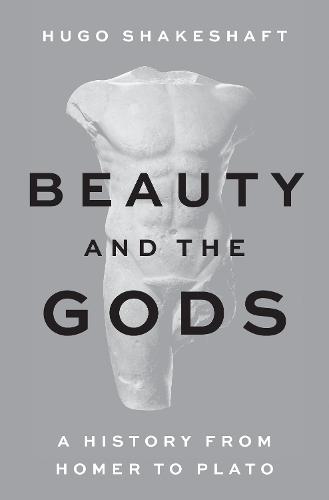
How ideas and experiences of beauty informed human relationships with the divine in ancient Greece Beginning with the earliest Greek literature, the epics of Homer and Hesiod, beauty was seen as having a special connection with the divine. The gods of ancient Greece were defined by their exceptional beauty; even today, 'to look like a Greek god' is proverbial for human beauty. In Beauty and the Gods, Hugo Shakeshaft explores the relationship between the beautiful and divine in ancient Greece, principally in the Archaic period (ca. 750-480 BCE). Analysing evidence that ranges from poetry, art, and philosophical texts to architecture and the natural landscape, Shakeshaft shows how ideas and experiences of beauty shaped Greek relations with the divine. With a powerful call for the place of beauty and aesthetics in the writing of history, Shakeshaft uncovers the cultural dialogue between beauty and the gods in a variety of contexts in the Archaic Greek world: in forms of divine worship; in poetry, music, and dance; in attitudes to the natural environment; and in architecture and art. This early chapter of Greek history, he argues, holds an unrecognised key to understanding some long-running threads in the histories of religion, art, and aesthetics, from Plato's aesthetic theories to beauty's status in contemporary discourse. Beauty's deep past and divine connection in ancient Greece can help us see beauty now in sharper focus.
Full Product Details
Author: Hugo Shakeshaft
Publisher: Princeton University Press
Imprint: Princeton University Press
ISBN: 9780691250205
ISBN 10: 0691250200
Pages: 528
Publication Date: 25 March 2025
Audience:
General/trade
,
General
Format: Hardback
Publisher's Status: Active
Availability: Available To Order

We have confirmation that this item is in stock with the supplier. It will be ordered in for you and dispatched immediately.
Reviews
""A piercing reexamination of ancient Greek religiosity through the prism of aesthetics. . . . Whether meditating on the kouros as a vessel of both beauty and sanctity or unearthing Hesiod’s theogonic imagery, [Beauty and the Gods] is an elegant and provocative call to re-center beauty in the historiography of the sacred."" * Indulge Magazine * ""This book certainly rises to a level of beauty the gods would be pleased with.""---Cliff Cunningham, Sun News Austin
""A piercing reexamination of ancient Greek religiosity through the prism of aesthetics. . . . Whether meditating on the kouros as a vessel of both beauty and sanctity or unearthing Hesiod’s theogonic imagery, [Beauty and the Gods] is an elegant and provocative call to re-center beauty in the historiography of the sacred."" * Indulge Magazine *
""A piercing reexamination of ancient Greek religiosity through the prism of aesthetics. . . . Whether meditating on the kouros as a vessel of both beauty and sanctity or unearthing Hesiod’s theogonic imagery, [Beauty and the Gods] is an elegant and provocative call to re-center beauty in the historiography of the sacred."" * Indulge Magazine * ""This book certainly rises to a level of beauty the gods would be pleased with.""---Cliff Cunningham, Sun News Austin ""Shakeshaft’s approach is a synthesis of art history, literary analysis, and archaeology. . . . The overall effect is a kind of immersion in what the world of Homer and Sappho must have looked, felt, and sounded like. Shakeshaft manages to be nigh on exhaustive within his chosen time period—an impressive feat in itself with such an unwieldy and wide-ranging topic—and he makes some intriguingly subtle arguments along the way.""---Spencer A. Klavan, Law & Liberty
Author Information
Hugo Shakeshaft is the A. W. Mellon Postdoctoral Fellow at the Center for the Advanced Study of the Visual Arts at the National Gallery of Art in Washington, D.C. He previously held fellowships at the Kunsthistorisches Institut in Florence and the University of Oxford and in 2023 received the College Art Association's Arthur Kingsley Porter Prize.