Overview
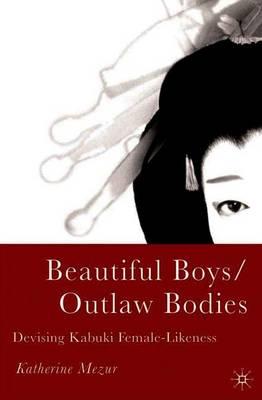
This book is a feminist reading of gender performance and construction of the female role players, onnogata, of the Kabuki theatre. It is not limited to a 'theatre arts' focus, rather it is a mapping and close analysis of transformative genders through several historical periods in Japan (the seventeenth through the twentieth centuries).
Full Product Details
Author: K. Mezur
Publisher: Palgrave USA
Imprint: Palgrave Macmillan
Edition: 2005 ed.
Dimensions:
Width: 14.00cm
, Height: 2.80cm
, Length: 21.60cm
Weight: 0.576kg
ISBN: 9781403967121
ISBN 10: 1403967121
Pages: 319
Publication Date: 18 August 2006
Audience:
College/higher education
,
Professional and scholarly
,
Postgraduate, Research & Scholarly
,
Professional & Vocational
Format: Hardback
Publisher's Status: Active
Availability: In Print

This item will be ordered in for you from one of our suppliers. Upon receipt, we will promptly dispatch it out to you. For in store availability, please contact us.
Reviews
Mezur's Beautiful Boys is a useful reprise of English-language scholarship on the traditional Japanese female impersonator, but something new as well: a fresh look at the Kabuki theater's onnagata through the insights granted us by feminist, gender and performance theories over the past thirty years. Written in clear, jargon-free prose, Beautiful Boys shows us that rather than distilling the putative 'essence' of Japanese femininity, the onnagata skillfully exploit the inevitable gender ambiguities of men playing women on the stage for both artistic and sexual effect. <br>--John Whittier Treat, Professor of Japanese, Yale University<br><br> Katherine Mezur subtly redresses the scholarship to date on onnagata , the Kabuki actor specializing in the roles of girls and women, in developing a compelling argument about the 'intentional body, ' that is, a male body that simultaneously obscures and performs itself. Effectively combining archival and textual research, interviews and the acute observation of training methods and actual performances, Beautiful Boys , not only provides a 'thickly descriptive' history of Kabuki but demonstrates the cultural tenacity of the bishonen , or beautiful boy, so fetishized in Japanese popular culture today. <br>--Jennifer Robertson, Professor of Anthropology, University of Michigan, Author, Takarazuka: Sexual Politics and Popular Culture <br><br> Katherine Mezur's Beautiful Boys/Outlaw Bodies is a tour de force. Looking at over 300 years of Kabuki history, she explores with sophistication and discernment the fantasy of gender transformation embodied by the onnagata . Her book will be appreciated by a wide variety of specialists and students including, but not limited to, those engaged in theater, gender, and Japanese studies. <br>--Susan Napier, Author of Anime from Akira to Princess Mononoke <br><br>
“Mezur’s Beautiful Boys is a useful reprise of English-language scholarship on the traditional Japanese female impersonator, but something new as well: a fresh look at the Kabuki theater’s onnagata through the insights granted us by feminist, gender and performance theories over the past thirty years. Written in clear, jargon-free prose, Beautiful Boys shows us that rather than distilling the putative ‘essence’ of Japanese femininity, the onnagata skillfully exploit the inevitable gender ambiguities of men playing women on the stage for both artistic and sexual effect.”<br>--John Whittier Treat, Professor of Japanese, Yale University <br> Katherine Mezur subtly redresses the scholarship to date on onnagata, the Kabuki actor specializing in the roles of girls and women, in developing a compelling argument about the 'intentional body, ' that is, a male body that simultaneously obscures and performs itself. Effectively combining archival and t
Mezur's Beautiful Boys is a useful reprise of English-language scholarship on the traditional Japanese female impersonator, but something new as well: a fresh look at the Kabuki theater's onnagata through the insights granted us by feminist, gender and performance theories over the past thirty years. Written in clear, jargon-free prose, Beautiful Boys shows us that rather than distilling the putative 'essence' of Japanese femininity, the onnagata skillfully exploit the inevitable gender ambiguities of men playing women on the stage for both artistic and sexual effect. --John Whittier Treat, Professor of Japanese, Yale University Katherine Mezur subtly redresses the scholarship to date on onnagata, the Kabuki actor specializing in the roles of girls and women, in developing a compelling argument about the 'intentional body, ' that is, a male body that simultaneously obscures and performs itself. Effectively combining archival and textual research, interviews and the acute observation of training methods and actual performances, Beautiful Boys, not only provides a 'thickly descriptive' history of Kabuki but demonstrates the cultural tenacity of the bishonen, or beautiful boy, so fetishized in Japanese popular culture today. --Jennifer Robertson, Professor of Anthropology, University of Michigan, Author, Takarazuka: Sexual Politics and Popular Culture Katherine Mezur's Beautiful Boys/Outlaw Bodies is a tour de force. Looking at over 300 years of Kabuki history, she explores with sophistication and discernment the fantasy of gender transformation embodied by the onnagata, Her book will be appreciated by a wide variety of specialists and students including, but notlimited to, those engaged in theater, gender, and Japanese studies. --Susan Napier, Author of Anime from Akira to Princess Mononoke
Author Information
KATHERINE MEZUR is a Postdoctoral Research Scholar in the Department of Rhetoric and Film at the University of California, Berkeley, USA.