Overview
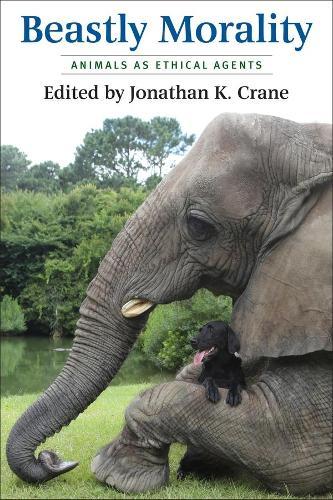
We have come to regard nonhuman animals as beings of concern, and we even grant them some legal protections. But until we understand animals as moral agents in and of themselves, they will be nothing more than distant recipients of our largesse. Featuring original essays by philosophers, ethicists, religionists, and ethologists, including Marc Bekoff, Frans de Waal, and Elisabetta Palagi, this collection demonstrates the ability of animals to operate morally, process ideas of good and bad, and think seriously about sociality and virtue. Envisioning nonhuman animals as distinct moral agents marks a paradigm shift in animal studies, as well as philosophy itself. Drawing not only on ethics and religion but also on law, sociology, and cognitive science, the essays in this collection test long-held certainties about moral boundaries and behaviors and prove that nonhuman animals possess complex reasoning capacities, sophisticated empathic sociality, and dynamic and enduring self-conceptions. Rather than claim animal morality is the same as human morality, this book builds an appreciation of the variety and character of animal sensitivities and perceptions across multiple disciplines, moving animal welfarism in promising new directions.
Full Product Details
Author: Jonathan K. Crane
Publisher: Columbia University Press
Imprint: Columbia University Press
Dimensions:
Width: 15.20cm
, Height: 2.30cm
, Length: 22.90cm
Weight: 0.510kg
ISBN: 9780231174169
ISBN 10: 0231174160
Pages: 296
Publication Date: 01 December 2015
Audience:
General/trade
,
General
,
Postgraduate, Research & Scholarly
Format: Hardback
Publisher's Status: Active
Availability: Manufactured on demand 
We will order this item for you from a manufactured on demand supplier.
Language: English
Table of Contents
Acknowledgments Introduction 1. Beastly Morality: A Twisting Tale, by Jonathan K. Crane Part I: The Permeability of Morality 2. De-humanizing Morality, by Kendy Hess 3. HumAnI(m)Morality, by Sean Meighoo 4. Not All Dogs Go to Heaven: Judaism's Lessons in Beastly Morality, by Mark Goldfeder Part II: Observing Animal Morality 5. Animal Empathy as Moral Building Block, by Frans B. M. de Waal 6. Humans, Other Animals, and the Biology of Morality, by Elisabetta Palagi 7. Moral Mutts: Social Play, Fairness, and Wild Justice, by Marc Bekoff 8. Fighting Fair: The Ecology of Honor in Humans and Animals, by Dan Demetriou Part III: Reading Animal Morality 9. Reading, Teaching Insects: Ant Society as Pedagogical Device in Rabbinic Literature, by Harrison King 10. Jakushin's Dogs and the Goodness of Animals: Preaching the Moral Life of Beasts in Medieval Japanese Tale Literature, by Michael Bathgate Part IV: Reconceiving Animal Morality 11. Just Chimpanzees? A Thomistic Perspective on Ethics in a Nonhuman Species, by John Berkman 12. Brutal Justice? Animal Litigation and the Question of Countertradition, by Jonathan K. Crane and Aaron S. Gross Part V: Epilogue 13. Beastly Morality: Untangling Possibilities, by Jonathan K. Crane, Ani B. Satz, Lori Marino, and Cynthia Willett List of Contributors Index
Reviews
Issues surrounding animal moral agency have become one of the cutting-edge areas of research in animal studies; as such, Beastly Morality is poised to make a significant contribution to the field. -- Matthew Calarco, author of Zoographies: The Question of the Animal from Heidegger to Derrida
Issues surrounding animal moral agency have become one of the cutting-edge areas of research in animal studies; as such, Beastly Morality is poised to make a significant contribution to the field. -- Matthew Calarco, author of Zoographies: The Question of the Animal from Heidegger to Derrida Beastly Morality is a wide-ranging, scholarly, and forward-looking book that will surely cause many people to think about animals in new and more respectful ways. Congratulations to all concerned. I hope it enjoys a wide audience -- Jane Goodall, PhD, DBE, United Nations Messenger of Peace Building on copious contemporary philosophical and scientific work, Beastly Morality moves from previous, somewhat limited interspecific comparisons of moral behavior to a wider discourse within which the very notion of moral agency is reshaped in an open-ended, species-neutral manner, thus marking a further relevant step in the development of a more impartial worldview. -- Paola Cavalieri, author of The Animal Question. Why Nonhuman Animals Deserve Human Rights This is one of the most fascinating books I have ever read. It does not just bring together scholars from across the academy interested in questions about animals, but shows the synergistic benefits of intense discussions between philosophers, ethologists and experts from diverse religious traditions. And the reader is caught up in wave after wave of arguments that will challenge current thinking on the status and significance of other animals. The depth and level of inquiry is impressive while still being accessible for the non-specialist. This book is radical in the very best sense of the word, serious scholarship combined with far reaching ethical implications. I highly recommend this book for advanced students and scholars alike. -- Celia Deane-Drummond, Inaugural Director of the Center for Theology, Science and Human Flourishing and Professor, Department of Theology, University of Notre Dame, Indiana
Author Information
Jonathan K. Crane is the Raymond F. Schinazi Scholar in Bioethics and Jewish Thought at the Emory University Center for Ethics. He is the past president of the Society of Jewish Ethics, founding editor of the Journal of Jewish Ethics, coeditor of The Oxford Handbook of Jewish Ethics and Morality, and author of Narratives and Jewish Bioethics.
Tab Content 6
Author Website:
Countries Available
All regions
|