|
|
|||
|
||||
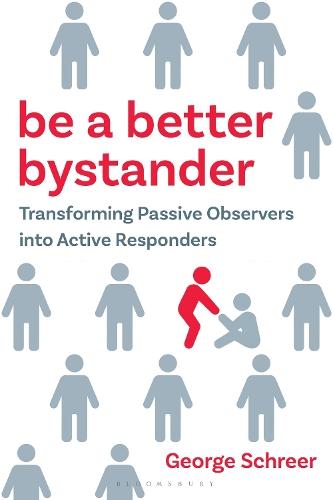
OverviewThe nature of an emergency is complex; after all, emergencies “emerge” suddenly without warning and typically require immediate attention. Bystanders are often the first line of defense in these situations. Unfortunately, in many situations where help is needed such as health-related emergencies, bullying, sexual misconduct, and bias, the default is to not get involved. The goal of this book is to identify the many obstacles that prevent people from taking action, and then provide evidence-based helping strategies to transform passive bystanders into pro-active responders. This timely and significant book, Be a Better Bystander: Transforming Passive Observers Into Active Responders, provides a toolbox of practical strategies for academic institutions, residence life personnel, diversity/education/inclusion educators, public health education advocates, and community activists. This book would also make a great supplemental text for courses in social psychology, health psychology, women’s studies, and bias-related courses. Full Product DetailsAuthor: George SchreerPublisher: Bloomsbury Publishing PLC Imprint: Bloomsbury Academic Dimensions: Width: 15.20cm , Height: 2.80cm , Length: 22.90cm Weight: 0.454kg ISBN: 9798881805906Pages: 144 Publication Date: 05 February 2026 Audience: College/higher education , Tertiary & Higher Education Format: Hardback Publisher's Status: Forthcoming Availability: Manufactured on demand Table of ContentsSection I: The Unresponsive Bystander Chapter 1: Background on Bystander Behavior Chapter 2: Identifying Obstacles that Impede Bystander Helping Section II: Transforming Passive Bystanders Into Active Responders Chapter 3: Evidence-Based Strategies to Boost Bystander Behavior Chapter 4: Confronting Alcohol- and Health-Related Emergencies Chapter 5: Confronting Bullying and Cyberbullying in Schools Chapter 6: Confronting Sexual Assault Chapter 7: Confronting Bias Chapter 8: Promoting AllyshipReviewsAuthor InformationProfessor George Schreer received his Ph.D. in Social Psychology from Syracuse University and has been a member of the Department of Psychology at Manhattanville College for 25 years. He currently teaches courses in his this area including: Social Psychology, Social Influence & Persuasion, Stereotyping & Prejudice, as well as courses emphasizing critical and quantitative reasoning including: Psychological Mythbusting, Statistics, and Research Methods. He has published studies in a wide array of areas including: institutionalized racism, the link between narcissism and aggression, and pet ownership and wellbeing. (see https://www.mville.edu/faculty/george-schreer.php). Tab Content 6Author Website:Countries AvailableAll regions |
||||