Overview
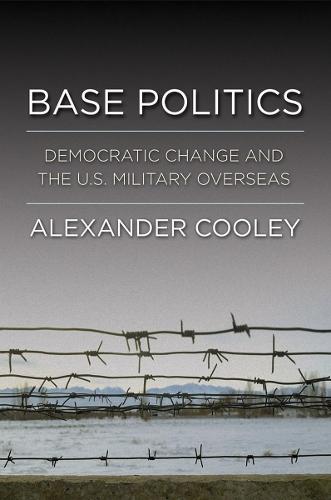
According to the Department of Defense's 2004 Base Structure Report, the United States officially maintains 860 overseas military installations and another 115 on noncontinental U.S. territories. Over the last fifteen years the Department of Defense has been moving from a few large-footprint bases to smaller and much more numerous bases across the globe. This so-called lily-pad strategy, designed to allow high-speed reactions to military emergencies anywhere in the world, has provoked significant debate in military circles and sometimes-fierce contention within the polity of the host countries. In Base Politics, Alexander Cooley examines how domestic politics in different host countries, especially in periods of democratic transition, affect the status of U.S. bases and the degree to which the U.S. military has become a part of their local and national landscapes. Drawing on exhaustive field research in different host nations across East Asia and Southern Europe, as well as the new postcommunist base hosts in the Black Sea and Central Asia, Cooley offers an original and provocative account of how and why politicians in host countries contest or accept the presence of the U.S. military on their territory. Overseas bases, Cooley shows, are not merely installations that serve a military purpose. For host governments and citizens, U.S. bases are also concrete institutions and embodiments of U.S. power, identity, and diplomacy. Analyzing the degree to which overseas bases become enmeshed in local political agendas and interests, Base Politics will be required reading for anyone interested in understanding the extent-and limits-of America's overseas military influence.
Full Product Details
Author: Alexander Cooley
Publisher: Cornell University Press
Imprint: Cornell University Press
Edition: 2nd Revised edition
Dimensions:
Width: 15.20cm
, Height: 2.80cm
, Length: 22.90cm
Weight: 0.907kg
ISBN: 9780801446054
ISBN 10: 0801446058
Pages: 328
Publication Date: 15 April 2008
Audience:
General/trade
,
General
Format: Hardback
Publisher's Status: Active
Availability: In Print

This item will be ordered in for you from one of our suppliers. Upon receipt, we will promptly dispatch it out to you. For in store availability, please contact us.
Reviews
Base Politics is an exceptional academic study on how domestic politics in countries hosting U.S. military bases affect the status of those bases and the degree to which the military has been integrated into their local and national landscapes...these findings represent the first comprehensive theory for understanding the conditions under which U.S. military basing arrangements in host countries become politicized. This makes Cooley's book required reading for defense policymakers charged with establishing and maintaining America's overseas military influence. -David A. Mastro, Joint Force Quarterly, 2009 Cooley offers useful advice to strategists as the Pentagon is implementing the Global Defense Posture Review (GDPR) that calls for downsizing the U.S. presence in several Cold War base hosts, such as Germany and Japan, while establishing a global network of smaller facilities, including in Africa, Central Asia, and the Black Sea region, in response to new, post-September 11th security challenges... Cooley's study is impressively well-researched and argued. He has first-hand experience in his case studies. Coming from an area studies background, he is sensitive to local conditions and history, including those cases such as the Azores and Okinawa, where a special triangular relationship is formed between the United States, the national government, and the local authorities. -Dimitris Keridis, Political Science Quarterly, 2009 Offers feasible pros and cons for both sides of the debate on U.S. basing in allied nations. -Col. Gordon W. Keiser, Proceedings (USNI), October 2008 Will prove helpful to defence officials and analysts grappling with the issue of how basing strategies might best support security interests... well researched and well crafted, and provides useful frameworks for thinking about base strategies. -Survival, Oct-Nov 2008 Alexander Cooley's Base Politics is an important look at what might be called the infrastructure of empire. Skillfully blending international relations and comparative politics, Cooley shows that the fate of foreign bases depends at least as much on local political developments as it does on traditional realist variables such as threat and power. This is required reading for anybody interested in the future of the American military presence abroad. -Gideon Rose, Managing Editor, Foreign Affairs In Base Politics, Alexander Cooley has single-handedly done what would have been a challenging task for a large team of researchers: a systematic, comparative analysis of domestic politics in disparate cultures and geopolitical venues and their intimate connections to the U.S. military and its overseas activities. The book offers a wealth of research, analysis, and clear writing. -Katharine H. S. Moon, Wellesley College Base Politics is a thorough treatment of an important and still somewhat neglected aspect of international relations. -Simon Duke, European Institute of Public Administration In Base Politics, Alexander Cooley describes the conditions under which U.S. military basing arrangements in host countries become politicized. He shows that such conflicts often take place in countries that are making a transition to democracy. This is a very important book that highlights how our interests and our ideals can often come into conflict. -Michael Desch, Robert M. Gates Chair in Intelligence and National Security Decision-Making, Texas A&M University
"""Base Politics is an exceptional academic study on how domestic politics in countries hosting U.S. military bases affect the status of those bases and the degree to which the military has been integrated into their local and national landscapes...these findings represent the first comprehensive theory for understanding the conditions under which U.S. military basing arrangements in host countries become politicized. This makes Cooley's book required reading for defense policymakers charged with establishing and maintaining America's overseas military influence.""-David A. Mastro, Joint Force Quarterly, 2009 ""Cooley offers useful advice to strategists as the Pentagon is implementing the Global Defense Posture Review (GDPR) that calls for downsizing the U.S. presence in several Cold War base hosts, such as Germany and Japan, while establishing a global network of smaller facilities, including in Africa, Central Asia, and the Black Sea region, in response to new, post-September 11th security challenges... Cooley's study is impressively well-researched and argued. He has first-hand experience in his case studies. Coming from an area studies background, he is sensitive to local conditions and history, including those cases such as the Azores and Okinawa, where a special triangular relationship is formed between the United States, the national government, and the local authorities.""-Dimitris Keridis, Political Science Quarterly, 2009 ""Offers feasible pros and cons for both sides of the debate on U.S. basing in allied nations.""-Col. Gordon W. Keiser, Proceedings (USNI), October 2008 ""Will prove helpful to defence officials and analysts grappling with the issue of how basing strategies might best support security interests... well researched and well crafted, and provides useful frameworks for thinking about base strategies.""-Survival, Oct-Nov 2008 ""Alexander Cooley's Base Politics is an important look at what might be called the infrastructure of empire. Skillfully blending international relations and comparative politics, Cooley shows that the fate of foreign bases depends at least as much on local political developments as it does on traditional realist variables such as threat and power. This is required reading for anybody interested in the future of the American military presence abroad.""-Gideon Rose, Managing Editor, Foreign Affairs ""In Base Politics, Alexander Cooley has single-handedly done what would have been a challenging task for a large team of researchers: a systematic, comparative analysis of domestic politics in disparate cultures and geopolitical venues and their intimate connections to the U.S. military and its overseas activities. The book offers a wealth of research, analysis, and clear writing.""-Katharine H. S. Moon, Wellesley College ""Base Politics is a thorough treatment of an important and still somewhat neglected aspect of international relations.""-Simon Duke, European Institute of Public Administration ""In Base Politics, Alexander Cooley describes the conditions under which U.S. military basing arrangements in host countries become politicized. He shows that such conflicts often take place in countries that are making a transition to democracy. This is a very important book that highlights how our interests and our ideals can often come into conflict.""-Michael Desch, Robert M. Gates Chair in Intelligence and National Security Decision-Making, Texas A&M University"
Cooley offers useful advice to strategists as the Pentagon is implementing the Global Defense Posture Review (GDPR) that calls for downsizing the U.S. presence in several Cold War base hosts, such as Germany and Japan, while establishing a global network of smaller facilities, including in Africa, Central Asia, and the Black Sea region, in response to new, post-September 11th security challenges. . . Cooley's study is impressively well-researched and argued. He has first-hand experience in his case studies. Coming from an area studies background, he is sensitive to local conditions and history, including those cases such as the Azores and Okinawa, where a special triangular relationship is formed between the United States, the national government, and the local authorities. -Dimitris Keridis, Political Science Quarterly, 2009
Author Information
Alexander Cooley is Associate Professor of Political Science at Barnard College and Columbia University's School of International and Public Affairs. He is the author of Logics of Hierarchy: The Organization of Empires, States, and Military Occupations, also from Cornell, cowinner of the 2006 Marshall Shulman Prize given by the AAASS. His writings on base-related issues have been published in the New York Times, International Herald Tribune and Foreign Affairs.