Overview
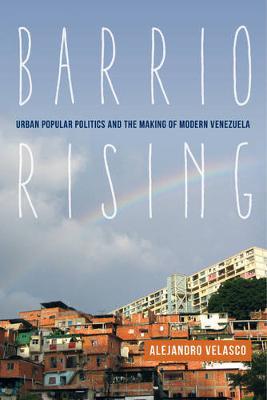
Beginning in the late 1950s political leaders in Venezuela built what they celebrated as Latin America's most stable democracy. But outside the staid halls of power, in the gritty barrios of a rapidly urbanizing country, another politics was rising-unruly, contentious, and clamoring for inclusion. Based on years of archival and ethnographic research in Venezuela's largest public housing community, Barrio Rising delivers the first in-depth history of urban popular politics before the Bolivarian Revolution, providing crucial context for understanding the democracy that emerged during the presidency of Hugo Chávez. In the mid-1950s, a military government bent on modernizing Venezuela razed dozens of slums in the heart of the capital Caracas, replacing them with massive buildings to house the city's working poor. The project remained unfinished when the dictatorship fell on January 23, 1958, and in a matter of days city residents illegally occupied thousands of apartments, squatted on green spaces, and renamed the neighborhood to honor the emerging democracy: the 23 de Enero (January 23). During the next thirty years, through eviction efforts, guerrilla conflict, state violence, internal strife, and official neglect, inhabitants of el veintitrés learned to use their strategic location and symbolic tie to the promise of democracy in order to demand a better life. Granting legitimacy to the state through the vote but protesting its failings with violent street actions when necessary, they laid the foundation for an expansive understanding of democracy-both radical and electoral-whose features still resonate today. Blending rich narrative accounts with incisive analyses of urban space, politics, and everyday life, Barrio Rising offers a sweeping reinterpretation of modern Venezuelan history as seen not by its leaders but by residents of one of the country's most distinctive popular neighborhoods.
Full Product Details
Author: Prof. Alejandro Velasco
Publisher: University of California Press
Imprint: University of California Press
Dimensions:
Width: 15.20cm
, Height: 2.30cm
, Length: 22.90cm
Weight: 0.454kg
ISBN: 9780520283329
ISBN 10: 0520283325
Pages: 344
Publication Date: 24 July 2015
Audience:
College/higher education
,
Undergraduate
,
Postgraduate, Research & Scholarly
Format: Paperback
Publisher's Status: Active
Availability: Out of stock

The supplier is temporarily out of stock of this item. It will be ordered for you on backorder and shipped when it becomes available.
Reviews
Barrio Rising prompts reflection on Chavismo and the imprint of architectural modernity beyond the famous profiles of Brasilia and writes the people of Caracas into the story of Latin America's 20th century... Highly recommended CHOICE connect Barrio Rising prompts reflection on Chavismo and the imprint of architectural modernity beyond the famous profiles of Brasilia and writes the people of Caracas into the story of Latin America's 20th century... Highly recommended CHOICE connect
Author Information
Alejandro Velasco is Assistant Professor at New York University's Gallatin School of Individualized Study.