Overview
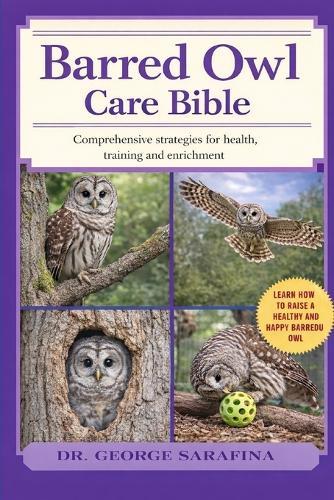
Barred Owl History, Origin & Natural Distribution The Barred Owl (Strix varia) is one of North America's most recognizable and beloved species of owls. Known for its distinctive ""Who cooks for you? Who cooks for you all?"" call, this owl has fascinated birdwatchers, wildlife rehabilitators, and raptor enthusiasts for generations. Understanding the history, origin, and natural distribution of Barred Owls is essential for anyone looking to care for or rehabilitate them responsibly. Barred Owls are native to the eastern United States and parts of Canada. Historically, their range was concentrated from the Atlantic coast westward to the Great Plains, and from southern Canada down through Florida and parts of the Gulf Coast. These owls favor mature forests with a mix of large deciduous trees, dense undergrowth, and access to water sources such as rivers, lakes, or wetlands. They are highly adaptable and have been known to inhabit urban and suburban areas where sufficient tree cover exists. Over the past century, Barred Owls have expanded their range significantly, moving westward into areas traditionally occupied by the Spotted Owl (Strix occidentalis), which has led to ecological competition between the species. The species' evolutionary history traces back to the genus Strix, which includes medium-sized owls found across much of the world. Fossil records suggest that Strix owls have been present in North America for at least a few million years, adapting to various habitats from dense forests to open woodlands. The Barred Owl's expansion in range and successful adaptation to human-altered landscapes highlights their resilience and flexibility as a species. Barred Owls are nocturnal but can occasionally be observed during daylight hours, especially in areas with minimal human disturbance. They are territorial birds, and a single pair may occupy a territory of several hundred acres. Territoriality is maintained through their vocalizations, which not only signal presence to neighbors but also play a crucial role in mating and social bonding. Key Characteristics Barred Owls are medium to large-sized owls, with adults measuring approximately 16 to 25 inches in length and a wingspan of 38 to 49 inches. Females are typically larger than males, a common feature among raptors. Their body weight ranges from 1 to 1.5 kilograms (2.2 to 3.3 pounds). Unlike some owl species with pronounced facial features, the Barred Owl is characterized by a rounded head without ear tufts, giving it a soft, approachable appearance.
Full Product Details
Author: Dr George Sarafina
Publisher: Independently Published
Imprint: Independently Published
Dimensions:
Width: 15.20cm
, Height: 0.50cm
, Length: 22.90cm
Weight: 0.141kg
ISBN: 9798243061285
Pages: 96
Publication Date: 11 January 2026
Audience:
General/trade
,
General
Format: Paperback
Publisher's Status: Active
Availability: Available To Order

We have confirmation that this item is in stock with the supplier. It will be ordered in for you and dispatched immediately.