Overview
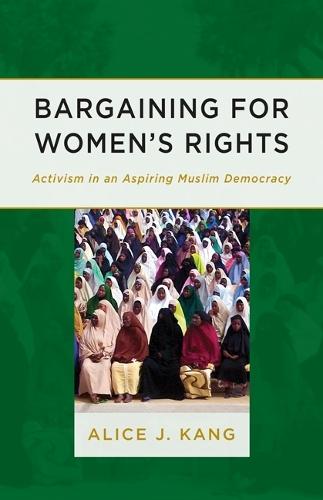
Gender relations in Muslim-majority countries have been subject to intense debate in recent decades. In some cases, Muslim women have fought for and won new rights to political participation, reproductive health, and education. In others, their agendas have been stymied. Yet missing from this discussion, until now, has been a systematic examination of how civil society groups mobilize to promote women's rights and how multiple components of the state negotiate such legislation.""In Bargaining for Women's Rights,"" Alice J. Kang argues that reform is more likely to happen when the struggle arises from within. Focusing on how a law on gender quotas and a United Nations treaty on ending discrimination against women passed in Niger while family law reform and an African Union protocol on women's rights did not, Kang shows how local women's associations are uniquely positioned to translate global concepts of democracy and human rights into concrete policy proposals. And yet, drawing on numerous interviews with women's rights activists as well as Islamists and politicians, she reveals that the former are not the only ones who care about the regulation of gender relations.Providing a solid analytic framework for understanding conflict over women's rights policies without stereotyping Muslims, ""Bargaining for Women's Rights"" demonstrates that, contrary to conventional wisdom, Islam does not have a uniformly negative effect on the prospects of such legislation.
Full Product Details
Author: Alice J. Kang
Publisher: University of Minnesota Press
Imprint: University of Minnesota Press
Dimensions:
Width: 14.00cm
, Height: 3.80cm
, Length: 21.60cm
Weight: 0.318kg
ISBN: 9780816692187
ISBN 10: 0816692181
Pages: 256
Publication Date: 30 June 2015
Audience:
General/trade
,
Professional and scholarly
,
General
,
Professional & Vocational
Format: Paperback
Publisher's Status: Active
Availability: Temporarily unavailable

The supplier advises that this item is temporarily unavailable. It will be ordered for you and placed on backorder. Once it does come back in stock, we will ship it out to you.
Reviews
An engaging, detailed look at how women activists played a vital role in Niger s adoption of women s rights policies. <i>Washington Post</i> [Kang] includes an impressive combination of original empirical research and review and analysis of alternative hypotheses to assert the argument that women, and women's movements, <i>matter</i> in the adoption of gender equality policies. <i>CHOICE</i></p> Fills an important research void on determinants of women s rights policy making in Muslim-majority democracies. <i>International Journal of Feminist Politics</i></p> Scholars in political science, sociology, women s studies, and public policy will benefit from the theoretical and substantive contributions of <i>Bargaining for Women s Rights.</i> <i>Mobilization</i></p>
Alice J. Kang compellingly argues that governments are more likely to adopt women's rights reforms when local activists mobilize for them, that opposing activists must also be considered, and that political context is essential for understanding outcomes around women's rights. Gretchen Bauer, University of Delaware Bargaining for Women s Rights is a refreshing approach to thinking about women's rights in majority Muslim countries that captures how civil society groups mobilize and how multiple components of 'the state' actually debate women's rights legislation. Barbara Cooper, Rutgers University
[Kang] includes an impressive combination of original empirical research and review and analysis of alternative hypotheses to assert the argument that women, and women's movements, matter in the adoption of gender equality policies. --CHOICE An engaging, detailed look at how women activists played a vital role in Niger's adoption of women's rights policies. --Washington Post Fills an important research void on determinants of women's rights policy making in Muslim-majority democracies. --International Journal of Feminist Politics Scholars in political science, sociology, women's studies, and public policy will benefit from the theoretical and substantive contributions of Bargaining for Women's Rights. --Mobilization An impressive study of the competition between women activists and religious conservatives in Muslim-majority, francophone Niger. --Canadian Journal of Political Science An engaging, detailed look at how women activists played a vital role in Niger's adoption of women's rights policies. --Washington Post [Kang] includes an impressive combination of original empirical research and review and analysis of alternative hypotheses to assert the argument that women, and women's movements, matter in the adoption of gender equality policies. --CHOICE Fills an important research void on determinants of women's rights policy making in Muslim-majority democracies. --International Journal of Feminist Politics Scholars in political science, sociology, women's studies, and public policy will benefit from the theoretical and substantive contributions of Bargaining for Women's Rights. --Mobilization Alice J. Kang compellingly argues that governments are more likely to adopt women's rights reforms when local activists mobilize for them, that opposing activists must also be considered, and that political context is essential for understanding outcomes around women's rights. --Gretchen Bauer, University of Delaware Bargaining for Women's Rights is a refreshing approach to thinking about women's rights in majority Muslim countries that captures how civil society groups mobilize and how multiple components of 'the state' actually debate women's rights legislation. --Barbara Cooper, Rutgers University [Kang] includes an impressive combination of original empirical research and review and analysis of alternative hypotheses to assert the argument that women, and women's movements, matter in the adoption of gender equality policies. CHOICE An engaging, detailed look at how women activists played a vital role in Niger s adoption of women s rights policies. Washington Post Alice J. Kang compellingly argues that governments are more likely to adopt women's rights reforms when local activists mobilize for them, that opposing activists must also be considered, and that political context is essential for understanding outcomes around women's rights. Gretchen Bauer, University of Delaware Bargaining for Women s Rights is a refreshing approach to thinking about women's rights in majority Muslim countries that captures how civil society groups mobilize and how multiple components of 'the state' actually debate women's rights legislation. Barbara Cooper, Rutgers University
[Kang] includes an impressive combination of original empirical research and review and analysis of alternative hypotheses to assert the argument that women, and women's movements, matter in the adoption of gender equality policies. --CHOICE An engaging, detailed look at how women activists played a vital role in Niger's adoption of women's rights policies. --Washington Post Fills an important research void on determinants of women's rights policy making in Muslim-majority democracies. --International Journal of Feminist Politics Scholars in political science, sociology, women's studies, and public policy will benefit from the theoretical and substantive contributions of Bargaining for Women's Rights. --Mobilization An impressive study of the competition between women activists and religious conservatives in Muslim-majority, francophone Niger. --Canadian Journal of Political Science An engaging, detailed look at how women activists played a vital role in Niger's adoption of women's rights policies. --Washington Post [Kang] includes an impressive combination of original empirical research and review and analysis of alternative hypotheses to assert the argument that women, and women's movements, matter in the adoption of gender equality policies. --CHOICE Fills an important research void on determinants of women's rights policy making in Muslim-majority democracies. --International Journal of Feminist Politics Scholars in political science, sociology, women's studies, and public policy will benefit from the theoretical and substantive contributions of Bargaining for Women's Rights. --Mobilization Alice J. Kang compellingly argues that governments are more likely to adopt women's rights reforms when local activists mobilize for them, that opposing activists must also be considered, and that political context is essential for understanding outcomes around women's rights. --Gretchen Bauer, University of Delaware Bargaining for Women's Rights is a refreshing approach to thinking about women's rights in majority Muslim countries that captures how civil society groups mobilize and how multiple components of 'the state' actually debate women's rights legislation. --Barbara Cooper, Rutgers University [Kang] includes an impressive combination of original empirical research and review and analysis of alternative hypotheses to assert the argument that women, and women's movements, matter in the adoption of gender equality policies. CHOICE An engaging, detailed look at how women activists played a vital role in Niger s adoption of women s rights policies. Washington Post Alice J. Kang compellingly argues that governments are more likely to adopt women's rights reforms when local activists mobilize for them, that opposing activists must also be considered, and that political context is essential for understanding outcomes around women's rights. Gretchen Bauer, University of Delaware Bargaining for Women s Rights is a refreshing approach to thinking about women's rights in majority Muslim countries that captures how civil society groups mobilize and how multiple components of 'the state' actually debate women's rights legislation. Barbara Cooper, Rutgers University
An engaging, detailed look at how women activists played a vital role in Niger's adoption of women's rights policies. --Washington Post [Kang] includes an impressive combination of original empirical research and review and analysis of alternative hypotheses to assert the argument that women, and women's movements, matter in the adoption of gender equality policies. --CHOICE Fills an important research void on determinants of women's rights policy making in Muslim-majority democracies. --International Journal of Feminist Politics Scholars in political science, sociology, women's studies, and public policy will benefit from the theoretical and substantive contributions of Bargaining for Women's Rights. --Mobilization
Author Information
Alice J. Kang is assistant professor of political science and ethnic studies at the University of NebraskaLincoln.