|
|
|||
|
||||
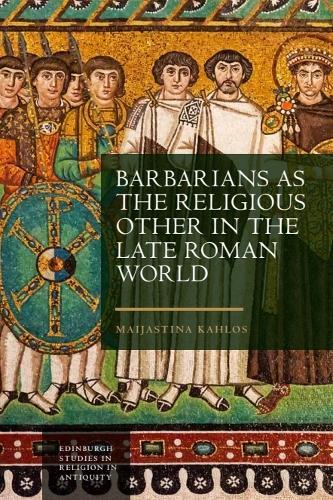
OverviewTwo major transformations of Late Antiquity redefined what it meant to be Roman: the Christianisation of imperial power and the collapse of the Western Roman state. This book examines how Prudentius, Athanasius, Augustine and other Roman and post-Roman writers used the figure of the 'barbarian' to articulate these shifting religious, political, and cultural boundaries. Religious identity - especially the divide between Nicene orthodoxy and so-called 'heretical' forms such as Homoian Christianity - became a key marker of Romanness. Barbarians such as Goths and Vandals were not only portrayed as ethnic outsiders but also as 'pagans' or 'heretics', threatening both the Church and Roman civilisation itself. While heresy was often equated with barbarism, Roman elites also downplayed these differences when politically convenient, using religious language to both legitimise and delegitimise power. Through thematic and regional case studies, Kahlos shows how religion, ethnicity and imperial traditions were entangled in the construction of Roman identity and how 'barbarians' were used to define, defend or reshape it. Full Product DetailsAuthor: Maijastina Kahlos (Senior Research Fellow, University of Helsinki)Publisher: Edinburgh University Press Imprint: Edinburgh University Press ISBN: 9781399514446ISBN 10: 139951444 Pages: 296 Publication Date: 28 February 2026 Audience: Professional and scholarly , College/higher education , Professional & Vocational , Postgraduate, Research & Scholarly Format: Hardback Publisher's Status: Forthcoming Availability: Not yet available This item is yet to be released. You can pre-order this item and we will dispatch it to you upon its release. Table of ContentsAcknowledgements Abbreviations Introduction Part I 1. Christian Romans and Pagan Barbarians? 2. The Taming of Barbarians 3. Unity and Heresy: Barbarian Imagery in Intra-Christian Rivalries 4. Barbarian Warlords and their Religious Choices Part II 5. Encounters and Social Realities: Visigoths in Gaul 6. Encounters and Social Realities: Vandals in Africa 7. Encounters and Social Realities: Ostrogoths in Italy Part III 8. Suspicions and Traitors: Barbarising the Rival 9. The Providential Use of Barbarians 10. Eschatology and the Forces of Chaos: Gigantomachia, Gog and Magog Conclusion Editions and translations BibliographyReviewsThis is an important book that pays a close attention to the intricate ways that religion, politics, cultural perceptions and military events were inextricably intertwined in this crucial transition period. It will serve both as a wonderful introduction to students while experts are bound to learn from it. -- Eric Fournier, West Chester University Author InformationMaijastina Kahlos holds the title of Docent at the University of Helsinki and is a Principal Researcher at the University of Lisbon Tab Content 6Author Website:Countries AvailableAll regions |
||||