Overview
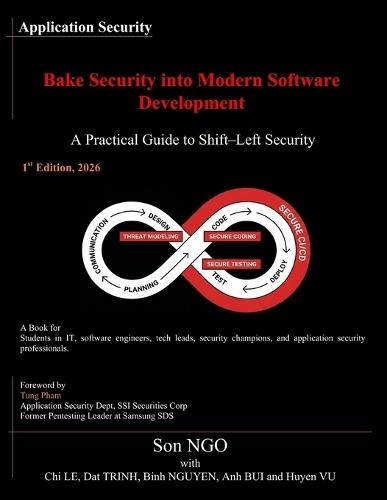
Step into the world of Secure SDLC with this practical guide that takes you from fundamentals to shipping secure software. Learn how to integrate security into requirements, design, implementation, and testing, then operationalize it through lightweight gates and measurable outcomes - so security is part of delivery, not a last-minute audit. Key Features: Turn shift-left security into an end-to-end workflow across the SDLC - from requirements to release Apply threat modeling and secure design thinking to reduce risk before code is written Use secure coding guidance mapped to common vulnerability classes and real failure modes Build evidence-driven quality gates (requirements/design review, bug bar, release readiness) - to enforce consistency without slowing teams down Integrate security testing into CI/CD and triage findings with an engineering-friendly process Book Description: Software runs the core of nearly every organization, and security failures rarely come from a single ""bad line of code."" They emerge from early decisions - ambiguous requirements, risky trust boundaries, missing abuse cases, weak defaults, and untested assumptions. This book shows how to prevent those failures by baking security into modern software development through a structured Secure SDLC approach. You will focus on how teams actually work: capturing security-relevant requirements, modeling threats and trust boundaries, selecting mitigations and patterns, writing secure code, and validating with security testing that fits your delivery model. Practical artifacts - checklists, templates, and gate criteria - help you scale security across products while keeping delivery predictable. Throughout the book, you build a repeatable workflow you can adapt to different stacks and maturity levels - for web, enterprise, and cloud-native systems. You learn to reduce exploitable bug chains and keep assumptions verified over time. Artifacts keep teams aligned too. By the end, you will be able to implement a Secure SDLC program that improves security outcomes without unnecessary bureaucracy - with clear phase-by-phase actions, evidence to collect, and a shared definition of ""done"". What you will learn: Translate security goals into actionable requirements and quality criteria Perform threat modeling using trust boundaries, abuse cases, and risk-driven prioritization Apply secure design principles, patterns, and mitigations that fit real trade-offs Prevent common vulnerabilities with secure coding practices and lightweight reviews Integrate security testing (SAST, DAST, dependency/SBOM checks) into CI/CD Define and run security gates such as design review, bug bar, and release readiness Triage and fix findings efficiently while improving feedback loops over time Who this book is for Software engineers, tech leads, security champions, and application security professionals who want a practical, systematic way to build secure software. Familiarity with modern delivery (CI/CD, cloud, web or microservices) is helpful. Table of Contents Secure SDLC overview and mindset Requirements modeling with security in mind Architecture and Design Threat modeling and risk-driven prioritization 1 Mitigations, Security Patterns and Cryptography in Secure SDLC Secure coding foundations and common vulnerability classes Security testing strategy and toolchain integration Secure CI/CD Pipeline
Full Product Details
Author: Chi Phuong Le ,
Binh Anh Nguyen ,
Dat Tien Trinh
Publisher: Independently Published
Imprint: Independently Published
Volume: 1
Dimensions:
Width: 21.60cm
, Height: 2.70cm
, Length: 27.90cm
Weight: 1.225kg
ISBN: 9798247427957
Pages: 534
Publication Date: 20 March 2026
Audience:
General/trade
,
General
Format: Paperback
Publisher's Status: Active
Availability: Available To Order

We have confirmation that this item is in stock with the supplier. It will be ordered in for you and dispatched immediately.