Overview
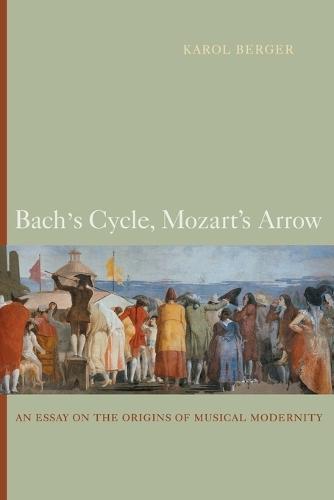
In this erudite and elegantly composed argument, Karol Berger uses the works of Monteverdi, Bach, Mozart, and Beethoven to support two groundbreaking claims: first, that it was only in the later eighteenth century that music began to take the flow of time from the past to the future seriously; second, that this change in the structure of musical time was an aspect of a larger transformation in the way educated Europeans began to imagine and think about time with the onset of modernity, a part of a shift from the premodern Christian outlook to the modern post-Christian worldview. Until this historical moment, as Berger illustrates in his analysis of Bach's St. Matthew Passion, music was simply ""in time."" Its successive events unfolded one after another, but the distinction between past and future, earlier and later, was not central to the way the music was experienced and understood. But after the shift, as he finds in looking at Mozart's Don Giovanni, the experience of linear time is transformed into music's essential subject matter; the cycle of time unbends and becomes an arrow. Berger complements these musical case studies with a rich survey of the philosophical, theological, and literary trends influencing artists during this period.
Full Product Details
Author: Karol Berger
Publisher: University of California Press
Imprint: University of California Press
Dimensions:
Width: 15.20cm
, Height: 2.80cm
, Length: 22.90cm
Weight: 0.590kg
ISBN: 9780520257979
ISBN 10: 0520257979
Pages: 432
Publication Date: 02 October 2007
Audience:
Professional and scholarly
,
Professional & Vocational
Format: Paperback
Publisher's Status: Active
Availability: Out of stock

The supplier is temporarily out of stock of this item. It will be ordered for you on backorder and shipped when it becomes available.
Reviews
[A] tautly constructed and thought-provoking new study. --Times Literary Supplement (Tls) Illuminating. --Notes Exceptionally interesting and full of insights. --European Legacy [A] formidably learned and wittily expressed book. --Modernism/Modernity As an explanation of the tenets of modern music's reception ... Berger's thesis may be accepted as hard music historical fact. --Canadian Jrnl of History
[A] tautly constructed and thought-provoking new study. Times Literary Supplement (TLS) Illuminating. Notes Exceptionally interesting and full of insights. -- Marina Ritzarev European Legacy [A] formidably learned and wittily expressed book. -- Mary Hunter Modernism/Modernity Rich tapestry of cultural history. Journal American Musicological Soci As an explanation of the tenets of modern music's reception ... Berger's thesis may be accepted as hard music historical fact. Canadian Journal Of History
[A] tautly constructed and thought-provoking new study. --Times Literary Supplement (Tls) Illuminating. --Notes Exceptionally interesting and full of insights. --European Legacy
Author Information
Karol Berger is the Osgood Hooker Professor in Fine Arts at Stanford University. His books include A Theory of Art (2000) .