Overview
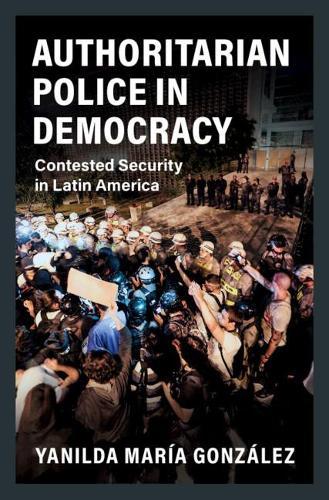
In countries around the world, from the United States to the Philippines to Chile, police forces are at the center of social unrest and debates about democracy and rule of law. This book examines the persistence of authoritarian policing in Latin America to explain why police violence and malfeasance remain pervasive decades after democratization. It also examines the conditions under which reform can occur. Drawing on rich comparative analysis and evidence from Brazil, Argentina, and Colombia, the book opens up the 'black box' of police bureaucracies to show how police forces exert power and cultivate relationships with politicians, as well as how social inequality impedes change. González shows that authoritarian policing persists not in spite of democracy but in part because of democratic processes and public demand. When societal preferences over the distribution of security and coercion are fragmented along existing social cleavages, politicians possess few incentives to enact reform.
Full Product Details
Author: Yanilda María González (Harvard University, Massachusetts)
Publisher: Cambridge University Press
Imprint: Cambridge University Press
Dimensions:
Width: 23.00cm
, Height: 3.00cm
, Length: 15.00cm
Weight: 0.750kg
ISBN: 9781108830393
ISBN 10: 1108830390
Pages: 376
Publication Date: 12 November 2020
Audience:
Professional and scholarly
,
College/higher education
,
Professional & Vocational
,
Tertiary & Higher Education
Format: Hardback
Publisher's Status: Active
Availability: Manufactured on demand

We will order this item for you from a manufactured on demand supplier.
Reviews
'In this remarkable, bracing, and deeply researched book, Yanilda Gonzalez goes to the heart of a question that has remained one of the most important, and underexamined questions of this century: why do the corrosive policing practices and the rampant state violence of authoritarian regimes persist after the transition to democracy? Authoritarian Police in Democracy reveals that coercive institutional arrangements are not simply holdovers of an authoritarian past, nor are they incompatible with democracy, but owe their endurance to democratic politics itself.' Vesla M. Weaver, Johns Hopkins University 'Building on remarkable and difficult field work, this book examines the presence of authoritarian modes of coercion in the midst of otherwise democratic regimes. The analysis makes sense of the intractability of violent policing in democracies - policymakers are vulnerable to the leverage of police forces, which control the means of coercion; and they most often face little pressure for reform from electorates demanding more order and security. Timely and timeless, the book offers an invaluable look into the darkest corners of many contemporary democracies.' Daniel M. Brinks, University of Texas at Austin 'Authoritarian Police in Democracy is a breakthrough book for any scholar interested in policing, security, violence, and democratic politics. Gonzalez develops an original and compelling theory of authoritarian coercion in democratic regimes and traces the political challenges to police reform in three highly impressive case studies. In doing so, she powerfully illustrates how and why the distribution of repression and protection by police often reproduces social stratification, but also explains the conditions under which reform can and does occur. An extraordinary accomplishment.' Lisa L. Miller, Rutgers University
'In this remarkable, bracing, and deeply researched book, Yanilda González goes to the heart of a question that has remained one of the most important, and underexamined questions of this century: why do the corrosive policing practices and the rampant state violence of authoritarian regimes persist after the transition to democracy? Authoritarian Police in Democracy reveals that coercive institutional arrangements are not simply holdovers of an authoritarian past, nor are they incompatible with democracy, but owe their endurance to democratic politics itself.' Vesla M. Weaver, Johns Hopkins University 'Building on remarkable and difficult field work, this book examines the presence of authoritarian modes of coercion in the midst of otherwise democratic regimes. The analysis makes sense of the intractability of violent policing in democracies - policymakers are vulnerable to the leverage of police forces, which control the means of coercion; and they most often face little pressure for reform from electorates demanding more order and security. Timely and timeless, the book offers an invaluable look into the darkest corners of many contemporary democracies.' Daniel M. Brinks, University of Texas at Austin 'Authoritarian Police in Democracy is a breakthrough book for any scholar interested in policing, security, violence, and democratic politics. González develops an original and compelling theory of authoritarian coercion in democratic regimes and traces the political challenges to police reform in three highly impressive case studies. In doing so, she powerfully illustrates how and why the distribution of repression and protection by police often reproduces social stratification, but also explains the conditions under which reform can and does occur. An extraordinary accomplishment.' Lisa L. Miller, Rutgers University 'This book lays a marvelous foundation for all scholars, policymakers, and activists who are committed to advancing this critical mission, and González should be applauded for her wisdom, erudition, and savvy in sharing both the barriers and enablers to achieving such goals.' Diane E. Davis, ReVista '… [a] very clear, timely, and well-researched book … a must-read for academics interested in understanding the drivers of institutional change, as well as activists and policy makers focused on devising more democratic security institutions.' Lucía Tiscornia, Perspectives on Politics '… this is a good book. González offers critical and useful insights into the so-called hard problem of police reform. … The book is not just about the demerits and problematic implications of authoritarian policing but also about how police reforms, as political processes, are either enacted or not. To have shown the path is, in my opinion, the principal achievement of the book. As police reform efforts and debates are, in my view, destined to continue in the region, González's book is by default destined to be a reference in these debates.' Carlos Vilalta, American Journal of Sociology
'In this remarkable, bracing, and deeply researched book, Yanilda González goes to the heart of a question that has remained one of the most important, and underexamined questions of this century: why do the corrosive policing practices and the rampant state violence of authoritarian regimes persist after the transition to democracy? Authoritarian Police in Democracy reveals that coercive institutional arrangements are not simply holdovers of an authoritarian past, nor are they incompatible with democracy, but owe their endurance to democratic politics itself.' Vesla M. Weaver, Johns Hopkins University 'Building on remarkable and difficult field work, this book examines the presence of authoritarian modes of coercion in the midst of otherwise democratic regimes. The analysis makes sense of the intractability of violent policing in democracies - policymakers are vulnerable to the leverage of police forces, which control the means of coercion; and they most often face little pressure for reform from electorates demanding more order and security. Timely and timeless, the book offers an invaluable look into the darkest corners of many contemporary democracies.' Daniel M. Brinks, University of Texas at Austin 'Authoritarian Police in Democracy is a breakthrough book for any scholar interested in policing, security, violence, and democratic politics. González develops an original and compelling theory of authoritarian coercion in democratic regimes and traces the political challenges to police reform in three highly impressive case studies. In doing so, she powerfully illustrates how and why the distribution of repression and protection by police often reproduces social stratification, but also explains the conditions under which reform can and does occur. An extraordinary accomplishment.' Lisa L. Miller, Rutgers University 'This book lays a marvelous foundation for all scholars, policymakers, and activists who are committed to advancing this critical mission, and González should be applauded for her wisdom, erudition, and savvy in sharing both the barriers and enablers to achieving such goals.' Diane E. Davis, ReVista '… [a] very clear, timely, and well-researched book … a must-read for academics interested in understanding the drivers of institutional change, as well as activists and policy makers focused on devising more democratic security institutions.' Lucía Tiscornia, Perspectives on Politics
Author Information
Yanilda María González is Assistant Professor of Public Policy at Harvard Kennedy School. She holds a Ph.D. in Politics and Social Policy from Princeton University and was a postdoctoral fellow at the Ash Center for Democratic Governance and Innovation at Harvard Kennedy School.