Overview
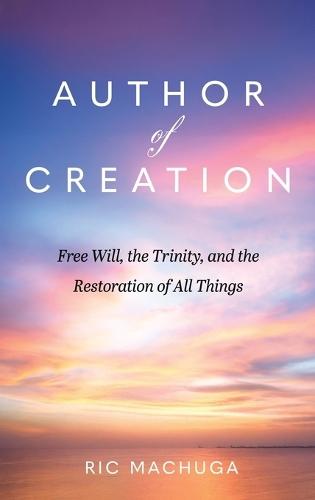
Metaphors matter. Isaac Newton likened God to one ""very skilled in geometry and mechanics."" Soon this mathematically skilled mechanic was widely referred to as the Supreme Being, quantitatively surpassing all other beings. But it wasn't always so. John's Gospel likens God to an author needing only a Word to speak a universe into existence. In this metaphor ""God"" refers to a reality qualitatively distinct from created ""existence""--authors and their characters, after all, exist in a very different way. A ""God"" who can't even be said to exist the way people, rocks, and mountains exist sounds more like agnosticism than traditional Christianity. But that's because the metaphor of God as Supreme Being has become so entrenched that people forget Christians traditionally described God as the Holy Trinity of Father, Son, and Spirit. Far from being a shibboleth testing for ""doctrinal purity,"" the Trinity made this unknowable God knowable, thereby bringing all souls to glory.
Full Product Details
Author: Ric Machuga
Publisher: Cascade Books
Imprint: Cascade Books
Dimensions:
Width: 15.20cm
, Height: 2.10cm
, Length: 22.90cm
Weight: 0.562kg
ISBN: 9798385252060
Pages: 292
Publication Date: 30 January 2026
Audience:
General/trade
,
General
Format: Hardback
Publisher's Status: Active
Availability: Available To Order

We have confirmation that this item is in stock with the supplier. It will be ordered in for you and dispatched immediately.
Reviews
""A fascinating and mind-expanding exploration of Christian thought regarding God's creation of all things and its far-reaching (sometimes surprising) implications. Machuga expertly guides us across a vast terrain of connected issues, from creation out of nothing to divine action, free will, the nature of a human being, the philosophy of language, prayer, predestination, the Trinity, Christology, and the destiny of the cosmos. Highly recommended."" --Gregory MacDonald, author of The Evangelical Universalist ""Author of Creation offers a philosophically disciplined and theologically constructive account of divine action, freedom, and eschatological hope. Machuga compellingly advances a properly Trinitarian account of God--as Creator non aliud, never in competition with creatures--that secures both genuine human freedom and the universal restoration of all things. This is a careful, conceptually rigorous work that advances contemporary debates in philosophical and systematic theology."" --Jon DePue, co-author Beyond Justification: Liberating Paul's Gospel ""This book is an exhilarating adventure in theology with both feet firmly planted in an orthodox concept of God as all-powerful, all-loving, and transcendent. Drawing heavily from the Aristotelian-Thomistic tradition, Machuga argues that the metaphor of God as an author is preferable to that of a craftsman. He insightfully applies the author metaphor to issues at the interface of theology and a variety of disciplines, from physics to linguistics. If you're like me, you may not agree with some of the moves Machuga makes, but even when you disagree with him, somehow his ideas are still enlightening and beckon deeper inquiry. . . . One of the most satisfying aspects of Machuga's book is that he uses fresh analogies and illustrations to reveal the limits of some standard theological categories. The result is a paradoxical gain for the reader, who will simultaneously grow in epistemic humility and confident faith by reading this book."" --James S. Spiegel, Executive Director, Center for Faith and Life, Geneva College, Beaver Falls, Pennsylvania
Author Information
Ric Machuga is Professor Emeritus at Butte College.