|
|
|||
|
||||
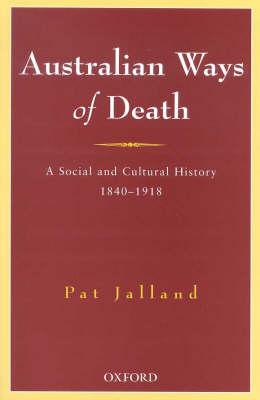
OverviewThis volume is the result of intensive research into where and how people have died in Australia, how they have been buried, mourned and commemmorated, and how social and regional factors have influenced mortality rates and people's consciousness of death and loss. The book describes how Australians in the past came to terms with death within the constraints and cultural perspectives of their own times. Historians in other western societies have responded to the growing interest and concern with death through books, conferences, and journals, but until now there has been little Australian material available to satisfy the increasing interest in the subject, stimulated by events such as debated on euthanasia, new developments in technology, and youth suicides. Full Product DetailsAuthor: Patricia JallandPublisher: Oxford University Press Australia Imprint: OUP Australia and New Zealand Dimensions: Width: 15.00cm , Height: 2.50cm , Length: 23.00cm Weight: 0.580kg ISBN: 9780195507546ISBN 10: 0195507541 Pages: 368 Publication Date: 15 March 2002 Audience: College/higher education , Tertiary & Higher Education Format: Hardback Publisher's Status: Active Availability: To order Stock availability from the supplier is unknown. We will order it for you and ship this item to you once it is received by us. Table of ContentsReviewsThis is traditional historical scholarship in its best sense: written with pellucid clarity, underpinned with dense and thorough documentation, informed by running comparisons with other times and other places and always evoking the emotional immediacy of experience ... It avoids the two principal hazards that loom over the historical treatment of death: mawkish sentimentality at one end and statistical rigor mortis at the other ... a remarkable perspective on Australiafrom a most unusual angle. Social History Society Bulletin Jalland's achievement is to assay changes in the cultural and emotional currents over the rapidly receding nineteenth century. Many of the issues with which she deals are timeless and her treatment of the individual psychology in the stages of grieving, as well as the power of social conditioning, are models of clarity for both past and present. Social History Society Bulletin Author InformationTab Content 6Author Website:Countries AvailableAll regions |
||||