Overview
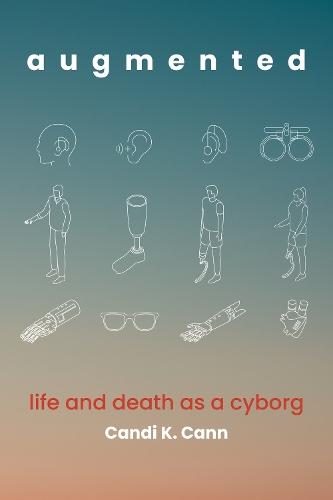
A provocative rethinking of the intersection of death, technology, and disability, for a better life. We are all cyborgs, relying on technology-whether it's Alexa, a pacemaker, or a titanium knee-for our quotidian existence. In our deep connection to a technological world, from robots to augmented and virtual realities, metaverses, and gaming, Candi Cann sees an opportunity, and good reason, to question our ideas about accessibility and inclusion. In augmented, she asks us to reconsider traditional notions of biology and death. Having relied on hearing aids from the age of four, Cann uses her experience to challenge readers to reconsider their assumptions about technologies and their role in life-and death. She also focuses on what it means that most of us are living longer with the intervention of medical technologies, and how a better understanding of our relationship to technology will grant us greater control as we age. Drawing on her life experience in Asia, the author explains how cultural and religious views of machines and artificial intelligence vary globally-in particular, how a Western fear of machines contrasts with an animistic worldview that can see machines as conduits of care for others, embedding spiritual possibilities.
Reviews
Included in Publishers Weekly's Spring 2026 Fiction & Nonfiction Preview ENDORSEMENTS “A brilliant, compassionate, and provocative reframing of what it means to be human in a tech-entwined world—augmented urgently calls us to protect what matters most: care, connection, and meaning.” —Shoshana Ungerleider, Host and Producer, TED Health; Founder, End Well “Insightful, powerful, essential. Through a dialog between personal experience, spirituality, and science, Candi Cann brings a new understanding of how technological augmentations will impact life and death. A needed text for anyone interested in the future of mankind.” —Matthieu J. Guitton, Editor-in-Chief of Computers in Human Behavior and Computers in Human Behavior: Artificial Humans “Candi Cann’s book brings together three very important and often neglected intersecting topics: death, disability, and technology. Exactly the death studies scholar we need to help us understand what it means to grieve today.” —John Troyer, author of Technologies of the Human Corpse “Candi Cann urges reflection on how we are, in effect, cyborgs and calls for building a more inclusive, compassionate community.” —Gil-Soo Han, author of Funeral Rites in Contemporary Korea
ENDORSEMENTS “A brilliant, compassionate, and provocative reframing of what it means to be human in a tech-entwined world—augmented urgently calls us to protect what matters most: care, connection, and meaning.” —Shoshana Ungerleider, Host and Producer, TED Health; Founder, End Well “Insightful, powerful, essential. Through a dialog between personal experience, spirituality, and science, Candi Cann brings a new understanding of how technological augmentations will impact life and death. A needed text for anyone interested in the future of mankind.” —Matthieu J. Guitton, Editor-in-Chief of Computers in Human Behavior and Computers in Human Behavior: Artificial Humans “Candi Cann’s book brings together three very important and often neglected intersecting topics: death, disability, and technology. Exactly the death studies scholar we need to help us understand what it means to grieve today.” —John Troyer, author of Technologies of the Human Corpse “Candi Cann urges reflection on how we are, in effect, cyborgs and calls for building a more inclusive, compassionate community.” —Gil-Soo Han, author of Funeral Rites in Contemporary Korea
Author Information
Former Fulbright Scholar, Candi K. Cann is a professor at Baylor University with a research focus on death, dying, and grief, and the intersections of marginality, diversity, and death technologies.