Overview
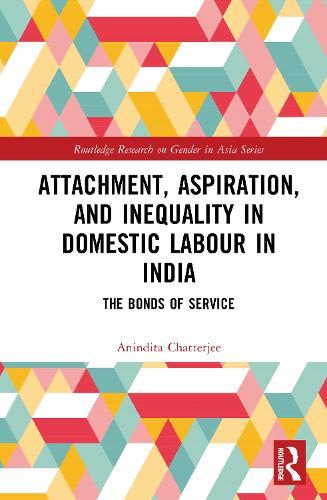
This novel volume presents an ethnography of the gendered dynamics of informal labour relations in three cosmopolitan cities in India—Kolkata, Delhi, and Noida—in order to analyse women’s agency and identity formation in the domestic labour sphere in India. Structured around an extensive set of in-depth narratives from female workers and employers, chapters reveal how employers and workers use language to express reciprocal support and care. Novel in its focus on affect—including the emotions, moods, and atmospheres that emerge from, and shape, the conditions of labour—chapters demonstrate the mutual, bi-directional ‘affective attachments and dependencies that are formed between employers and workers through practices of mutual care. The book explores the construction of gender identities among workers, in part shaped by a variety of other intersecting relationships, including caste, ethnicity, and religion. As well as an exploration of worker-employer relations within the employers’ homes, the book also examines the squatter settlements of workers, uncovering aspects of workers’ domestic lives, relationships with each other, and broader relationships between transregional and trans-border migrants. Examining a space where gender, migration, language, and emotion intersect, this book will be of interest to researchers studying gender, South Asian studies, anthropology, labour studies, migration studies, and urban studies.
Full Product Details
Author: Anindita Chatterjee
Publisher: Taylor & Francis Ltd
Imprint: Routledge
Weight: 0.480kg
ISBN: 9781041015727
ISBN 10: 1041015720
Pages: 160
Publication Date: 20 February 2026
Audience:
College/higher education
,
Tertiary & Higher Education
Format: Hardback
Publisher's Status: Active
Availability: Not yet available

This item is yet to be released. You can pre-order this item and we will dispatch it to you upon its release.
Author Information
Anindita Chatterjee is Visiting Professor at Ashoka University (Delhi, India) in the Department of Sociology and Anthropology. She is affiliated with BRAC University. Prior to joining Ashoka, Chatterjee has held academic appointments in Bangladesh, American University of Sharjah (UAE), and Symbiosis International University (India). She has held postdoctoral fellowship at Max Weber Stiftung IBO (New Delhi) and was a Postdoctoral Research Consultant with Sarah Lamb (Brandeis University) on Dr. Lamb’s Andrew Carnegie Fellowship project on ‘Successful Aging’s Global Moment: Visions and Dilemmas of Aging Well’. Her research and teaching engage with the fields of globalization, labour, migration, structural inequality, ethics and culture, gender and sexuality, reproductive health, ageing, and well-being. Chatterjee has presented her research findings at multiple international and national conferences over the past 16 years, and she also has a record of producing collaborative research with an international network of scholars.