Overview
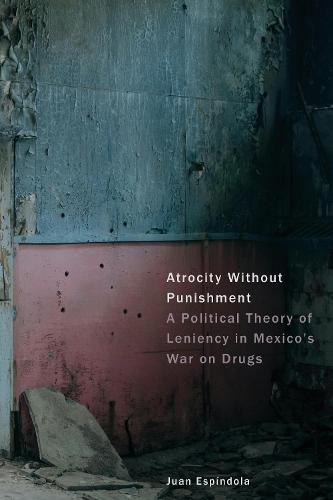
Leniency might sometimes be the ethical response to atrocity. However, the more extraordinary an act of violence is, the greater the compulsion to severely punish the offender. The rationale is that the threat of harsh punishment will be more effective at preventing crime. At the same time, the notion that the criminal justice system is corrupt and ineffective has become commonplace. At the center of these conflicting trends is a puzzle that this book sets out to solve: what if punishment should not only be judged by its effectiveness, but also by its morality? Mexico's War on Drugs has unleashed an endless cycle of violence in the country. The resulting human toll is catastrophic. Atrocity Without Punishment advances ethically compelling reasons to impose lenient sentences on offenders involved in drugtrafficking, including many who commit serious offenses. Juan Espíndola argues that this is in fact a morally permissible, even obligatory, way to hold perpetrators accountable. From this vantage point, Espíndola problematizes the relationship between punishment and core political values such as legitimacy and justice. By challenging the criminal justice system in this way, he charts a path toward a more just criminal legal system that can muster the support of those who reject abolitionism.
Full Product Details
Author: Juan Espíndola
Publisher: Stanford University Press
Imprint: Stanford University Press
Edition: New edition
ISBN: 9781503644922
ISBN 10: 1503644928
Pages: 216
Publication Date: 03 February 2026
Audience:
Professional and scholarly
,
Professional & Vocational
Format: Paperback
Publisher's Status: Active
Availability: Not yet available

This item is yet to be released. You can pre-order this item and we will dispatch it to you upon its release.
Reviews
""This book skillfully shows how to discuss the morality of leniency and punishment in the real world. It should be widely read by every political theorist interested in making ethical theory take seriously the realities of politics.""--Paulina Ochoa Espejo, University of Virginia ""This is the only work that I know of that even attempts to put forward a constructive ethical and political proposal around Mexico's judicial normative order for the punishment for serious crimes. Written with an impressive combination of philosophical rigor, conceptual originality, and a well-informed and analytically acute understanding of the real-world conditions in which it is intervening, this book is everywhere and all-the-way-through admirably synthetic and precise, and it can serve well as a summary and synthesis of what, specifically, is the problem of criminal justice in contemporary Mexico."" --Claudio Lomnitz, Columbia University and author of Sovereignty and Extortion: A New State Form in Mexico ""Through a careful consideration of Mexicos recent drug-related violence and incarceration, Atrocity Without Punishment craftily turns rational, practical, and necessary the apparent inexplicability of humanness and compassion."" --Mauricio Tenorio-Trillo, The University of Chicago
""This is the only work that I know of that even attempts to put forward a constructive ethical and political proposal around Mexico's judicial normative order for the punishment for serious crimes. Written with an impressive combination of philosophical rigor, conceptual originality, and a well-informed and analytically acute understanding of the real-world conditions in which it is intervening, this book is everywhere and all-the-way-through admirably synthetic and precise, and it can serve well as a summary and synthesis of what, specifically, is the problem of criminal justice in contemporary Mexico."" --Claudio Lomnitz, Columbia University and author of Sovereignty and Extortion: A New State Form in Mexico ""Through a careful consideration of Mexicos recent drug-related violence and incarceration, Atrocity Without Punishment craftily turns rational, practical, and necessary the apparent inexplicability of humanness and compassion."" --Mauricio Tenorio-Trillo, The University of Chicago
Author Information
Juan Espíndola is Associate Professor at the Institute for Philosophical Research in the national Autonomous University of Mexico. He is the author of Transitional Justice After German Reunification (2015), and El hombre que lo podía todo (2004).