Overview
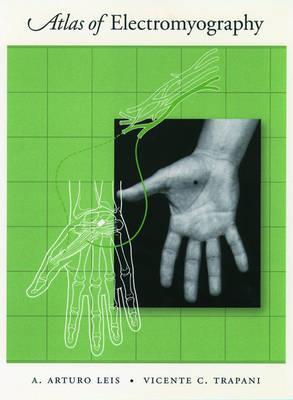
This visually alluring book is an anatomical guide for students and practitioners of electromyography, including neurologists and rehabilitation specialists. It provides high quality anatomical illustrations of skeletal muscles that include nerve, plexus, and root supply; photographs of each muscle in healthy subjects to enable the practitioner to identify the optimum site of EMG needle insertion; clinical features of the major conditions affecting peripheral nerves; and electordiagnostic strategies for the confirming suspected lesions of the peripheral nervous system.
Full Product Details
Author: A. Arturo Leis ,
Vicente C. Trapani
Publisher: Oxford University Press Inc
Imprint: Oxford University Press Inc
Dimensions:
Width: 21.60cm
, Height: 1.90cm
, Length: 28.00cm
Weight: 0.928kg
ISBN: 9780195112504
ISBN 10: 0195112504
Pages: 218
Publication Date: 10 February 2000
Audience:
Professional and scholarly
,
Professional & Vocational
Format: Hardback
Publisher's Status: Unknown
Availability: Awaiting stock

Reviews
<br> The text includes excellent illustrations, corresponding photographs, and well organized outlines...This excellent guide should become a standard text for residents in clinical neurophysiology programs. --Annals, The Royal College of Physicians and Surgeons of Canada, February 2001<br> This electromyography book is useful and high quality. It is above average in content compared to other books in the field of electromyography. It is superior as a manageable, portable text written with a succinct, concise, organized approach to other books in this field. -- Doody's<br> This atlas is an excellent guide for the practicing electromyographer and the student beginner and should become a standard text for residents in clinical neurophysiology programs. -- R.D. Gordon Blair, MD<br> All of the plexuses and peripheral nerves in the upper and lower extremities, which are commonly evaluated clinically and by EMG, have excellent diagrams and descriptions. The brief comments and clinical feat
The text includes excellent illustrations, corresponding photographs, and well organized outlines...This excellent guide should become a standard text for residents in clinical neurophysiology programs. --Annals, The Royal College of Physicians and Surgeons of Canada, February 2001 This electromyography book is useful and high quality. It is above average in content compared to other books in the field of electromyography. It is superior as a manageable, portable text written with a succinct, concise, organized approach to other books in this field. -- Doody's This atlas is an excellent guide for the practicing electromyographer and the student beginner and should become a standard text for residents in clinical neurophysiology programs. -- R.D. Gordon Blair, MD All of the plexuses and peripheral nerves in the upper and lower extremities, which are commonly evaluated clinically and by EMG, have excellent diagrams and descriptions. The brief comments and clinical features, with references, add to the value of the atlas....The greatest value of this atlas is the diagrams of the root innervation of the specific muscle to be examined. These diagrams are especially important in the evaluation and diagnosis of patients with possible root-plexus syndromes. This atlas is recommended especially for the beginning resident physician or fellow in neuromuscular disease....The atlas is a worthwhile addition to the library in the EMG laboratory. --Annals of Neurology The written text with drawings and photographs for each muscle described is beautifully organized in one book page, a fact that enables a quick search of the book... This is an excellent book, classic and up to date at the same time, very easy to read with simple (but not simplified) 'take home' messages...[this] is a wonderful meeting point of three academic generations. --European Journal of Paediatric Neurology
The text includes excellent illustrations, corresponding photographs, and well organized outlines...This excellent guide should become a standard text for residents in clinical neurophysiology programs. --Annals, The Royal College of Physicians and Surgeons of Canada, February 2001 This electromyography book is useful and high quality. It is above average in content compared to other books in the field of electromyography. It is superior as a manageable, portable text written with a succinct, concise, organized approach to other books in this field. -- Doody's This atlas is an excellent guide for the practicing electromyographer and the student beginner and should become a standard text for residents in clinical neurophysiology programs. -- R.D. Gordon Blair, MD All of the plexuses and peripheral nerves in the upper and lower extremities, which are commonly evaluated clinically and by EMG, have excellent diagrams and descriptions. The brief comments and clinical features, with references, add to the value of the atlas....The greatest value of this atlas is the diagrams of the root innervation of the specific muscle to be examined. These diagrams are especially important in the evaluation and diagnosis of patients with possible root-plexus syndromes. This atlas is recommended especially for the beginning resident physician or fellow in neuromuscular disease....The atlas is a worthwhile addition to the library in the EMG laboratory. --Annals of Neurology The written text with drawings and photographs for each muscle described is beautifully organized in one book page, a fact that enables a quick search of the book... This is an excellent book, classic and up to date at the same time, very easy to read with simple (but not simplified) 'take home' messages...[this] is a wonderful meeting point of three academic generations. --European Journal of Paediatric Neurology