Overview
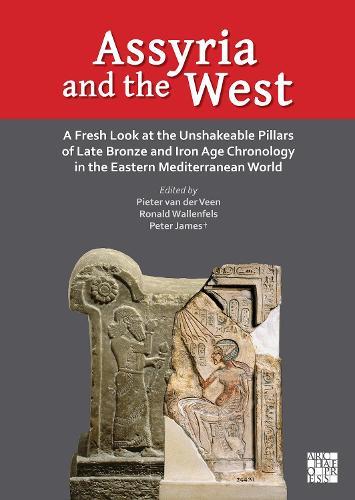
Many years ago, archaeologist George Hanfmann wrote that: ‘a word of caution must be added regarding the so-called ‘absolute’ dates. Because the Near East is so vital for the chronologies of the European, Central Asiatic … areas, it is well to remind ourselves from time to time that the two great pillars of the chronology of the Bronze Age, the Egyptian and the Mesopotamian, are not two stout towers resting on immovable foundations.’ His first pillar, the chronology of Egypt, has come under increasing scrutiny, particularly with respect to the ‘Third Intermediate Period’, which separates the 26th Dynasty from Egypt’s earlier history. To establish firmer dates for New Kingdom Egypt, scholars now point to synchronisms with Mesopotamia. Yet, how valid are these synchronisms? In many respects, Mesopotamian chronology seems antagonistic rather than complementary to the Egyptian. Egypt provides the dates for the Late Bronze Age Hittite empire, while Assyria controls those of the Neo-Hittite kingdoms that succeeded it in northern Syria during the Iron Age. Here, Imperial Hittite styles come into conflict with indications from Assyrian-dated artistic sequences. Similarly, at Byblos, links with Neo-Assyrian art have raised a mystery concerning its royal inscriptions, while Israel remains the focal point of heated debates in Iron Age archaeology. An option is simply to lower the start of the Iron Age, and there is much evidence from Mesopotamia consistent with this. The articles in this volume deal with several important aspects of ‘Assyria and the West’ (as related to the so-called ‘Dark Age’).
Full Product Details
Author: Pieter van der Veen (Reader of Levantine Archaeology, Johannes Gutenberg University of Mainz) ,
Ronald Wallenfels (Adjunct-associate Professor of Hebrew and Judaic Studies, New York University) ,
Peter James (Independent Researcher)
Publisher: Archaeopress
Imprint: Archaeopress Archaeology
Weight: 1.986kg
ISBN: 9781803279893
ISBN 10: 1803279893
Pages: 446
Publication Date: 10 July 2025
Audience:
Professional and scholarly
,
Professional & Vocational
Format: Hardback
Publisher's Status: Active
Availability: Manufactured on demand

We will order this item for you from a manufactured on demand supplier.
Author Information
Pieter Gert van der Veen (PhD, habil.) is a reader in Levantine archaeology at the University of Mainz. Besides being a prolific writer on archaeological topics, he has excavated at various sites in Israel and has conducted archaeological field work in East Jerusalem. He specialises in inscribed seals and scarabs from ancient Israel and Jordan, West Semitic epigraphy, the history and archaeology of monarchic Judah, and Late Bronze Age burial finds from Eastern Jerusalem. Ronald Wallenfels PhD is an Adjunct Associate Professor in the Skirball Department of Hebrew and Judaic Studies, New York University, and a former Associate Curator in the Department of Ancient Near Eastern Art, The Metropolitan Museum of Art, New York. He has published extensively in monographs, journal articles, and critical reviews on both the languages and art history of the Ancient Near East from the Early Bronze Age through the end of the Hellenistic period. Peter James (1952-2024) was an independent researcher specialising in ancient history, archaeology and the chronology of the Eastern Mediterranean, ancient technology and astronomy, and sub-Roman Britain. He graduated in archaeology and ancient history at the University of Birmingham and pursued postgraduate research in ancient history at University College London. He authored and co-authored many articles and books, including Centuries of Darkness: A challenge to the conventional chronology of Old World archaeology (London, 1991).