Overview
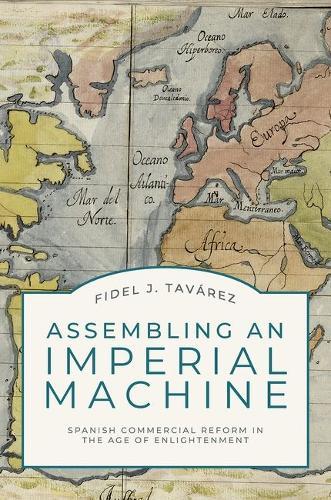
During the eighteenth century, Spanish statesmen pursued a set of ambitious imperial reforms that thoroughly remade conceptualizations of empire. They compared well-ordered empires to harmonious machines and devised a comprehensive plan to liberalize and integrate the imperial economy. The main initiative to emerge from this economic plan was a commercial policy that contemporaries called comercio libre, which entailed replacing the traditional fleets and galleons with a new system of free trade within the empire. The men who designed this new imperial vision became convinced that the pursuit of markets, rather than military power alone, was the key to succeeding in a modern commercial society. Unlike their European counterparts, who remained keenly interested in international trade, Spanish ministers focused on integrating Spain's vast imperial economy. In their minds, the Hispanic world could become an integrated and self-sufficient microcosm of the global economy, which would enable the empire to partake in the world's trade without the rivalry and warfare that came from international commerce. Moving seamlessly between developments in Spain and Spanish America, Fidel J. Tavárez demonstrates how the imperial machine was projected to reap the benefits of economic growth by synergizing millions of people across Spain's dominions, including Indigenous and Afro-descendant colonial subjects. He traces the evolution of the empire's economy from extractive measures intended to drain colonial possessions of their resources for the metropole's gain to notions of a mutually beneficial and equal conglomeration of transoceanic territories. By bringing this effort to light, Tavárez shows that, rather than a mercantilist throwback, the Hispanic world's commercial reforms represented a genuine attempt to solve the dilemmas of early modern globalization, an endeavor that, in turn, inaugurated the enduring fascination with erecting trade blocs in Latin America. Combining economic, intellectual, and political history, Assembling an Imperial Machine provides an innovative interpretation of this momentous period in the history of the Hispanic world.
Full Product Details
Author: Fidel J. Tavárez (Assistant Professor of History, Assistant Professor of History, Queens College, CUNY)
Publisher: Oxford University Press Inc
Imprint: Oxford University Press Inc
ISBN: 9780197755051
ISBN 10: 0197755054
Pages: 368
Publication Date: 22 April 2026
Audience:
College/higher education
,
Postgraduate, Research & Scholarly
Format: Hardback
Publisher's Status: Forthcoming
Availability: Not yet available

This item is yet to be released. You can pre-order this item and we will dispatch it to you upon its release.
Author Information
Fidel J. Tavárez is Assistant Professor of History at Queens College, City University of New York.