|
|
|||
|
||||
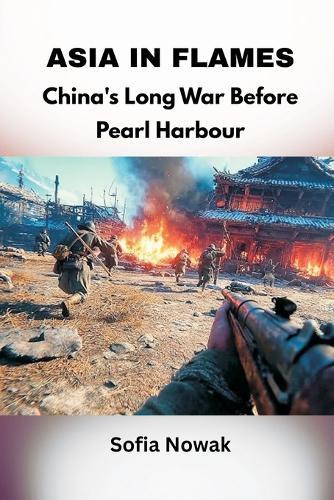
OverviewMost histories still tell the story of Asia's war as if it suddenly erupted over Hawaii in 1941. Long before that morning, cities in China had burned, civilians had fled into caves, and diplomats had watched a supposed regional dispute turn into a test of global will. This book asks what the Second World War would look like if you start not at Pearl Harbour but at the Second Sino-Japanese War. Step by step, it follows the Japanese invasion of China, from the Marco Polo Bridge to the Nanjing massacre history, the bombing of Chongqing, and the struggle to keep supplies flowing along the Burma Road history. It shows how the failures of collective security at Geneva became a textbook example of the League of Nations' failure, how Soviet aid to China and the battles of Khalkhin Gol reshaped Japanese strategy, and how U.S.-China relations in the 1940s moved from sympathy to hard calculation. Along the way, readers see why the Chongqing bombing campaign mattered to planners in London and Washington, and how the Asia-Pacific War's origins cannot be understood without China at the centre. For readers of serious history who want a clear, narrative guide rather than myth or nostalgia, this book offers a new mental map of Asia's long war and its place in the global conflict. Full Product DetailsAuthor: Sofia NowakPublisher: Vij Books Imprint: Vij Books Dimensions: Width: 15.20cm , Height: 1.10cm , Length: 22.90cm Weight: 0.254kg ISBN: 9789347436567ISBN 10: 9347436569 Pages: 184 Publication Date: 20 February 2026 Audience: General/trade , General Format: Paperback Publisher's Status: Active Availability: Not yet available This item is yet to be released. You can pre-order this item and we will dispatch it to you upon its release. Table of ContentsReviewsAuthor InformationSofia Nowak writes about the places where regional wars spill over into global crises. She has spent years studying how conflict in East Asia reshaped the twentieth century, focusing on the people who lived through occupation, bombardment, and uncertain diplomacy. Her work draws on political history, military records, and contemporary reporting to follow events from the conference table to the bomb shelter. Growing up near a major Second World War memorial, she learned early how different societies remember the same battles in sharply different ways. That curiosity feeds her interest in how timelines are drawn, whose suffering is counted, and which front lines are quietly labelled peripheral until it is too late. In this book, she brings readers into China's wartime capitals, League of Nations corridors, Soviet planning rooms, and US newspaper offices to show how an Asian conflict became the hinge of a global war. Tab Content 6Author Website:Countries AvailableAll regions |
||||