Overview
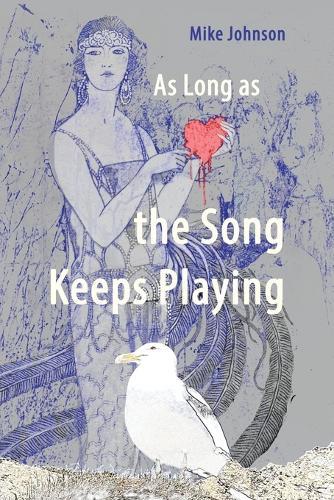
Sad, hopeful, resilient, this lyrical novella weaves the political and the personal, the past and the present, into a compelling meditation on love and life. Set in the last months of the 1980s, As Long As The Song Keeps Playing is a hymn to a love gone wrong, an evocation of a relationship caught in the moment of unravelling. The narrator and his wife Monika, returning from years travelling, set up house on Waiheke Island and try to make a go of it. The narrator is flooded with memories from their past as they attempt to establish themselves in their new environment. Politics overwhelms us; remember Neruda, 'one morning the bonfires / leapt out of the earth / devouring human beings.' Devorando seres, as they say in dry Castile or Barcelona with its orthopedic shops. It's a short hop from Barcelona to Algiers, Algiers to Tel Aviv. In our grandfathers' day they took twenty thousand of our young men, the best and worst, and consigned their bodies to the leaping bonfires of places like Verdun and Passchendaele. Pretty much a whole generation for our small country; pretty much a clean sweep. 'A wave of pride / and knives!' Politics overwhelms us, and it's hard to forget Neruda, or Lorca under the ground, even here, in paradise, surrounded by tall, quiet pongas roasting in the cicada sizzle, in a world where Algiers and Tel Aviv exist only by report, and Verdun and Passchendaele belong to the litany of history. There's a radio somewhere playing a slow, mournful version of 'Po Kare Kare Ana', by a revamped, reissued Howard Morrison, reminding me that it's Waitangi Day tomorrow, the day the Maori chiefs gave away their rangatiratanga, their sacred authority, believing they were being guaranteed it. For Monika read grace and beauty. I can put off the moment of having to start writing by flicking through the deck, looking for the right card for her, trying to get that side of it clear. I choose the Queen of Cups, Waite deck, high Rosicrucian style. She sits on her throne staring into her ornate chalice. Around her feet laps water as blue as the Aegean. She is robed in memory and desire, contemplative but self-involved. The Queen of the Throne of the Waters. The power of reception and reflection. She is not so much the queen of history but its dreamer; this symbol of her not so much an idea as a memory. Monika has that elegance, that self- involvement, that capacity to be immersed in her pose. I've seen it in you too when you act the adult. I can see it in this one; Monika's wearing a long, flowing dress. That must be Spain, 1974. Formentera. Another island. I'm squinting again. On that island, unlike this one, the landscape has overwhelmed its history, subdued its inhabitants to a small, insular people with dark, walnut skin. The inhabitants, history tells, are descendants of those witches and wizards dumped there by the inquisition to die for lack of water. But the 8 witches and wizards survived and with their witchery and wizardry built huge cisterns to catch enough winter rain to last through the dry season. The combination of light and ochre rock on the bare plateau of La Mola makes for an hallucinatory realism. The photograph just about gets it, with Monika looking like a flower growing out of the rock, the Queen of the Throne of the Waters. That third person in the photograph is Juliet de Bairacli Levy, the famous herbalist and animal doctor, who lived on La Mola with her two Afghan hounds. She hated the hippies because of their drugs, telling me that any substance that widened the pupils of the eye permitted the soul to escape by that route from the body. As parts of the soul escape, holes appear in the aura and the
Full Product Details
Author: Mike Johnson
Publisher: Lasavia Publishing
Imprint: Lasavia Publishing
Dimensions:
Width: 14.00cm
, Height: 0.30cm
, Length: 21.00cm
Weight: 0.068kg
ISBN: 9781991083524
ISBN 10: 1991083521
Pages: 50
Publication Date: 01 March 2026
Audience:
General/trade
,
General
Format: Paperback
Publisher's Status: Active
Availability: In Print

This item will be ordered in for you from one of our suppliers. Upon receipt, we will promptly dispatch it out to you. For in store availability, please contact us.
Author Information
Mike Johnson, fiction writer and poet, is widely regarded as one of New Zealand's most innovative writers. He lives on Waiheke Island and has taught creative writing at AUT University and the University of Auckland. In 2002 he received The University of Auckland's Literary Fellowship, having been Literary Fellow at Canterbury University in 1987. His first novel, Lear, the Shakespeare Company Plays Lear at Babylon was short listed for the New Zealand Book Awards in 1986, his novel Dumb Show won the Buckland Memorial Award for Literary Excellence in 1995, and he won the Frances Kean Award his short story, 'Magic Strings' in 1999. His first book of poetry, The Palanquin Ropes, (1983) was co-winner of the John Cowie Reed Memorial Competition. His non-fiction, Angel of Compassion, was shortlisted for the Ashton Whyle Award in 2014, and a poem from Vertical Harp, The selected poems of Li He (2006) has been anthologised in the Essential New Zealand Poems: Facing the Empty Page (Random House, 2015). Mike Johnson is the author of twenty-six books including nine books of poetry, three of shorter fiction, one non fiction, three children's books, and ten novels.