Overview
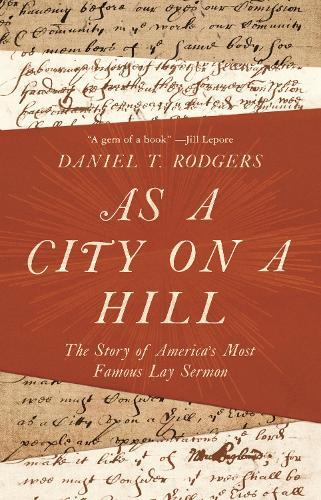
How an obscure Puritan sermon came to be seen as a founding document of American identity and exceptionalism""For we must consider that we shall be as a city upon a hill,"" John Winthrop warned his fellow Puritans at New England's founding in 1630. More than three centuries later, Ronald Reagan remade that passage into a timeless celebration of American promise. How were Winthrop's long-forgotten words reinvented as a central statement of American identity and exceptionalism? In As a City on a Hill, leading American intellectual historian Daniel Rodgers tells the surprising story of one of the most celebrated documents in the canon of the American idea. In doing so, he brings to life the ideas Winthrop's text carried in its own time and the sharply different yearnings that have been attributed to it since.As a City on a Hill shows how much more malleable, more saturated with vulnerability, and less distinctly American Winthrop's ""Model of Christian Charity"" was than the document that twentieth-century Americans invented. Across almost four centuries, Rodgers traces striking shifts in the meaning of Winthrop's words-from Winthrop's own anxious reckoning with the scrutiny of the world, through Abraham Lincoln's haunting reference to this ""almost chosen people,"" to the ""city on a hill"" that African Americans hoped to construct in Liberia, to the era of Donald Trump.As a City on a Hill reveals the circuitous, unexpected ways Winthrop's words came to lodge in American consciousness. At the same time, the book offers a probing reflection on how nationalism encourages the invention of ""timeless"" texts to straighten out the crooked realities of the past.
Full Product Details
Author: Daniel T. Rodgers
Publisher: Princeton University Press
Imprint: Princeton University Press
ISBN: 9780691181592
ISBN 10: 0691181594
Pages: 368
Publication Date: 13 November 2018
Audience:
College/higher education
,
Professional and scholarly
,
General/trade
,
Tertiary & Higher Education
,
Professional & Vocational
Format: Hardback
Publisher's Status: Active
Availability: Temporarily unavailable

The supplier advises that this item is temporarily unavailable. It will be ordered for you and placed on backorder. Once it does come back in stock, we will ship it out to you.
Language: English
Reviews
A fine book, As a City on a Hill shows how the multiple meanings of John Winthrop's sermon unfolded, with unexpected developments at every turn, over almost four centuries. --James T. Kloppenberg, the author of Toward Democracy In As a City on a Hill, Daniel Rodgers offers a brilliant and much-needed revision to the legend that has been built around John Winthrop's famous sermon. This sharply written and compellingly argued book shows how Winthrop's words, often misread as a precursor to American nationalism, were in fact a call to our responsibilities to build community and nurture mutuality. --E. J. Dionne, coauthor of One Nation after Trump and author of Our Divided Political Heart Today, most of us understand John Winthrop's famous phrase, 'a city upon a hill, ' to mean that America is the exceptional nation and model for all mankind. But in this brilliant and engaging book, distinguished historian Daniel Rogers shows how the phrase meant almost the opposite--and how it has been used and misused throughout American history. --Frances FitzGerald, Pulitzer Prize-winning author of Fire in the Lake: The Vietnamese and the Americans in Vietnam Reading As a City on a Hill is an opportunity to be reminded yet again why Daniel Rodgers's work has been so formative for generations of American historians. In captivating prose, he demonstrates beautifully how every present is layered with its past, even in ways hidden to its actors. --Jennifer Ratner-Rosenhagen, author of American Nietzsche A gem of a book. Daniel Rodgers's inquiry into John Winthrop's much-quoted essay challenges a raft of assumptions and brims with insight and provocation. Rodgers has always written intellectual history at its very best: learned, searching, and vital. --Jill Lepore, author of These Truths: A History of the United States In lucid and engaging prose, Daniel Rodgers awakens us to the presence of a historical myth--and to the particular importance of history in the creation of American nationalism and national identity. This is a book based on feats of archival research but above all on an acute ear for language and the multiple valences that, over time, particular words acquire. --David D. Hall, author of A Reforming People: Puritanism and the Transformation of Public Life in New England
Reading As a City on a Hill is an opportunity to be reminded yet again why Daniel Rodgers's work has been so formative for generations of American historians. In captivating prose, he demonstrates beautifully how every present is layered with its past, even in ways hidden to its actors. --Jennifer Ratner-Rosenhagen, author of American Nietzsche A fine book by a distinguished historian, As a City on a Hill shows how the multiple meanings of John Winthrop's sermon unfolded, with unexpected developments at every turn, over almost four centuries. --James T. Kloppenberg, the author of Toward Democracy In lucid and engaging prose, Daniel Rodgers awakens us to the presence of a historical myth--and to the particular importance of history in the creation of American nationalism and national identity. This is a book based on feats of archival research but above all on an acute ear for language and the multiple valences that, over time, particular words acquire. --David D. Hall, author of A Reforming People: Puritanism and the Transformation of Public Life in New England In As a City on a Hill, distinguished historian Daniel Rodgers offers a brilliant and much-needed revision to the legend that has been built around John Winthrop's famous sermon. This sharply written and compellingly argued book shows how Winthrop's words, often misread as a precursor to American nationalism, were in fact a call to our responsibilities to build community and nurture mutuality. --E. J. Dionne, coauthor of One Nation after Trump and author of Our Divided Political Heart A gem of a book. Daniel Rodgers's inquiry into John Winthrop's much-quoted essay challenges a raft of assumptions and brims with insight and provocation. Rodgers has always written intellectual history at its very best: learned, searching, and vital. --Jill Lepore, author of These Truths: A History of the United States
[Daniel Rodgers] argues that the comparison of America to a city on a hill that politicians often use, quoting from John Winthrop's 1630 lay sermon 'Model of Christian Charity, ' is not true to the sermon's original sentiment and distorts the historical legacy of the passage. . . . It wasn't until Cold War-era writers and thinkers revisited the 'Model' in search of evidence of America's universal nature (ignoring the text's historical context) that it regained popularity. Through a winding, enthralling timeline, Rodgers successfully illuminates the strange history of 'a text that we think we know so well that we barely know it at all.' --Publishers Weekly John Winthrop was the preacher, and his chapel may have been the main deck on the ship that took him and other Puritans to Boston in 1630. Much of the sermon is relevant to contemporary issues of work, charity, welfare, and class. . . . His work is a model of clearly written scholarship. ---Marvin Olasky, World (25 Good History Reads) Today, most of us understand John Winthrop's famous phrase, 'a city upon a hill, ' to mean that America is the exceptional nation and model for all mankind. But in this brilliant and engaging book, distinguished historian Daniel Rodgers shows how the phrase meant almost the opposite--and how it has been used and misused throughout American history. --Frances FitzGerald, Pulitzer Prize-winning author of Fire in the Lake: The Vietnamese and the Americans in Vietnam A fine book, As a City on a Hill shows how the multiple meanings of John Winthrop's sermon unfolded, with unexpected developments at every turn, over almost four centuries. --James T. Kloppenberg, the author of Toward Democracy In As a City on a Hill, Daniel Rodgers offers a brilliant and much-needed revision to the legend that has been built around John Winthrop's famous sermon. This sharply written and compellingly argued book shows how Winthrop's words, often misread as a precursor to American nationalism, were in fact a call to our responsibilities to build community and nurture mutuality. --E. J. Dionne, coauthor of One Nation after Trump and author of Our Divided Political Heart Reading As a City on a Hill is an opportunity to be reminded yet again why Daniel Rodgers's work has been so formative for generations of American historians. In captivating prose, he demonstrates beautifully how every present is layered with its past, even in ways hidden to its actors. --Jennifer Ratner-Rosenhagen, author of American Nietzsche In lucid and engaging prose, Daniel Rodgers awakens us to the presence of a historical myth--and to the particular importance of history in the creation of American nationalism and national identity. This is a book based on feats of archival research but above all on an acute ear for language and the multiple valences that, over time, particular words acquire. --David D. Hall, author of A Reforming People: Puritanism and the Transformation of Public Life in New England A gem of a book. Daniel Rodgers's inquiry into John Winthrop's much-quoted essay challenges a raft of assumptions and brims with insight and provocation. Rodgers has always written intellectual history at its very best: learned, searching, and vital. --Jill Lepore, author of These Truths: A History of the United States
Reading As a City on a Hill is an opportunity to be reminded yet again why Daniel Rodgers's work has been so formative for generations of American historians. In captivating prose, he demonstrates beautifully how every present is layered with its past, even in ways hidden to its actors. -Jennifer Ratner-Rosenhagen, author of American Nietzsche A fine book by a distinguished historian, As a City on a Hill shows how the multiple meanings of John Winthrop's sermon unfolded, with unexpected developments at every turn, over almost four centuries. -James T. Kloppenberg, the author of Toward Democracy In lucid and engaging prose, Daniel Rodgers awakens us to the presence of a historical myth-and to the particular importance of history in the creation of American nationalism and national identity. This is a book based on feats of archival research but above all on an acute ear for language and the multiple valences that, over time, particular words acquire. -David D. Hall, author of A Reforming People: Puritanism and the Transformation of Public Life in New England In As a City on a Hill, distinguished historian Daniel Rodgers offers a brilliant and much-needed revision to the legend that has been built around John Winthrop's famous sermon. This sharply written and compellingly argued book shows how Winthrop's words, often misread as a precursor to American nationalism, were in fact a call to our responsibilities to build community and nurture mutuality. -E. J. Dionne, coauthor of One Nation after Trump and author of Our Divided Political Heart A gem of a book. Daniel Rodgers's inquiry into John Winthrop's much-quoted essay challenges a raft of assumptions and brims with insight and provocation. Rodgers has always written intellectual history at its very best: learned, searching, and vital. -Jill Lepore, author of These Truths: A History of the United States
[Daniel Rodgers] argues that the comparison of America to a city on a hill that politicians often use, quoting from John Winthrop's 1630 lay sermon `Model of Christian Charity,' is not true to the sermon's original sentiment and distorts the historical legacy of the passage. . . . It wasn't until Cold War-era writers and thinkers revisited the `Model' in search of evidence of America's universal nature (ignoring the text's historical context) that it regained popularity. Through a winding, enthralling timeline, Rodgers successfully illuminates the strange history of `a text that we think we know so well that we barely know it at all.' * Publishers Weekly * In lucid and engaging prose, Daniel Rodgers awakens us to the presence of a historical myth-and to the particular importance of history in the creation of American nationalism and national identity. This is a book based on feats of archival research but above all on an acute ear for language and the multiple valences that, over time, particular words acquire. -David D. Hall, author of A Reforming People: Puritanism and the Transformation of Public Life in New England A fine book, As a City on a Hill shows how the multiple meanings of John Winthrop's sermon unfolded, with unexpected developments at every turn, over almost four centuries. -James T. Kloppenberg, the author of Toward Democracy Reading As a City on a Hill is an opportunity to be reminded yet again why Daniel Rodgers's work has been so formative for generations of American historians. In captivating prose, he demonstrates beautifully how every present is layered with its past, even in ways hidden to its actors. -Jennifer Ratner-Rosenhagen, author of American Nietzsche In As a City on a Hill, Daniel Rodgers offers a brilliant and much-needed revision to the legend that has been built around John Winthrop's famous sermon. This sharply written and compellingly argued book shows how Winthrop's words, often misread as a precursor to American nationalism, were in fact a call to our responsibilities to build community and nurture mutuality. -E. J. Dionne, coauthor of One Nation after Trump and author of Our Divided Political Heart Today, most of us understand John Winthrop's famous phrase, `a city upon a hill,' to mean that America is the exceptional nation and model for all mankind. But in this brilliant and engaging book, distinguished historian Daniel Rodgers shows how the phrase meant almost the opposite-and how it has been used and misused throughout American history. -Frances FitzGerald, Pulitzer Prize-winning author of Fire in the Lake: The Vietnamese and the Americans in Vietnam A gem of a book. Daniel Rodgers's inquiry into John Winthrop's much-quoted essay challenges a raft of assumptions and brims with insight and provocation. Rodgers has always written intellectual history at its very best: learned, searching, and vital. -Jill Lepore, author of These Truths: A History of the United States Rodgers's As a City on a Hill is an exceptional piece of scholarship. Eminently readable and sophisticated in its analysis, scholars of nationalism, religion, political history, and the colonial Americas will find much material of interest, as will general audiences seeking to learn more about the shifting contours of American nationalism and about how historians, public officials, and the public work work perpetually to remake both national history and the means by which it is propagated. This is an important book. ---William S. Cossen, H-Nationalism As a City on a Hill is a masterful synthesis. Spanning four centuries, the book deftly narrates the intellectual history of `America's most famous lay sermon.' ---Seth Dowland, Reading Religion John Winthrop was the preacher, and his chapel may have been the main deck on the ship that took him and other Puritans to Boston in 1630. Much of the sermon is relevant to contemporary issues of work, charity, welfare, and class. . . . His work is a model of clearly written scholarship. ---Marvin Olasky, World (25 Good History Reads) In a wonderful new book, As a City on a Hill: The Story of America's Most Famous Lay Sermon, distinguished intellectual historian Daniel Rodgers recaptures Winthrop's original meaning and explains why it's relevant to Americans today. . . . Masterful history. ---Robert Tracy McKenzie, Christianity Today Rodgers' superlative book is an intellectual page-turner-a muscular examination of the culture and theology behind the `Model,' a cogent study of the methods by which a nation gives itself meaning through the inventive interpretation of documents from the past, and a sharp-eyed accounting of how Winthrop's `city on a hill' phrase came to be used in modern political parlance. ---Patrick T. Reardon, Chicago Tribune World's 2018 Books of the Year
[Daniel Rodgers] argues that the comparison of America to a city on a hill that politicians often use, quoting from John Winthrop's 1630 lay sermon 'Model of Christian Charity, ' is not true to the sermon's original sentiment and distorts the historical legacy of the passage. . . . It wasn't until Cold War-era writers and thinkers revisited the 'Model' in search of evidence of America's universal nature (ignoring the text's historical context) that it regained popularity. Through a winding, enthralling timeline, Rodgers successfully illuminates the strange history of 'a text that we think we know so well that we barely know it at all.' --Publishers Weekly In lucid and engaging prose, Daniel Rodgers awakens us to the presence of a historical myth--and to the particular importance of history in the creation of American nationalism and national identity. This is a book based on feats of archival research but above all on an acute ear for language and the multiple valences that, over time, particular words acquire. --David D. Hall, author of A Reforming People: Puritanism and the Transformation of Public Life in New England A fine book, As a City on a Hill shows how the multiple meanings of John Winthrop's sermon unfolded, with unexpected developments at every turn, over almost four centuries. --James T. Kloppenberg, the author of Toward Democracy Reading As a City on a Hill is an opportunity to be reminded yet again why Daniel Rodgers's work has been so formative for generations of American historians. In captivating prose, he demonstrates beautifully how every present is layered with its past, even in ways hidden to its actors. --Jennifer Ratner-Rosenhagen, author of American Nietzsche In As a City on a Hill, Daniel Rodgers offers a brilliant and much-needed revision to the legend that has been built around John Winthrop's famous sermon. This sharply written and compellingly argued book shows how Winthrop's words, often misread as a precursor to American nationalism, were in fact a call to our responsibilities to build community and nurture mutuality. --E. J. Dionne, coauthor of One Nation after Trump and author of Our Divided Political Heart Today, most of us understand John Winthrop's famous phrase, 'a city upon a hill, ' to mean that America is the exceptional nation and model for all mankind. But in this brilliant and engaging book, distinguished historian Daniel Rodgers shows how the phrase meant almost the opposite--and how it has been used and misused throughout American history. --Frances FitzGerald, Pulitzer Prize-winning author of Fire in the Lake: The Vietnamese and the Americans in Vietnam A gem of a book. Daniel Rodgers's inquiry into John Winthrop's much-quoted essay challenges a raft of assumptions and brims with insight and provocation. Rodgers has always written intellectual history at its very best: learned, searching, and vital. --Jill Lepore, author of These Truths: A History of the United States In a wonderful new book, As a City on a Hill: The Story of America's Most Famous Lay Sermon, distinguished intellectual historian Daniel Rodgers recaptures Winthrop's original meaning and explains why it's relevant to Americans today. . . . Masterful history. ---Robert Tracy McKenzie, Christianity Today Rodgers' superlative book is an intellectual page-turner--a muscular examination of the culture and theology behind the 'Model, ' a cogent study of the methods by which a nation gives itself meaning through the inventive interpretation of documents from the past, and a sharp-eyed accounting of how Winthrop's 'city on a hill' phrase came to be used in modern political parlance. ---Patrick T. Reardon, Chicago Tribune World's 2018 Books of the Year John Winthrop was the preacher, and his chapel may have been the main deck on the ship that took him and other Puritans to Boston in 1630. Much of the sermon is relevant to contemporary issues of work, charity, welfare, and class. . . . His work is a model of clearly written scholarship. ---Marvin Olasky, World (25 Good History Reads)
Today, most of us understand John Winthrop's famous phrase, 'a city upon a hill, ' to mean that America is the exceptional nation and model for all mankind. But in this brilliant and engaging book, distinguished historian Daniel Rogers shows how the phrase meant almost the opposite--and how it has been used and misused throughout American history. --Frances FitzGerald, Pulitzer Prize-winning author of Fire in the Lake: The Vietnamese and the Americans in Vietnam Reading As a City on a Hill is an opportunity to be reminded yet again why Daniel Rodgers's work has been so formative for generations of American historians. In captivating prose, he demonstrates beautifully how every present is layered with its past, even in ways hidden to its actors. --Jennifer Ratner-Rosenhagen, author of American Nietzsche A fine book by a distinguished historian, As a City on a Hill shows how the multiple meanings of John Winthrop's sermon unfolded, with unexpected developments at every turn, over almost four centuries. --James T. Kloppenberg, the author of Toward Democracy In lucid and engaging prose, Daniel Rodgers awakens us to the presence of a historical myth--and to the particular importance of history in the creation of American nationalism and national identity. This is a book based on feats of archival research but above all on an acute ear for language and the multiple valences that, over time, particular words acquire. --David D. Hall, author of A Reforming People: Puritanism and the Transformation of Public Life in New England In As a City on a Hill, distinguished historian Daniel Rodgers offers a brilliant and much-needed revision to the legend that has been built around John Winthrop's famous sermon. This sharply written and compellingly argued book shows how Winthrop's words, often misread as a precursor to American nationalism, were in fact a call to our responsibilities to build community and nurture mutuality. --E. J. Dionne, coauthor of One Nation after Trump and author of Our Divided Political Heart A gem of a book. Daniel Rodgers's inquiry into John Winthrop's much-quoted essay challenges a raft of assumptions and brims with insight and provocation. Rodgers has always written intellectual history at its very best: learned, searching, and vital. --Jill Lepore, author of These Truths: A History of the United States
Author Information
Daniel T. Rodgers is the Henry Charles Lea Professor of History Emeritus at Princeton University. His books include Age of Fracture, winner of the Bancroft Prize; Atlantic Crossings; Contested Truths; and The Work Ethic in Industrial America. He lives in Princeton, New Jersey.